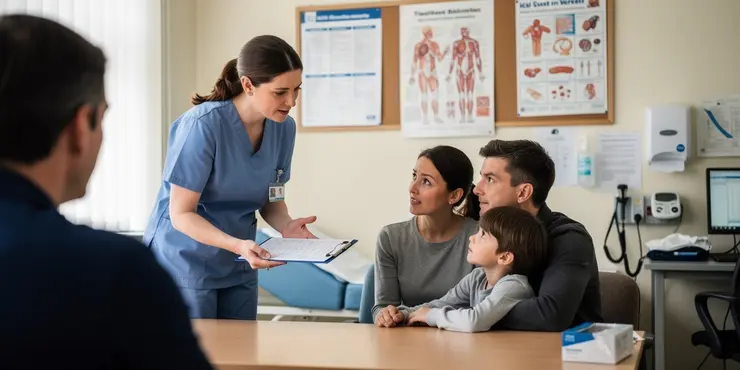

Speak To An Expert
Get clear, personalised advice for your situation.
Jot down a few questions to make the most of your conversation.
Understanding Autism: Beyond Paracetamol
Autism spectrum disorder (ASD) is a complex developmental condition that affects communication, behavior, and social interaction. Understanding the causes of autism is a critical area of research, and it is widely accepted that there is no single cause of autism.
Genetic Factors
Research indicates that genetics play a significant role in the development of autism. Many different genes appear to be involved in increasing the risk of developing ASD. Studies have shown that genetic mutations can disrupt normal brain development and lead to the characteristics associated with autism. Families with a history of autism may have a higher likelihood of having children with ASD. However, autism can occur in individuals with no family history of the condition, suggesting that other factors also contribute.
Environmental Influences
Environmental factors may interact with genetic predispositions to influence the development of ASD. Prenatal exposure to certain substances, such as alcohol and certain drugs, may increase the risk of autism. Other environmental exposures that have been studied include advanced parental age at the time of conception, maternal illness or infection during pregnancy, and complications during birth. While these factors do not cause autism directly, they may contribute to an increased risk when combined with genetic factors.
Neurobiological Factors
Autism is associated with differences in brain structure and function. Researchers have found that individuals with autism often have variations in the size and activity of certain brain regions, such as the amygdala and hippocampus. These neurobiological differences may contribute to the symptoms of autism, including difficulties with social interaction and communication. While these differences are not causes per se, they are indicative of the complex nature of autism and its development.
The Role of Paracetamol
In recent years, there has been some speculation about the role of paracetamol (also known as acetaminophen) in the development of autism. However, scientific evidence does not support the claim that paracetamol use, when taken as recommended, causes autism. Ongoing research continues to explore this question, but the consensus in the scientific community is that paracetamol is safe when used according to guidelines and does not contribute to the development of autism.
Conclusion
Autism is a multifactorial condition with contributions from genetic, environmental, and neurobiological factors. While ongoing research continues to investigate potential causes, it is clear that no single factor causes autism. Understanding the complex interplay of these factors is crucial for developing effective interventions and treatments. Individuals and families affected by autism should consult healthcare professionals for advice and support tailored to their unique circumstances.
Understanding Autism: More Than Just Medicine
Autism is a condition that affects how people communicate and behave. It also affects how they interact with others. Scientists are trying to learn what causes autism. There isn't just one cause of autism.
Genes and Autism
Autism can run in families. This means that if someone in your family has autism, you might have a higher chance, too. Many genes are involved in whether a person has autism. Sometimes changes in these genes can make the brain develop differently. But even if no one else in your family has autism, you can still have it. This shows that other things also play a part.
Things Around Us
The environment can also affect autism. For example, if a mother drinks alcohol when she is pregnant, it might increase the chance of a child having autism. Other things that might make a difference are how old parents are when the baby is born or if the mother got sick while she was pregnant. These things don't directly cause autism, but they can add to the risk.
The Brain and Autism
People with autism have differences in their brains. This can affect how they talk to others and react to things. Some parts of their brain might be a different size or work in different ways. These differences show how complex autism is, but they are not the direct cause.
Medicine and Autism
Some people wonder if taking paracetamol (also called acetaminophen) can cause autism. Scientists say that taking paracetamol as directed is safe and does not cause autism. They continue to study it, but for now, the advice is that it is okay.
Final Thoughts
Autism is caused by many different things, not just one. These include genes, the environment, and changes in the brain. We need to understand how these things work together to help people with autism better. Families should talk to doctors for help and advice that is right for them. Tools like pictures or simple stories might help explain things clearly.
Frequently Asked Questions
Autism has a strong genetic component, with studies suggesting that between 74-93% of the risk can be attributed to genetic factors. Mutations in several genes, such as CHD8, SHANK3, and SCN2A, have been associated with autism.
Environmental factors can interact with genetic predispositions to increase autism risk. These factors include prenatal exposures to infections, air pollution, and certain medications during pregnancy.
Yes, advanced parental age, especially of the father, has been associated with an increased risk of autism in children.
Premature birth and very low birth weight have been linked to a higher risk of autism spectrum disorders.
Maternal health conditions, such as obesity, diabetes, and hypertension, during pregnancy have been associated with an increased risk of autism in offspring.
Certain birth complications, including birth trauma and lack of oxygen to the baby’s brain, have been identified as risk factors for autism.
Nutritional factors, such as vitamin deficiencies or excesses and overall maternal diet, may impact fetal brain development and have been implicated in autism risk.
Immune system dysregulation, including certain maternal infections during pregnancy or autoimmune disorders, has been associated with a higher risk of autism.
Early brain development is vital as any disruptions or abnormalities during this period can lead to neurodevelopmental disorders like autism.
Exposure to environmental chemicals, such as heavy metals and pesticides, has been studied as potential contributors to autism risk.
Having a sibling or parent with autism increases the risk of autism due to shared genetic factors.
Prenatal exposure to certain infections, such as rubella and cytomegalovirus, has been linked to an increased autism risk.
Epigenetic changes, which affect gene expression without altering the DNA sequence, can influence autism risk, particularly how environmental factors impact genetic predispositions.
Lack of prenatal care can increase the risk of autism by failing to address potential health issues or exposures that could affect fetal development.
Socioeconomic factors can indirectly influence autism risk, primarily through access to healthcare, nutrition, and exposure to environmental stressors.
There is ongoing research on the gut-brain axis and how gut microbiota may influence autism symptoms and risk, although this area is not fully understood yet.
Disruptions in neurodevelopmental pathways that regulate brain growth and connectivity can lead to autism spectrum disorders.
Some studies suggest that mitochondrial dysfunction, which affects energy production in cells, might be associated with autism in some individuals.
Conditions such as ADHD, anxiety disorders, and OCD can present with symptoms similar to autism, leading to misdiagnosis.
Understanding the diverse causes of autism can aid in early detection, targeted interventions, and personalized therapeutic approaches.
Autism is mostly caused by genes. This means it can run in families. Scientists say that 74-93% of autism comes from genes. Some important genes are called CHD8, SHANK3, and SCN2A. When these genes change, it can cause autism.
Tools like picture schedules and visual aids can help people understand better. Taking short breaks can also help with learning.
Things around us can affect whether someone might have autism. These things include being sick while pregnant, breathing bad air, and using some medicines during pregnancy.
Yes, when parents are older, especially dads, it can make a child more likely to have autism.
Being born too early or being very small at birth can mean a higher chance of having autism.
When a pregnant mom has health problems like being very overweight, having too much sugar in her blood (diabetes), or having high blood pressure, it can make it more likely for the baby to have autism.
Sometimes, things can go wrong when a baby is born. This can be a risk for autism. Two big things are:
- The baby might get hurt during birth.
- The baby might not get enough air to the brain.
These things can make it more likely for a baby to have autism.
If you want help to read more, try using picture books or talk to someone who can explain things step by step.
The food a mom eats can affect a baby’s brain while it's growing in her tummy. If the mom doesn't get enough vitamins or gets too many, it might change how the baby’s brain grows. This could be a reason why some children have autism.
Sometimes, when a mom is pregnant, her body might fight off germs in a way that can affect the baby. This is called an infection. Or, her body might attack itself by mistake, which is called an autoimmune disorder. These things might make it more likely for the baby to have autism.
Early brain growth is very important. Problems during this time can cause brain disorders like autism.
Scientists study how things like chemicals in the environment, heavy metals, and bug-killing sprays might make autism more likely.
Having a brother, sister, or parent with autism can mean you are more likely to have autism too. This is because of genes that family members share.
Some infections during pregnancy, like rubella and cytomegalovirus, can raise the chance of having a baby with autism.
It's important to tell a doctor if you're worried.
Epigenetic changes are like tiny switches that can turn genes on or off without changing the DNA itself. These switches can affect autism risk. Environmental factors, like what we eat or breathe, can flip these switches. This is how the world around us can change how our genes work without changing the genes themselves.
To understand this better, tools like picture aids or story mapping can help. They make it easier to see how these switches and environmental factors work together. If you're interested in learning more, you can also use apps or videos that explain these ideas with simple words and pictures.
If a pregnant person does not go to the doctor, it can make it more likely for the baby to have autism. This is because health problems or things that might hurt the baby are not checked or fixed.
Things like money, jobs, and where you live can affect autism. This happens because they change how you get healthcare, food, and how much stress you feel around you.
Tip: It can help to use simple words and short sentences to make reading easier. If reading is hard, try listening to the text or using pictures to help understand.
Scientists are studying how the stomach and brain talk to each other. They want to know if tiny living things in our tummies can affect autism. We don't have all the answers yet, but they are working hard to learn more.
When the brain grows in a way that is not normal, it can cause autism. The brain has pathways that help it grow and connect, and if these pathways are not working right, it can lead to autism.
If you find this hard to understand, try using picture books or videos that talk about the brain and how it works. These can make learning easier.
Some studies show that problems with mitochondria, which help make energy in our cells, might be linked to autism for some people.
Sometimes, people with ADHD, anxiety, or OCD can show signs that look like autism. This can make doctors confuse one with the other.
Knowing what causes autism can help us find it early. This means we can help the person in the way that is best for them.

Ergsy Search Results
This website offers general information and is not a substitute for professional advice.
Always seek guidance from qualified professionals.
If you have any medical concerns or need urgent help, contact a healthcare professional or emergency services immediately.
Some of this content was generated with AI assistance. We've done our best to keep it accurate, helpful, and human-friendly.
- Ergsy carefully checks the information in the videos we provide here.
- Videos shown by Youtube after a video has completed, have NOT been reviewed by ERGSY.
- To view, click the arrow in centre of video.
- Most of the videos you find here will have subtitles and/or closed captions available.
- You may need to turn these on, and choose your preferred language.
- Go to the video you'd like to watch.
- If closed captions (CC) are available, settings will be visible on the bottom right of the video player.
- To turn on Captions, click settings.
- To turn off Captions, click settings again.