

Speak To An Expert
Get clear, personalised advice for your situation.
Jot down a few questions to make the most of your conversation.
More Items From Ergsy search
-

Do VAT rules apply to online sales?
Relevance: 100%
-

Do VAT rules apply to online sales?
Relevance: 98%
-
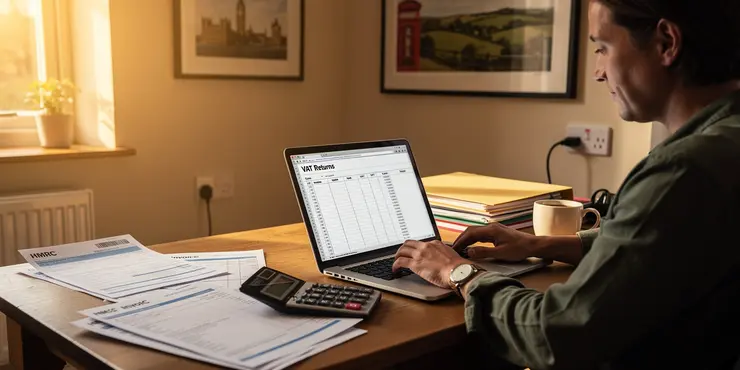
How do I file VAT returns?
Relevance: 61%
-

What is the threshold for mandatory VAT registration?
Relevance: 55%
-

Can I register for VAT voluntarily?
Relevance: 54%
-

Do I need to register my business for VAT?
Relevance: 54%
-

What is VAT?
Relevance: 52%
-
What happens if I don't register for VAT when required?
Relevance: 51%
-

Is online sale of e-cigarettes still allowed?
Relevance: 51%
-
What records do I need to keep for VAT?
Relevance: 49%

-
Who needs to register for VAT?
Relevance: 49%
-

Are there exemptions from registering for VAT?
Relevance: 49%
-

What is a VAT number?
Relevance: 48%
-

When should a business register for VAT?
Relevance: 47%
-

What is the VAT rate that I need to charge?
Relevance: 47%
-

What is reverse charge VAT?
Relevance: 47%
-

How do I deregister for VAT?
Relevance: 46%
-

Can I reclaim VAT on purchases?
Relevance: 46%
-

What documents are needed for VAT registration?
Relevance: 45%
-

Do all businesses need to charge VAT?
Relevance: 44%
-

Is there a software requirement for VAT submissions?
Relevance: 39%
-

How long does it take to register for VAT?
Relevance: 38%
-

What is input tax and output tax?
Relevance: 35%
-

Rules on E-cigarettes to Tighten Amid Concerns Over Youth Vaping
Relevance: 34%
-

Which property sales are exempt from CGT?
Relevance: 34%
-

What are the rules regarding smoking?
Relevance: 33%
-

What age restrictions apply to purchasing e-cigarettes under the new rules?
Relevance: 31%
-

How do I calculate the gain on my property sale?
Relevance: 30%
-

Are manufacturers liable for products sold online or through third parties?
Relevance: 28%
-

Are there any regulations on the sale of baby sleep pillows?
Relevance: 26%
-

What tax rate applies to capital gains from property sales?
Relevance: 26%
-

What is Jess's Rule?
Relevance: 25%
-
How can I reduce my CGT liability on a property sale?
Relevance: 25%
-

Who created Jess's Rule?
Relevance: 24%
-

Can I combine cashback rewards with other discounts or offers?
Relevance: 24%
-

Where is Jess's Rule commonly applied?
Relevance: 23%
-

Can a manufacturer be liable for a product that was altered after sale?
Relevance: 22%
-
What is the seven-year rule relating to inheritance tax?
Relevance: 22%
-
What is the '7-year rule' in Inheritance Tax?
Relevance: 22%
-

Supreme Court Delivers Key Ruling on Electoral Reform
Relevance: 22%
Understanding VAT for Online Sales
Value Added Tax (VAT) is a crucial consideration for anyone conducting online sales from or within the UK. As more transactions move online, understanding VAT obligations becomes essential for compliance.
Whether you sell through your website, online marketplaces, or platforms, you'll need to determine how VAT rules apply to your situation. These rules can vary depending on factors such as the nature of your products and the location of your customers.
VAT Registration Requirements
If your business turnover exceeds the VAT threshold, you must register for VAT and charge it on your online sales. The current threshold as of 2023 is £85,000.
Even if your sales are below this limit, you might opt to register voluntarily. This can be beneficial if you're incurring VAT on purchases, as it allows you to reclaim VAT credits.
Charging and Collecting VAT
Once registered, you'll need to charge VAT on every taxable sale you make online. The standard VAT rate in the UK is 20%, though some items qualify for reduced or zero rates.
It's essential to display prices inclusive of VAT to ensure transparency for your customers. Failing to properly collect and remit VAT can lead to penalties from HM Revenue and Customs (HMRC).
Managing VAT for International Sales
Selling to customers outside the UK presents additional VAT considerations. For sales to EU countries, the VAT treatment depends on whether you're selling to businesses or consumers.
Sales within the EU to consumers might require you to register for VAT in the consumer’s country under the One Stop Shop (OSS) scheme. This can simplify VAT reporting for multiple EU countries.
Using Online Marketplaces
If you use platforms like Amazon or eBay, specific VAT rules apply. These platforms might be responsible for collecting VAT on your behalf in some cases.
Understanding the VAT responsibilities between you and the marketplace is crucial. Ensure compliance by reviewing the terms of service and government guidelines related to third-party sellers.
Compliance and Reporting
Once registered, you'll need to submit VAT returns periodically, usually quarterly. These returns summarize the VAT you've charged and the VAT you've paid on business expenses.
Maintaining accurate records is vital to ensure that your VAT returns are complete and accurate. Utilizing accounting software can simplify this task greatly.
Conclusion
VAT rules for online sales can be complex, but staying informed is key to compliant and efficient operations. Keeping abreast of changing regulations ensures you meet your responsibilities effectively.
Consulting a tax professional for personalized advice on VAT obligations, especially when expanding your market internationally, is often a prudent decision.
Understanding VAT for Online Sales
Value Added Tax (VAT) is a tax you need to know about if you sell things online in the UK. As more people buy online, it's important to understand how VAT works.
Whether you sell on your own website, or through places like Amazon or eBay, you need to know how VAT applies to your business. VAT rules can change based on what you sell and where your customers are.
VAT Registration Requirements
If your business makes more than £85,000 a year, you have to register for VAT and charge it on what you sell. This is the rule in 2023.
Even if you make less than that, you can still register for VAT if you want to. This might help you because you can get some VAT back on things you buy for your business.
Charging and Collecting VAT
When you're registered, you have to charge VAT on everything you sell that's taxable. In the UK, the VAT rate is usually 20%, but some things have a lower rate or none at all.
Make sure to include VAT in the price you show to customers. If you don’t collect and send the right VAT to the government, you might get fined.
Managing VAT for International Sales
Selling to people outside the UK makes VAT more complicated. If you sell to EU countries, the rules depend on if you’re selling to people or businesses.
If you sell to people in the EU, you might need to register for VAT in their country using the One Stop Shop (OSS) system. This can make it easier to handle VAT in different EU countries.
Using Online Marketplaces
If you sell through sites like Amazon or eBay, there are special VAT rules. Sometimes, these sites collect VAT for you.
It's important to know who handles VAT - you or the marketplace. Check the terms and government rules to make sure you're following the law.
Compliance and Reporting
After you register, you have to send VAT reports every few months, usually four times a year. These reports show how much VAT you charged and paid.
Keeping good records is important to make sure your reports are right. Using accounting software can make this much easier.
Conclusion
VAT rules for selling online can be tricky, but knowing them is important. Pay attention to changes in the rules so you can do things the right way.
Talking to a tax expert can help you understand what you need to do, especially if you sell to other countries.
Frequently Asked Questions
What is VAT and how does it apply to online sales?
VAT, or Value Added Tax, is a type of indirect tax that is imposed on goods and services at each stage of production or distribution. For online sales, VAT rules dictate that sellers must charge VAT on sales to customers in certain locations and remit the collected tax to the appropriate tax authorities.
Do all online sellers need to charge VAT?
Not all online sellers are required to charge VAT. It depends on factors such as the seller's location, the location of the customer, the type of goods or services sold, and the seller's revenue. Generally, businesses that exceed certain sales thresholds must charge VAT.
How does Brexit affect VAT on online sales to and from the UK?
After Brexit, the UK is considered a third country for VAT purposes with the European Union. This means that different VAT rules apply to sales between the UK and EU countries, such as potential customs duties and changes in VAT registration requirements.
What is the VAT registration threshold for online sellers?
The VAT registration threshold varies by country. In the UK, for example, businesses must register for VAT if their taxable turnover exceeds £85,000. In the EU, Member States have different registration thresholds.
How is VAT applied to digital goods sold online?
For digital goods, VAT is typically charged based on the location of the consumer, not the seller. This rule ensures that VAT is collected by the country where consumption occurs. Sellers may need to register with VAT authorities in multiple jurisdictions.
What is the VAT rate for online sales?
VAT rates for online sales vary depending on the country and the type of product or service sold. Standard VAT rates can range from 5% to 27%, but reduced rates may apply to certain goods and services in some countries.
Do foreign online sellers need to apply VAT when selling to customers in the EU?
Yes, foreign online sellers usually need to apply VAT when selling to EU customers if their sales exceed the VAT registration threshold, and they need to account for VAT at the place of consumption or use the One-Stop Shop (OSS) scheme.
What is the One-Stop Shop (OSS) scheme for VAT?
The OSS scheme allows businesses to register for VAT in one EU country and use that registration to report and remit VAT for sales to customers in other EU countries. It simplifies VAT compliance for cross-border online sellers.
Are there any exemptions to charging VAT on online sales?
Exemptions to charging VAT may apply to specific goods or services, such as financial or educational services, depending on national VAT laws. Sellers should consult VAT regulations in their jurisdiction to determine applicable exemptions.
How can online sellers determine the correct VAT rate to charge?
Online sellers need to check the VAT rate for the consumer's location and the type of product or service. Many countries have online resources or VAT calculators that can help determine the correct rate.
What happens if an online seller fails to charge VAT correctly?
Failing to charge the correct VAT can result in fines, penalties, and legal issues. Sellers may also be liable for unpaid VAT along with interest. Compliance is essential to avoid these consequences.
Are online platforms responsible for charging VAT on behalf of sellers?
In some jurisdictions, online platforms may be required to collect and remit VAT on behalf of their sellers, especially for cross-border sales, making them responsible for VAT compliance.
Do I need to issue VAT invoices for online sales?
Yes, in most cases, online sellers must provide a VAT invoice for taxable sales, detailing the VAT charged and other required information. However, requirements can vary by jurisdiction.
What is the Import One Stop Shop (IOSS) scheme?
The IOSS scheme is a VAT collection mechanism for goods imported into the EU valued at €150 or less. It allows sellers to collect VAT at the point of sale rather than at customs, facilitating easier VAT compliance for low-value goods.
How does VAT apply to services sold online?
For services sold online, VAT generally applies at the location where the service is consumed or performed. Businesses may need to register for VAT in different jurisdictions depending on the nature of their services.
What role do currency exchange rates play in VAT calculations for online sales?
When dealing with cross-border sales, currency exchange rates might affect the VAT calculation if the transaction is in a different currency than the seller's home country. VAT should be calculated using the rate when the sale occurs.
Can I reclaim VAT on expenses related to online sales?
Businesses registered for VAT can generally reclaim the VAT paid on expenses related to their business activities, such as supplies or services used in making taxable sales. This process is typically handled through VAT returns.
Are there different VAT rules for B2B versus B2C online sales?
Yes, VAT rules can differ between B2B and B2C sales. B2B transactions often shift the VAT liability to the buyer through reverse charge mechanisms, while B2C transactions require the seller to charge and remit VAT.
What is reverse charge mechanism in relation to VAT?
The reverse charge mechanism allows the VAT responsibility to shift from the seller to the buyer, typically in B2B transactions. This is used to simplify VAT for cross-border transactions and helps avoid VAT fraud.
Do I need to register for VAT in every country I sell to online?
Not always. Options like the One-Stop Shop (OSS) in the EU simplify cross-border VAT by allowing you to register in one country for EU-wide sales. Rules differ by region and sales volume, so local laws should be checked.
What is VAT and how does it work for online shopping?
VAT means "Value Added Tax." It is a tax you pay when you buy things.
When you shop online, you might have to pay VAT. This can make things cost more.
If you sell things online, you might have to add VAT to your prices.
To help with VAT, you can:
- Use a calculator to work out the VAT cost.
- Ask an adult or someone you trust for help.
VAT means Value Added Tax. It's a kind of tax that you pay when you buy things or use services. This tax is added at each step when something is made or sold.
When you buy things online, the seller has to add VAT to your bill if you live in certain places. The seller then sends this tax money to the government.
Do all online sellers have to add VAT?
Not all online sellers have to charge VAT. It depends on different things like how much money they make and where they are selling to.
If you sell things online, check the rules for VAT. You can use tools like online calculators or ask someone who knows about VAT.
If you find it hard to understand, ask an adult or a friend to help you. They can explain it and make it clearer.
Not all online stores need to add VAT. This depends on things like where the store is, where the customer lives, what is being sold, and how much money the store makes. Usually, if a store makes a lot of money, they must add VAT.
What does Brexit mean for VAT on online shopping to and from the UK?
After Brexit, the UK is not part of the EU for VAT rules. This means the UK and EU countries have different rules for VAT. Things like extra taxes or needing to sign up for VAT can change when selling between the UK and EU.
When do online sellers need to register for VAT?
If you sell things online, you may need to register for VAT.
VAT is a bit like a tax. It stands for "Value Added Tax." It's some extra money added to the price of items you sell.
You need to register for VAT if you make a lot of money from selling things online. There is a money limit for this.
If you earn more than this limit in one year, you have to register. The limit can change, so it is good to check the latest amount from a reliable source like the government website.
If you're unsure, you can ask someone who knows about taxes to help. You can also use online tools that help count the money.
Different countries have different rules for when a business needs to register for VAT (Value Added Tax).
In the UK, a business must register for VAT if it makes more than £85,000 in a year.
In the EU, each country has its own rules. They have different amounts for when a business must register for VAT.
What is VAT for things you buy online?
When you buy things online, like games or music, sometimes there is a special tax you have to pay called VAT. VAT is short for Value Added Tax. It is extra money added to the price you see.
Here is how it works:
- You choose something to buy, like an online game.
- The store adds VAT to the price. This makes the price a little higher.
- You pay the total price, and part of that money is the VAT.
If you need help with understanding VAT, you can:
- Ask a grown-up to explain it to you.
- Use a calculator to help add up the price.
When you buy things online, like music or games, the VAT (tax) is usually based on where you live, not where the seller is. This means your country gets the tax money because that's where you use it. People who sell a lot online might need to sign up for VAT in different places.
What is the tax rate for buying things online?
VAT is a tax you pay when you buy things online. Each country has different rules for VAT. The VAT amount can be between 5% and 27%. Some countries make you pay less VAT on certain things.
Do online sellers from other countries need to add VAT when selling to people in the EU?
VAT is a tax that is added to some things we buy. If people from other countries sell online to someone in the EU, they might need to add this tax. A good way to understand VAT is to think of it as an extra cost added to the price. People selling online should check the rules because they might need to charge this tax.
Support tools can help with this:
- Calculator: Use a calculator to work out prices with VAT.
- Online help: Look for websites that explain VAT rules simply.
- VAT guide: Find simple guides or ask a grown-up to help you understand.
Yes, if people from other countries sell things online to people in the EU, they often have to add a tax called VAT. This happens if they sell a lot. They have to either charge VAT where the buyer lives or use a special system called the One-Stop Shop (OSS) to handle it.
What is the One-Stop Shop (OSS) for VAT?
The One-Stop Shop, or OSS, is a way to make paying VAT (Value Added Tax) easier. VAT is a tax people pay when they buy things.
The OSS helps businesses pay VAT in one place, even if they sell to many countries. This makes it simpler for businesses to handle their taxes.
Here is something that can help: If any words are hard, you can use a dictionary or ask someone to explain. There are also tools that can read text out loud to you.
The OSS scheme helps businesses with VAT. VAT is a type of tax. Businesses can register for VAT in one country in the EU. Then, they use that registration to pay VAT for sales to customers in other EU countries. This makes it easier for online sellers who sell to more than one country.
Do you have to always add VAT when you sell things online?
Sometimes, you don't have to pay VAT (Value Added Tax) on certain things, like bank services or school services. Each country has its own rules about this. If you're selling something, check the rules in your country to see if you need to charge VAT.
How do online sellers know the right VAT rate to charge?
Here is a simple way for online sellers to find out the right VAT rate:
- Check your country: See what the VAT rate is in your country. Each country has its own VAT rate.
- Where is the buyer: Find out where your buyer lives. This can affect the VAT rate you need to charge.
- Type of product: Some products might have a different VAT rate. Check if your product is special.
Here are some tools that can help:
- Government websites: Check the official government website for VAT rates.
- VAT calculators: Use online calculators to help figure out the VAT cost for you.
Ask a tax expert if you are unsure. They can help you understand what to do.
People who sell things online need to know the right tax amount based on where the buyer lives and what is being sold. Many countries have websites or tools that help find the correct tax rate.
What if an online seller does not charge VAT the right way?
If you do not charge the right VAT (Value Added Tax), you can get into trouble. You might have to pay extra money, like fines or penalties. You could also have legal problems. Sellers may have to pay the VAT they missed, plus extra money called interest. It is important to follow the rules to avoid these problems.
Do online sites need to add VAT for sellers?
Easy words:
- Online sites are places like Amazon and eBay.
- Sellers are people who sell things online.
- VAT is a kind of tax you pay when you buy things.
Helping tips:
- Use a calculator to work out VAT if needed.
- Ask an adult if you need more help.
In some places, websites that let people sell things might have to help collect a type of tax called VAT. This is important when buying and selling between different countries. The website must make sure this tax is paid correctly.
Do I need to give VAT bills for selling online?
If you sell things online, do you need to give people a VAT bill?
Use simple words and short sentences to explain.
Try using pictures or videos to help understand better.
Yes, most of the time, online sellers have to give a VAT invoice when they sell something that can be taxed. The invoice shows the VAT (tax) amount and other important details. But, different places might have different rules.
What is the Import One Stop Shop (IOSS) plan?
The Import One Stop Shop, or IOSS, is a plan to help buy things from other countries. It makes paying tax easier when you buy from another country. The plan is for businesses and people.
Support Tools:
- Pictures can help you understand.
- Ask someone to read with you.
- Use a dictionary to find word meanings.
The IOSS scheme helps collect VAT (a kind of tax) for things sent into the EU that cost €150 or less. It lets sellers collect the tax when people buy the items, so it is easier to handle taxes for cheaper items.
What is VAT for online services?
When you sell services online, you usually have to pay a tax called VAT. This tax depends on where the person using the service is. Sometimes, businesses need to sign up for VAT in different places because of what they sell.
How do money exchange rates affect VAT for online sales?
When you buy something online from another country, you might use a different kind of money. This is called currency exchange.
VAT is a tax you pay when you buy things. Your VAT might change if the exchange rate changes.
If you need help, you can use tools like online calculators to see how much the VAT will be.
When you sell things to other countries, the money exchange rates can change the VAT amount. This happens if the buyer's money is different from the seller's money. You should use the exchange rate from the day you make the sale to work out the VAT.
Can I get VAT money back for online sales costs?
You might get VAT money back for some online sales costs.
Here are some tips to help:
- Keep all your bills and receipts.
- Use a calculator to work out VAT.
- Ask an accountant if unsure.
- Use VAT apps or tools online.
If a business has signed up to pay VAT, it can usually get back the VAT it spends on things it needs to run the business. This includes supplies or services that help them sell things that have VAT. They usually do this by filling out VAT forms.
Are the rules for VAT different when selling online to businesses or shoppers?
Yes, the rules for VAT can be different for B2B and B2C sales. In B2B sales, the buyer might have to pay the VAT instead of the seller. This is called a reverse charge. In B2C sales, the seller has to add the VAT to the price and send it to the government.
What is reverse charge in VAT?
VAT is a tax added to things we buy.
Reverse charge means the buyer has to pay the VAT instead of the seller.
This is used so businesses don't have to pay VAT twice on the same thing.
Tools to help understand:
- Use a number line to see how VAT is added or moved.
- Ask someone to explain with a picture or drawing.
The reverse charge rule means the buyer, not the seller, has to pay the VAT (Value Added Tax). This usually happens when a business buys from another business. It makes things easier when buying and selling between different countries. It also helps stop VAT cheating.
Do I have to sign up for VAT in every country where I sell online?
When you sell things online to other countries, you might need to pay a tax called VAT.
VAT means Value Added Tax. It is like an extra cost added to things you buy.
Whether you need to sign up for VAT depends on each country’s rules. Some countries say you must register if you sell a lot there.
Here’s what you can do:
- Ask a person who knows about VAT for help. They are called tax experts.
- Look at the website for each country to find out their VAT rules.
These steps can help you understand what you need to do.
Not always. There is something called the One-Stop Shop (OSS) in the EU. It helps make VAT (a type of tax) easier when selling things to different countries in the EU. You can register for tax in just one country for all of your EU sales. However, the rules can be different depending on where you are and how much you sell. It is important to check the local laws to be sure.

Useful Links
This website offers general information and is not a substitute for professional advice.
Always seek guidance from qualified professionals.
If you have any medical concerns or need urgent help, contact a healthcare professional or emergency services immediately.
Some of this content was generated with AI assistance. We've done our best to keep it accurate, helpful, and human-friendly.
- Ergsy carefully checks the information in the videos we provide here.
- Videos shown by Youtube after a video has completed, have NOT been reviewed by ERGSY.
- To view, click the arrow in centre of video.
- Most of the videos you find here will have subtitles and/or closed captions available.
- You may need to turn these on, and choose your preferred language.
- Go to the video you'd like to watch.
- If closed captions (CC) are available, settings will be visible on the bottom right of the video player.
- To turn on Captions, click settings.
- To turn off Captions, click settings again.
More Items From Ergsy search
-
Do VAT rules apply to online sales?
Relevance: 100%
-
Do VAT rules apply to online sales?
Relevance: 98%
-
How do I file VAT returns?
Relevance: 61%
-
What is the threshold for mandatory VAT registration?
Relevance: 55%
-
Can I register for VAT voluntarily?
Relevance: 54%
-
Do I need to register my business for VAT?
Relevance: 54%
-
What is VAT?
Relevance: 52%
-
What happens if I don't register for VAT when required?
Relevance: 51%
-
Is online sale of e-cigarettes still allowed?
Relevance: 51%
-
What records do I need to keep for VAT?
Relevance: 49%
-
Who needs to register for VAT?
Relevance: 49%
-
Are there exemptions from registering for VAT?
Relevance: 49%
-
What is a VAT number?
Relevance: 48%
-
When should a business register for VAT?
Relevance: 47%
-
What is the VAT rate that I need to charge?
Relevance: 47%
-
What is reverse charge VAT?
Relevance: 47%
-
How do I deregister for VAT?
Relevance: 46%
-
Can I reclaim VAT on purchases?
Relevance: 46%
-
What documents are needed for VAT registration?
Relevance: 45%
-
Do all businesses need to charge VAT?
Relevance: 44%
-
Is there a software requirement for VAT submissions?
Relevance: 39%
-
How long does it take to register for VAT?
Relevance: 38%
-
What is input tax and output tax?
Relevance: 35%
-
Rules on E-cigarettes to Tighten Amid Concerns Over Youth Vaping
Relevance: 34%
-
Which property sales are exempt from CGT?
Relevance: 34%
-
What are the rules regarding smoking?
Relevance: 33%
-
What age restrictions apply to purchasing e-cigarettes under the new rules?
Relevance: 31%
-
How do I calculate the gain on my property sale?
Relevance: 30%
-
Are manufacturers liable for products sold online or through third parties?
Relevance: 28%
-
Are there any regulations on the sale of baby sleep pillows?
Relevance: 26%
-
What tax rate applies to capital gains from property sales?
Relevance: 26%
-
What is Jess's Rule?
Relevance: 25%
-
How can I reduce my CGT liability on a property sale?
Relevance: 25%
-
Who created Jess's Rule?
Relevance: 24%
-
Can I combine cashback rewards with other discounts or offers?
Relevance: 24%
-
Where is Jess's Rule commonly applied?
Relevance: 23%
-
Can a manufacturer be liable for a product that was altered after sale?
Relevance: 22%
-
What is the seven-year rule relating to inheritance tax?
Relevance: 22%
-
What is the '7-year rule' in Inheritance Tax?
Relevance: 22%
-
Supreme Court Delivers Key Ruling on Electoral Reform
Relevance: 22%