
Find Help
More Items From Ergsy search
-
How can a boundary dispute be resolved?
Relevance: 100%
-
How long do boundary disputes typically take to resolve?
Relevance: 96%
-
Is mediation a good option for resolving boundary disputes?
Relevance: 94%
-
Are boundary disputes common?
Relevance: 90%
-
What is a boundary dispute?
Relevance: 90%
-
Can boundary disputes affect property values?
Relevance: 82%
-
What is a boundary dispute between home owners?
Relevance: 82%
-
What role do property deeds play in boundary disputes?
Relevance: 78%
-
What is the role of local government in boundary disputes?
Relevance: 78%
-
Can boundary disputes be insured against?
Relevance: 78%
-
What is encroachment in terms of boundary disputes?
Relevance: 78%
-
What is an easement and how can it relate to boundary disputes?
Relevance: 71%
-
How important is a property survey in preventing boundary disputes?
Relevance: 68%
-
What is adverse possession in the context of boundary disputes?
Relevance: 65%
-
How can valuation disputes in buyouts be resolved?
Relevance: 60%
-
What is a title dispute?
Relevance: 58%
-
What is the role of a company’s articles of association in resolving disputes?
Relevance: 58%
-
How can disputes over banking fees be resolved effectively?
Relevance: 56%
-
Is mediation an option to resolve eviction disputes?
Relevance: 55%
-
How does a buy-sell agreement help in resolving disputes?
Relevance: 55%
-
What evidence can be used in a boundary dispute?
Relevance: 54%
-
What role does a shareholder agreement play in resolving disputes?
Relevance: 54%
-
What types of disputes are involved in property litigation?
Relevance: 54%
-
Is arbitration a viable option for resolving director disputes?
Relevance: 53%
-
When should you consult a lawyer about a boundary dispute?
Relevance: 51%
-
Is mediation available for land registration disputes?
Relevance: 50%
-
How can a shareholder dispute be resolved?
Relevance: 48%
-
Shareholder Disputes
Relevance: 47%
-
What role does a property litigator play in resolving disputes?
Relevance: 46%
-
Company Director Disputes
Relevance: 46%
-
How can a director be removed if a dispute cannot be resolved?
Relevance: 46%
-
How are landlord-tenant issues resolved in property litigation?
Relevance: 44%
-
What happens if a neighbor builds a fence on my property?
Relevance: 44%
-
Can mediation be used to resolve a professional negligence dispute?
Relevance: 42%
-
How are disputes between landlords and tenants handled?
Relevance: 42%
-
Why might someone need a property litigator?
Relevance: 41%
-
Are there any mediation services for resolving disputes over security cameras?
Relevance: 41%
-
What are some common outcomes of property litigation?
Relevance: 41%
-
What role does the Information Commissioner’s Office (ICO) play in these disputes?
Relevance: 40%
-
What is the role of corporate governance in preventing disputes?
Relevance: 40%
Boundary Dispute Resolution Methods
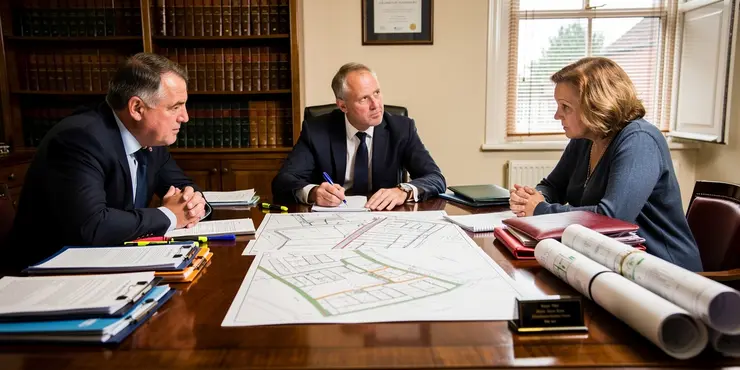
In the UK, boundary disputes can arise when there is a disagreement between property owners regarding the precise divide between two parcels of land. Such disputes can be time-consuming and stressful, but there are several methods to resolve them.
Mediation and Negotiation
Mediation and negotiation are non-confrontational approaches that can lead to a satisfactory resolution for both parties. In mediation, an impartial third party, known as a mediator, assists both sides in reaching a mutual agreement. This process is often faster and less costly than going to court. Negotiation, on the other hand, occurs directly between the disputing parties and aims to reach a compromise through open dialogue and cooperation.
Involving a Chartered Surveyor
Hiring a chartered surveyor to carry out a detailed assessment of the boundary can provide a professional opinion based on historical deeds, maps, and physical evidence. Surveyors use their expertise to measure land and define boundary lines, which can help clarify the specifics of the dispute. A surveyor’s report can serve as a powerful tool during negotiations or in court, if necessary.
Resolution Through Title Deeds
Examining title deeds and historical documentation can clarify where a boundary lies. Land Registry documents, alongside plans stored by the Title Registry, can offer evidence related to boundary definitions. Reviewing these documents with legal assistance can shed light on ownership and extent of land as registered under the Land Registry.
Legal Proceedings
If informal tactics do not resolve the issue, legal action may be required. This involves taking the dispute to court, where a judge can rule based on evidence presented by both parties. While this is often considered a last resort due to the costs and time involved, it can provide a legally binding decision. Solicitors with expertise in property law can represent and guide parties through the complexities of legal proceedings.
Adverse Possession
In some cases, a party may claim ownership of disputed land through adverse possession, which occurs when someone has occupied the land for a continuous period, typically 10 years, without the legal owner’s consent. Successful claims of adverse possession can lead to the occupier being registered as the legal owner of the land. To pursue this avenue, specific legal criteria must be met, and professional legal advice is recommended.
Alternative Dispute Resolution (ADR)
Alternative Dispute Resolution encompasses various techniques beyond mediation, such as arbitration. In arbitration, an independent arbitrator makes a binding decision after reviewing the evidence and arguments from both parties. ADR methods can be advantageous in saving time and legal fees compared to court proceedings while providing an authoritative resolution.
Ways to Solve Fights Over Land Borders
In the UK, people sometimes fight over where the line between two pieces of land is. These fights can take a lot of time and be very stressful. But there are ways to solve them.
Talking and Working Together
Mediation and negotiation are friendly ways to solve problems. In mediation, a neutral helper, called a mediator, helps both sides agree on a solution. This is quicker and cheaper than going to court. Negotiation means the people involved talk directly to each other to find a solution by working together and sharing ideas.
Getting Help from a Property Expert
You can hire a chartered surveyor to look at the land carefully. They are experts who check land lines using old records and maps. Their report can help decide the border and can be useful in talks or court, if needed.
Checking Official Land Papers
Looking at land deeds and old papers can show where the border is. Documents from the Land Registry show land and who owns it. A lawyer can help understand these papers better.
Going to Court
If talking doesn’t work, you might have to go to court. A judge will make a decision based on proof from both sides. This can be expensive and take time, so it's often the last choice. Lawyers who know about property law can help guide you.
Claiming Land by Living on It
Sometimes, if someone lives on a piece of land for 10 years without the owner's permission, they can claim it as theirs. This is called adverse possession. It needs special rules to be followed, and a lawyer's help is a good idea.
Other Ways to Solve Disputes
Alternative Dispute Resolution includes other methods like arbitration. In arbitration, an impartial person makes a decision after hearing from both sides. These ways can be faster and cheaper than court, giving a firm decision.
Frequently Asked Questions
What is a boundary dispute?
A boundary dispute arises when neighboring property owners disagree on the location of their property lines.
How can I determine the legal boundary of my property?
The legal boundary can often be determined by examining the property's deed, title, or land survey, which outlines property lines.
What role does a land surveyor play in resolving boundary disputes?
A land surveyor can provide a professional assessment of where the legal boundaries of a property should be based on historical records and physical evidence.
Can I resolve a boundary dispute without going to court?
Yes, many boundary disputes can be resolved through negotiation, mediation, or arbitration without the need for court intervention.
What is mediation in the context of boundary disputes?
Mediation is a process where a neutral third party helps the disputing parties reach an amicable agreement regarding their boundary dispute.
Is hiring a lawyer necessary for a boundary dispute?
While not always necessary, hiring a lawyer can be beneficial in providing legal advice and representation, especially if the dispute may lead to litigation.
What documentation is typically reviewed in a boundary dispute?
Documentation such as deeds, property surveys, historical maps, and possibly aerial photos are reviewed to determine property boundaries.
What is adverse possession in relation to boundary disputes?
Adverse possession is a legal principle where someone may claim ownership of land they've continuously used and maintained over a certain period, contrary to the interests of the legal owner.
How does an easement affect a boundary dispute?
An easement grants someone the right to use or access parts of a property for a specific purpose, which can be a point of negotiation in boundary disputes.
What should I do if my neighbor starts building on what I believe is my property?
Promptly address the issue by discussing it with your neighbor, reviewing legal documents, and possibly hiring a surveyor or attorney to clarify the property line.
What is mediation's success rate in boundary disputes?
Mediation has a high success rate in resolving boundary disputes as it encourages cooperative problem-solving and can preserve neighborly relations.
How can fencing impact a boundary dispute?
Fences might suggest an assumed boundary, but they don't legally determine property lines. They can complicate disputes if placed inaccurately.
When is litigation necessary in a boundary dispute?
Litigation may be necessary when negotiations and other alternative dispute resolution methods fail to resolve the issue.
What government agencies can assist with boundary disputes?
Local land registries or recorder’s offices can assist with historical and legal documentation; however, they don't offer mediation services.
Can property line changes be legally adjusted?
Yes, property lines can be adjusted with mutual agreement of the affected landowners and proper legal documentation.
How does my state's law impact boundary disputes?
State laws can vary greatly, affecting how disputes are resolved, the time required for adverse possession claims, and other critical aspects.
Can title insurance help with boundary disputes?
Title insurance might protect against certain boundary-related issues, but specifics depend on the policy and the nature of the dispute.
What is the statute of limitations for claiming adverse possession?
The statute of limitations for adverse possession varies by state, typically ranging from 5 to 30 years.
Will changing a boundary require local government involvement?
Yes, changing a boundary often requires approval from local zoning or land use authorities to ensure compliance with local regulations.
What initial steps should I take if I suspect a boundary dispute?
Review property documents, have a survey conducted, and attempt to discuss the issue directly with your neighbor before seeking legal options.
What is a boundary fight?
A boundary fight is when people argue about where one person's land ends and another person's land begins.
Think of a boundary like an invisible line between two gardens.
If you have a garden next to your friend's garden, the boundary tells you where your garden stops and your friend's garden starts.
Sometimes, people disagree about where this line should be. This is called a boundary fight.
To solve a boundary fight, people can use tools like maps to see where the line is.
They can also talk to someone who knows a lot about boundaries, like a surveyor, to help them decide.
A boundary dispute happens when people who own land next to each other do not agree about where their land stops and the other person's land starts.
How do I find out where my property line is?
You can find out where your land ends by looking at some important papers. These are the property's deed, the title, or a land survey. They show where your property lines are.
Ask an adult for help if you need it. You can also use tools like online maps to see your property's borders.
How does a land surveyor help fix boundary arguments?
A land surveyor helps people figure out where property lines are. They use tools and measurements to find out where one person's land ends and another person's land starts. This is important when people argue about who owns which part of land.
If two neighbours think they own the same piece of land, a land surveyor can help. They use special tools to measure the land. They look at maps and records to make sure everything is right. Then, they can show the neighbours the correct property lines.
People can use the surveyor's report to understand their land better. It can also help them talk to each other and solve problems calmly.
If you find it hard to read, you can ask someone to read it out loud to you. Using pictures and diagrams can also make it easier to understand. Don't be afraid to ask questions if you need help!
A land surveyor is a person who helps find out where the edges of a piece of land are. They look at old records and things they can see on the land.
Can I sort out a border problem without going to court?
Yes, people can often fix problems about property lines by talking, using a helper to find a solution, or having someone decide for them, without going to court.
What is mediation for solving boundary arguments?
Mediation is a way to help people who are having arguments about their land. A mediator is a person who helps both sides talk and find a solution. The mediator listens and makes sure everyone gets a turn to speak.
Helpful tools to use during mediation:
- Checklist: Write down what you want to say.
- Pictures: Use pictures to show what you mean.
- Calm words: Use kind words to talk about the problem.
Mediation can help people agree and make things better without fighting.
Mediation is a way to solve a problem. A neutral person helps people who disagree about their property lines to find a friendly solution.
Do I need a lawyer for a land border problem?
Sometimes, you might need a lawyer to help you. A lawyer can give you advice and speak for you in legal matters. This is very helpful if you think you might go to court.
If reading is hard, you can try using text-to-speech tools. These tools can read the words out loud for you.
What papers do we look at when there is a boundary problem?
Sometimes neighbors disagree about where one yard ends and another begins. To figure this out, we look at important papers. These papers can show us the lines and marks that tell us where each yard should be.
Here are some things that might help you understand better:
- Property Map: This is a picture that shows where the land is and its borders.
- Deeds: These are papers that say who owns the land.
- Surveys: Experts measure the land and draw lines on a map.
If you find these things a bit hard, it's okay to ask someone to explain them. You can also use tools like a magnifying glass to see pictures clearly or ask for help from a friend or a family member.
To find out where the property lines are, people look at important papers. These papers can be:
- Deeds: These are like the birth certificates for property.
- Property surveys: These are special maps showing where the land starts and ends.
- Historical maps: Old maps help see what the land looked like before.
- Aerial photos: Pictures taken from the sky can show the land too.
For help, you can use a magnifying glass to see papers better. You can also ask someone to explain things you don’t understand.
What is adverse possession in relation to boundary disputes?
Adverse possession is a way of owning land that is not yours by using it for a long time.
Sometimes a person uses land near their home, like a garden or driveway, even if it belongs to someone else. If they use it for many years without the real owner's permission, they can ask to own it.
This can happen in disputes over property borders. People may not agree on where the land boundary is, so they might argue who owns what part of the land.
If you have trouble understanding, you can ask someone to explain it to you, draw a picture, or use blocks to show the land. Also, there are videos that explain things simply online.
Adverse possession is a rule in law. It means you can own land if you take care of it and use it for many years, even if someone else owns it.
What is an easement and how does it change a boundary argument?
An easement is a rule that lets someone use land that is not theirs. It could be about a path or driveway.
When people disagree about where one land ends and another begins, this can be called a boundary dispute.
An easement might help solve this argument. It explains if someone else can use the land, like a shared path.
To help understand, you can look at maps, ask a grown-up, or even use drawings to see the land shares better.
An easement is like giving someone permission to use part of your land. It is for a special reason. People might talk about easements when they have disagreements about land borders.
What do I do if my neighbor builds on my land?
1. Talk to your neighbor. Ask them why they are building there.
2. Check your property papers. Make sure that part of land is yours.
3. You can use tools like maps or ask someone for help. A grown-up, like a parent or a friend, can help you check.
4. If you're still not sure or need more help, you can talk to a person who knows about land and houses. They are called a "surveyor" or a "lawyer."
Talk to your neighbor about the problem. Look at any papers that talk about the land. You might need to get help from a surveyor or a lawyer to know where the border line is.
How often does mediation work in boundary disputes?
Mediation helps people solve problems about boundaries. It works well because it helps neighbors work together and stay friends.
How does a fence affect a boundary argument?
A fence can show where one person's land ends and another person's land starts. If people do not agree where the fence should be, they might argue about it. A fence can help solve the argument.
Here are some tips to help:
- Use a map to see where the land ends and starts.
- Talk to your neighbor about the fence.
- Ask someone like a land surveyor to measure the land.
Fences show where you think the edge of your land is. But they don't say for sure where your land ends. If a fence is in the wrong place, it can cause problems with your neighbors.
When do you need to go to court in a land fight?
Sometimes people argue about land borders. This is called a boundary dispute. You might need to go to court if:
- You and the other person can’t agree about where the border is.
- You have tried talking but nothing works.
- You want a judge to decide what is right.
Before going to court, you could try:
- Talking calmly to the other person.
- Using a mediator to help solve the argument. A mediator is a person who helps people agree.
- Looking at maps or documents that show the border.
Sometimes, people can't agree on a solution to a problem. If talking and trying other ways doesn't work, they might need to go to court to solve it.
Who can help with fights about land borders?
Land offices can help with finding old papers about land and the law. But they can't help with sorting out arguments.
Can you change where the property line is?
Yes, you can change where your property's borders are. You need to agree with your neighbors and have the right papers signed.
How do state laws affect boundary arguments?
When people disagree about where their property ends, it is called a boundary argument. The laws in your state tell you how to handle these arguments. These laws can help decide who owns what part of the land.
If you have a boundary argument, you might need help from a lawyer. They know the laws and can explain them to you.
Maps and property papers can also help show where the boundary should be. Use these to understand which land is yours.
If you find reading hard, try asking someone to read with you or use a reading tool that can speak the words out loud.
Each state has different rules. These rules change how problems are fixed, how long it takes to make a claim when using someone else's property, and many other important things.
Can title insurance help with boundary fights?
Sometimes people argue about where the line is between their properties. This is called a boundary fight. Title insurance is a kind of protection. It might help with these problems.
If you have a boundary fight, talk to your insurance company. They can explain what title insurance covers.
If you need help understanding, ask a friend or family member. They can help you read and understand the information.
Title insurance can help if there are problems with the property lines. But it depends on the type of insurance you have and what the problem is.
How long do you have to claim land by living on it?
If you live on land that isn't yours, you might be able to claim it. This is called "adverse possession." You have to live there for a certain number of years.
Check local rules to see how many years it takes. You can also ask someone for help or use online tools to learn more.
The time you need to wait to own land by using it, called "adverse possession," is different in each state. It can be from 5 years to 30 years, depending on where you live.
Do I need to ask the local government if I want to change a boundary?
When you change a boundary, you might need permission from the local government. A boundary is a line that shows where your land ends and someone else's begins.
Here are some tips to help you:
- Ask a grown-up to help you understand.
- Talk to someone at your local government office. They can give you advice.
- Look at a map to see where your boundary is now.
Yes, if you want to change a boundary, you usually need permission from local officers. They check that you are following local rules.
What should I do first if I think there is a problem with property lines?
Here are simple steps you can follow:
- Stay calm and talk to your neighbor. Ask questions and listen to their side.
- Check your house papers, like the land map, to see where the lines are.
- If you are not sure, get help. You can talk to a land surveyor. They can measure the property.
- Use a notebook or phone to write down any important details.
If you need support, ask a friend or family member to help. You can also draw a simple map to understand better.
Check the property papers, have someone check the land, and try to talk to your neighbor about the problem before thinking about legal action.
Useful Links
- Ergsy carfully checks the information in the videos we provide here.
- Videos shown by Youtube after a video has completed, have NOT been reviewed by ERGSY.
- To view, click the arrow in centre of video.
- Most of the videos you find here will have subtitles and/or closed captions available.
- You may need to turn these on, and choose your preferred language.
- Go to the video you'd like to watch.
- If closed captions (CC) are available, settings will be visible on the bottom right of the video player.
- To turn on Captions, click settings .
- To turn off Captions, click settings again.
More Items From Ergsy search
-
How can a boundary dispute be resolved?
Relevance: 100%
-
How long do boundary disputes typically take to resolve?
Relevance: 96%
-
Is mediation a good option for resolving boundary disputes?
Relevance: 94%
-
Are boundary disputes common?
Relevance: 90%
-
What is a boundary dispute?
Relevance: 90%
-
Can boundary disputes affect property values?
Relevance: 82%
-
What is a boundary dispute between home owners?
Relevance: 82%
-
What role do property deeds play in boundary disputes?
Relevance: 78%
-
What is the role of local government in boundary disputes?
Relevance: 78%
-
Can boundary disputes be insured against?
Relevance: 78%
-
What is encroachment in terms of boundary disputes?
Relevance: 78%
-
What is an easement and how can it relate to boundary disputes?
Relevance: 71%
-
How important is a property survey in preventing boundary disputes?
Relevance: 68%
-
What is adverse possession in the context of boundary disputes?
Relevance: 65%
-
How can valuation disputes in buyouts be resolved?
Relevance: 60%
-
What is a title dispute?
Relevance: 58%
-
What is the role of a company’s articles of association in resolving disputes?
Relevance: 58%
-
How can disputes over banking fees be resolved effectively?
Relevance: 56%
-
Is mediation an option to resolve eviction disputes?
Relevance: 55%
-
How does a buy-sell agreement help in resolving disputes?
Relevance: 55%
-
What evidence can be used in a boundary dispute?
Relevance: 54%
-
What role does a shareholder agreement play in resolving disputes?
Relevance: 54%
-
What types of disputes are involved in property litigation?
Relevance: 54%
-
Is arbitration a viable option for resolving director disputes?
Relevance: 53%
-
When should you consult a lawyer about a boundary dispute?
Relevance: 51%
-
Is mediation available for land registration disputes?
Relevance: 50%
-
How can a shareholder dispute be resolved?
Relevance: 48%
-
Shareholder Disputes
Relevance: 47%
-
What role does a property litigator play in resolving disputes?
Relevance: 46%
-
Company Director Disputes
Relevance: 46%
-
How can a director be removed if a dispute cannot be resolved?
Relevance: 46%
-
How are landlord-tenant issues resolved in property litigation?
Relevance: 44%
-
What happens if a neighbor builds a fence on my property?
Relevance: 44%
-
Can mediation be used to resolve a professional negligence dispute?
Relevance: 42%
-
How are disputes between landlords and tenants handled?
Relevance: 42%
-
Why might someone need a property litigator?
Relevance: 41%
-
Are there any mediation services for resolving disputes over security cameras?
Relevance: 41%
-
What are some common outcomes of property litigation?
Relevance: 41%
-
What role does the Information Commissioner’s Office (ICO) play in these disputes?
Relevance: 40%
-
What is the role of corporate governance in preventing disputes?
Relevance: 40%


