

Speak To An Expert
Get clear, personalised advice for your situation.
Jot down a few questions to make the most of your conversation.
More Items From Ergsy search
-

How do legal fees usually work in medical negligence cases?
Relevance: 100%
-

Do all banks have the same fee structures?
Relevance: 64%
-

Are there specific banking services more prone to opaque fee structures?
Relevance: 63%
-

Is there a fee to bring a case to the tribunal?
Relevance: 59%
-

Are there any additional fees for obtaining a digital license?
Relevance: 53%
-

What can I do if I am the victim of medical or clinical negligence?
Relevance: 53%
-

How can banks improve transparency regarding their fees?
Relevance: 51%
-
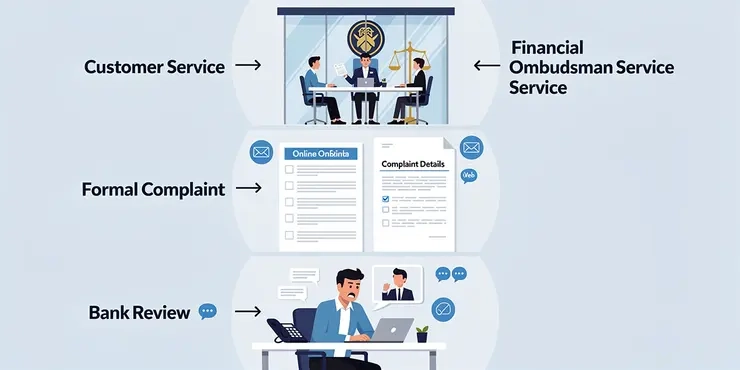
How can disputes over banking fees be resolved effectively?
Relevance: 50%
-

What happens if I don't pay my TV license fee?
Relevance: 50%
-

Calls for Greater Transparency in Banking Fees as Complaints Rise
Relevance: 50%

-

What is the impact of a professional negligence claim on a professional's career?
Relevance: 50%
-

Are there fees associated with Stocks & Shares ISAs?
Relevance: 49%
-

Why are some banking fees unexpectedly high?
Relevance: 49%
-

What role do regulatory bodies play in fee transparency?
Relevance: 49%
-

Are there any fees associated with obtaining my medical records?
Relevance: 49%
-

Are there any hidden fees I should be aware of?
Relevance: 48%
-

Why is there a call for greater transparency in banking fees?
Relevance: 48%
-

How can government policies influence transparency in banking fees?
Relevance: 47%
-

Do online banks have lower fees than traditional banks?
Relevance: 46%
-

Are there any hidden fees with Monzo or Revolut?
Relevance: 46%
-

What role do customer service representatives play in fee transparency?
Relevance: 46%
-

Is there a time limit for bringing a medical negligence claim?
Relevance: 46%
-

What initiatives are in place to address banking fee transparency?
Relevance: 45%
-

How does technology help in enhancing transparency in banking fees?
Relevance: 45%
-

How is causation established in professional negligence?
Relevance: 44%
-

Are professionals insured against negligence claims?
Relevance: 43%
-

What feedback do customers give regarding banking fees?
Relevance: 42%
-

Is a mistake always considered professional negligence?
Relevance: 42%
-

Are there any fees to claim money back?
Relevance: 42%
-

What fees should I avoid when choosing a new bank?
Relevance: 42%
-

Are there any fees associated with balance transfers?
Relevance: 41%
-

Is CBD legal?
Relevance: 41%
-

What are some examples of hidden fees in banking?
Relevance: 41%
-

What are the elements of a professional negligence claim?
Relevance: 41%
-

Can customers dispute unexpected banking fees?
Relevance: 41%
-

How does professional negligence differ from ordinary negligence?
Relevance: 41%
-

Can a professional negligence claim be filed against a company?
Relevance: 40%
-

Is ketamine legal?
Relevance: 40%
-

Are there any fees to obtain my police records?
Relevance: 40%
-

How can consumers protect themselves from hidden banking fees?
Relevance: 40%
How medical negligence legal fees are usually arranged
In the UK, medical negligence claims are often handled on a “no win, no fee” basis. This is usually called a Conditional Fee Agreement, or CFA. It means you should not have to pay your solicitor’s legal fees if the claim is unsuccessful, provided the agreement covers that outcome.
If the case is successful, the solicitor will usually take a success fee from your compensation. This fee is capped by law in many personal injury cases, including medical negligence claims. The exact percentage should be explained clearly before you agree to proceed.
What a no win, no fee agreement covers
A no win, no fee agreement usually covers the solicitor’s basic legal fees. It does not always cover every possible cost connected to the claim. For example, there may be extra expenses for medical reports, court fees, and expert evidence.
Many solicitors arrange insurance to protect you against these extra costs. This is often called After the Event, or ATE, insurance. If the case is lost, this can help cover the other side’s costs and some disbursements, depending on the policy terms.
What happens if the case is unsuccessful
If your claim does not succeed, you will usually not pay your solicitor’s main fees under a CFA. However, you should always check whether any exceptions apply. The solicitor should explain clearly what costs, if any, you might still owe.
This is one reason why it is important to ask questions before signing anything. You should know exactly what is covered, what is not, and whether insurance is in place. A good solicitor will give you this information in writing.
Alternative ways legal fees may be charged
Some medical negligence cases are funded privately, which means you pay hourly rates or an agreed fixed fee. This is less common for claimants, because costs can rise quickly in complex cases. It may be suitable in some situations, especially if you want more direct control over billing.
Legal aid is very limited for medical negligence claims in England and Wales. It is generally only available in rare circumstances, such as certain cases involving children with severe neurological injury. Most people therefore rely on conditional fee funding or private arrangements.
What to ask a solicitor before you start
Before instructing a solicitor, ask how their fees work in plain English. Find out whether there is a success fee, what percentage it is, and whether you may need to pay any disbursements. You should also ask about insurance and what happens if the case is lost.
It is sensible to compare more than one firm and to read the agreement carefully. Medical negligence claims can be stressful, so clarity about costs can make the process much easier. A reputable solicitor will be happy to explain the funding terms clearly.
Frequently Asked Questions
How do legal fees usually work in medical negligence cases?
They are often handled on a conditional fee or contingency-style basis, meaning you may pay nothing upfront and the lawyer is paid only if the case succeeds, though the exact arrangement varies by jurisdiction and firm.
Will I have to pay anything at the start of a medical negligence claim?
Sometimes there are no upfront legal fees, but you may still be responsible for some case-related expenses depending on the funding agreement and local rules.
What is a no win, no fee agreement?
A no win, no fee agreement usually means your solicitor does not charge their main legal fee if the case is unsuccessful, although there may still be other costs to consider.
If I win my medical negligence case, how are the fees paid?
If you win, the legal fees are typically paid from the compensation award, and in some cases the losing side may also pay some of your legal costs.
If I lose my case, will I owe legal fees?
It depends on the fee agreement and any insurance or protections in place; in many no win, no fee arrangements, the solicitor's main fee is not charged if the case fails, but you may still face certain expenses.
What other costs besides solicitor fees might I have to pay?
Other costs can include medical reports, court fees, expert witnesses, and administrative expenses, which may be handled separately from the solicitor's own charges.
What is a success fee in a medical negligence case?
A success fee is an extra fee that may be charged if the case succeeds, reflecting the risk the solicitor took in funding the case.
Can I be charged a percentage of my compensation?
Yes, in some funding arrangements the lawyer's fee or success fee may be taken as a percentage of the compensation, subject to legal limits and disclosure requirements.
Do medical negligence lawyers offer free initial consultations?
Many do offer a free first consultation so they can assess whether you may have a claim and explain the possible fee structure.
How do I know if a fee agreement is fair?
A fair agreement should clearly explain what you pay, when you pay it, what happens if you lose, and which costs are included or excluded.
Are legal fees the same in every medical negligence case?
No, fees can vary based on the complexity of the case, the evidence needed, the time involved, and the lawyer's pricing model.
Does the strength of my case affect legal fees?
Yes, stronger cases may be more likely to be taken on a no win, no fee basis, while weaker or more complex cases may require different funding arrangements.
Can I use legal aid for a medical negligence claim?
Legal aid is generally limited in medical negligence cases and availability depends on the country and the details of the claim.
What happens if my case settles early?
If a case settles early, legal fees may be lower because less work and fewer expert reports are needed, but the final amount still depends on the agreement.
Will I be told about costs as the case goes on?
Yes, your lawyer should keep you informed about likely costs, changes in funding, and any expenses that arise during the case.
Can I switch lawyers if I do not like the fee arrangement?
Usually yes, but there may be costs or practical issues involved, so it is important to review your current agreement before switching.
Do I need to pay the other side's costs if I lose?
In some cases you might, but this risk is often addressed through insurance or specific fee agreements; the rule depends on the jurisdiction and case details.
What is after-the-event insurance?
After-the-event insurance is a policy that may help cover the risk of paying the other side's costs and certain expenses if the claim does not succeed.
How can I avoid surprises with legal fees?
Ask for a written costs agreement, request examples of likely total costs, and make sure you understand what is included before you proceed.
Should I choose a lawyer based only on the cheapest fee?
Not necessarily, because experience, expertise in medical negligence, and the quality of case preparation can be just as important as price.

Useful Linksxxx
This website offers general information and is not a substitute for professional advice.
Always seek guidance from qualified professionals.
If you have any medical concerns or need urgent help, contact a healthcare professional or emergency services immediately.
Some of this content was generated with AI assistance. We've done our best to keep it accurate, helpful, and human-friendly.
- Ergsy carefully checks the information in the videos we provide here.
- Videos shown by Youtube after a video has completed, have NOT been reviewed by ERGSY.
- To view, click the arrow in centre of video.
- Most of the videos you find here will have subtitles and/or closed captions available.
- You may need to turn these on, and choose your preferred language.
- Go to the video you'd like to watch.
- If closed captions (CC) are available, settings will be visible on the bottom right of the video player.
- To turn on Captions, click settings.
- To turn off Captions, click settings again.
More Items From Ergsy search
-
How do legal fees usually work in medical negligence cases?
Relevance: 100%
-
Do all banks have the same fee structures?
Relevance: 64%
-
Are there specific banking services more prone to opaque fee structures?
Relevance: 63%
-
Is there a fee to bring a case to the tribunal?
Relevance: 59%
-
Are there any additional fees for obtaining a digital license?
Relevance: 53%
-
What can I do if I am the victim of medical or clinical negligence?
Relevance: 53%
-
How can banks improve transparency regarding their fees?
Relevance: 51%
-
How can disputes over banking fees be resolved effectively?
Relevance: 50%
-
What happens if I don't pay my TV license fee?
Relevance: 50%
-
Calls for Greater Transparency in Banking Fees as Complaints Rise
Relevance: 50%
-
What is the impact of a professional negligence claim on a professional's career?
Relevance: 50%
-
Are there fees associated with Stocks & Shares ISAs?
Relevance: 49%
-
Why are some banking fees unexpectedly high?
Relevance: 49%
-
What role do regulatory bodies play in fee transparency?
Relevance: 49%
-
Are there any fees associated with obtaining my medical records?
Relevance: 49%
-
Are there any hidden fees I should be aware of?
Relevance: 48%
-
Why is there a call for greater transparency in banking fees?
Relevance: 48%
-
How can government policies influence transparency in banking fees?
Relevance: 47%
-
Do online banks have lower fees than traditional banks?
Relevance: 46%
-
Are there any hidden fees with Monzo or Revolut?
Relevance: 46%
-
What role do customer service representatives play in fee transparency?
Relevance: 46%
-
Is there a time limit for bringing a medical negligence claim?
Relevance: 46%
-
What initiatives are in place to address banking fee transparency?
Relevance: 45%
-
How does technology help in enhancing transparency in banking fees?
Relevance: 45%
-
How is causation established in professional negligence?
Relevance: 44%
-
Are professionals insured against negligence claims?
Relevance: 43%
-
What feedback do customers give regarding banking fees?
Relevance: 42%
-
Is a mistake always considered professional negligence?
Relevance: 42%
-
Are there any fees to claim money back?
Relevance: 42%
-
What fees should I avoid when choosing a new bank?
Relevance: 42%
-
Are there any fees associated with balance transfers?
Relevance: 41%
-
Is CBD legal?
Relevance: 41%
-
What are some examples of hidden fees in banking?
Relevance: 41%
-
What are the elements of a professional negligence claim?
Relevance: 41%
-
Can customers dispute unexpected banking fees?
Relevance: 41%
-
How does professional negligence differ from ordinary negligence?
Relevance: 41%
-
Can a professional negligence claim be filed against a company?
Relevance: 40%
-
Is ketamine legal?
Relevance: 40%
-
Are there any fees to obtain my police records?
Relevance: 40%
-
How can consumers protect themselves from hidden banking fees?
Relevance: 40%