

Speak To An Expert
Get clear, personalised advice for your situation.
Jot down a few questions to make the most of your conversation.
More Items From Ergsy search
-
What is the role of immunotherapy in prostate cancer treatment?
Relevance: 100%
-
What is Prostate Cancer?
Relevance: 100%
-

Treating prostate cancer
Relevance: 100%
-
Living with prostate cancer
Relevance: 99%
-

Can prostate cancer recur after treatment?
Relevance: 98%
-

How is prostate cancer treated?
Relevance: 97%
-
Breakthrough in Cancer Treatment Offers Hope for Prostate Cancer Patients
Relevance: 97%
-
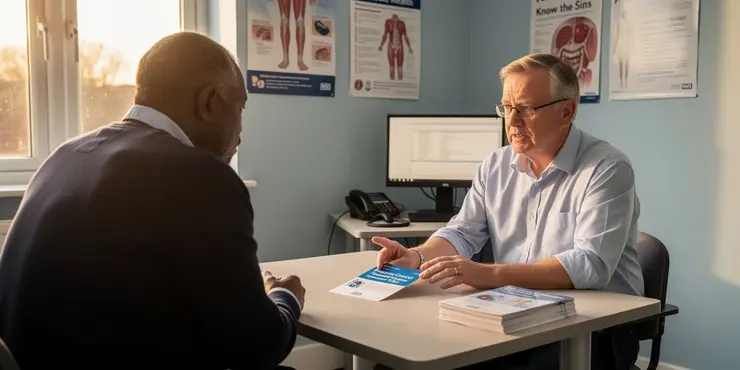
Are there clinical trials available for prostate cancer treatment?
Relevance: 97%
-

Is BPH the same as prostate cancer?
Relevance: 96%
-

Can lifestyle changes complement prostate cancer treatment?
Relevance: 96%

-

What is the purpose of a bone scan in prostate cancer treatment?
Relevance: 95%
-

What factors determine the treatment plan for prostate cancer?
Relevance: 95%
-
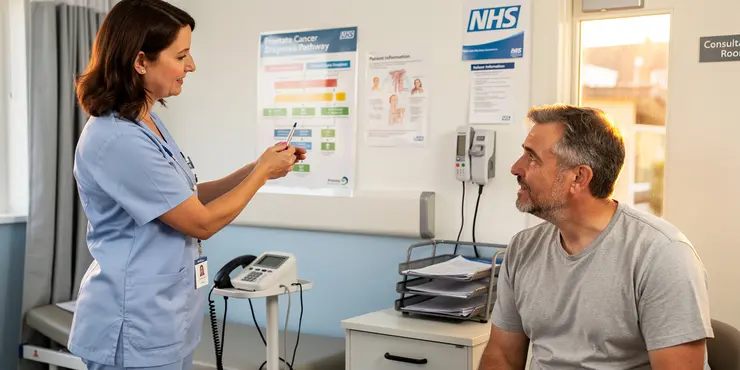
Prostate cancer diagnosis and tests
Relevance: 95%
-

Where can I find online resources for prostate cancer treatments on the NHS?
Relevance: 94%
-
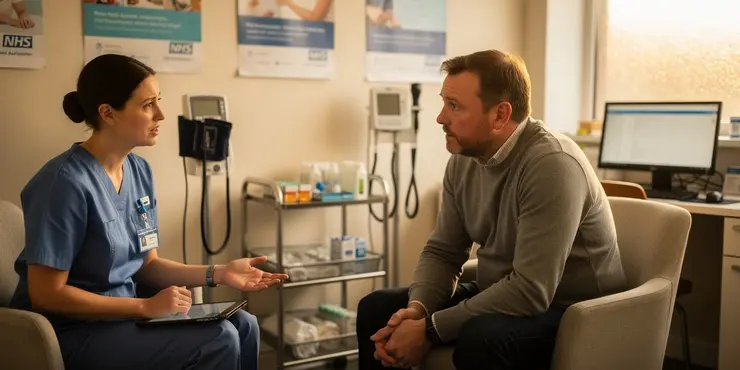
When is chemotherapy used for prostate cancer?
Relevance: 94%
-
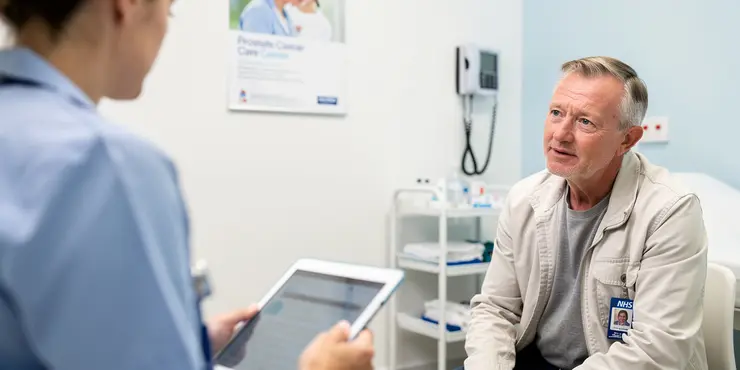
What is active surveillance in prostate cancer treatment?
Relevance: 94%
-

How is advanced prostate cancer treated?
Relevance: 93%
-
Prostate cancer symptoms - detecting them early
Relevance: 92%
-
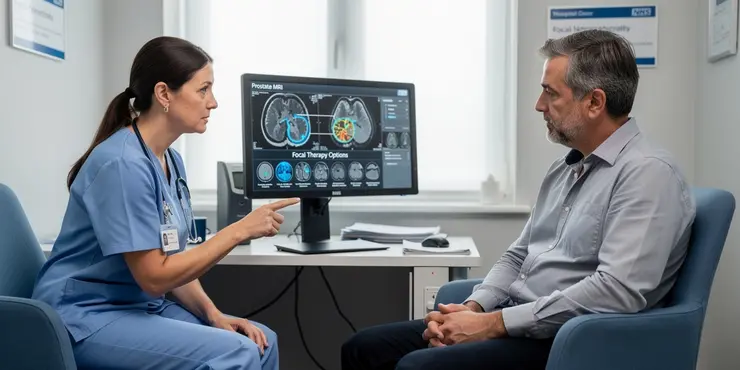
Is focal therapy an option for prostate cancer?
Relevance: 92%
-
Can Abiraterone be used for early-stage prostate cancer?
Relevance: 92%
-
Why do men get prostate cancer?
Relevance: 92%
-
Does Abiraterone cure prostate cancer?
Relevance: 91%
-
Am I more at risk of prostate cancer?
Relevance: 90%
-
How does surgery treat prostate cancer?
Relevance: 90%
-
How does cryotherapy work in treating prostate cancer?
Relevance: 90%
-

Is there an NHS app for managing prostate cancer care?
Relevance: 90%
-
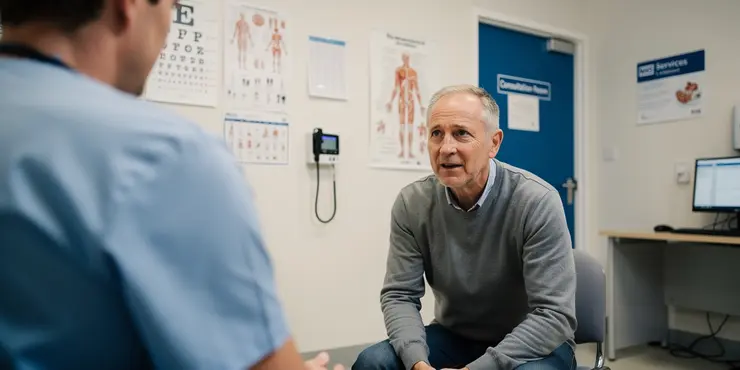
Can prostate cancer be treated with targeted therapy?
Relevance: 90%
-

Does BPH increase the risk of prostate cancer?
Relevance: 89%
-
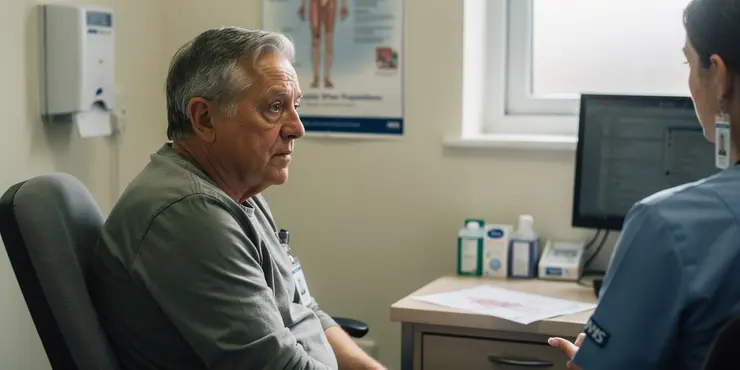
Hormone Therapy for prostate cancer
Relevance: 89%
-

Are there online support services for prostate cancer patients on the NHS?
Relevance: 88%
-

Can I access prostate cancer information online through the NHS?
Relevance: 88%
-

How does hormone therapy help in treating prostate cancer?
Relevance: 88%
-

Can eating vegetables and probiotics help slow prostate cancer?
Relevance: 86%
-
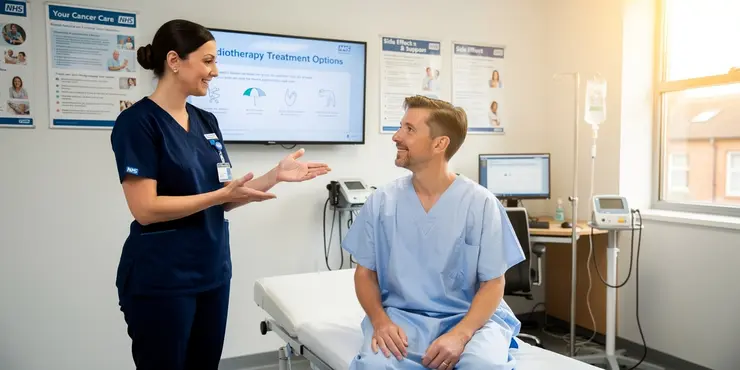
Royal Berkshire NHS Foundation Trust: Radiotherapy for prostate cancer
Relevance: 86%
-

What role do probiotics play in managing prostate cancer?
Relevance: 86%
-

Can eating vegetables help slow the progression of prostate cancer?
Relevance: 86%
-

Are there specific vegetables that are more effective against prostate cancer?
Relevance: 85%
-

What type of research supports the role of diet in prostate cancer management?
Relevance: 84%
-

Can I consult with NHS doctors online for prostate cancer?
Relevance: 83%
-

What are the side effects of prostate cancer surgery?
Relevance: 83%
Understanding Prostate Cancer Treatment
Prostate cancer is a significant health concern for men, particularly those over the age of 50. When it comes to treating prostate cancer, several options are available depending on the stage of the cancer, the patient's overall health, and personal preferences. It is essential for patients in the UK to consult with their healthcare providers to understand the best treatment plan for their specific situation.
Surgery
Surgery is a common treatment for prostate cancer and is typically considered for early-stage cancer that has not spread beyond the prostate gland. The most common surgical procedure is a radical prostatectomy, which involves the removal of the prostate gland and some surrounding tissue. Advances in surgical techniques, such as robot-assisted surgery, have improved outcomes and reduced recovery times for many patients.
Radiotherapy
Radiotherapy uses targeted radiation to kill cancer cells and shrink tumors. It can be used as a primary treatment or in conjunction with other treatments. There are two main types of radiotherapy: external beam radiotherapy, which directs radiation beams at the prostate from outside the body, and brachytherapy, where radioactive seeds are implanted directly into the prostate. Radiotherapy is often recommended for patients who are not candidates for surgery or wish to avoid it.
Hormone Therapy
Hormone therapy is used to reduce or stop the production of male hormones that fuel prostate cancer growth. It is often used when cancer has spread beyond the prostate or in conjunction with other treatments. Options include medication that blocks testosterone or surgery to remove the testicles, which produce most of the body's testosterone.
Active Surveillance
For some men with slow-growing prostate cancer, active surveillance may be an option. This approach involves regular monitoring of the cancer through PSA tests, digital rectal exams, and biopsies. Treatment is only initiated if there are signs that the cancer is growing or becoming more aggressive. This option is often suitable for older men or those with other health conditions where immediate treatment may not be necessary.
Chemotherapy
While not as commonly used in the early stages of prostate cancer, chemotherapy can be an option for more advanced cancer or when the cancer has spread beyond the prostate and is not responding to hormone therapy. Chemotherapy involves the use of drugs to target and kill rapidly dividing cancer cells.
Accessing Treatment in the UK
In the UK, prostate cancer treatment is available through the National Health Service (NHS) as well as private healthcare providers. It is important for patients to discuss with their GP or specialist to understand the treatment options available, seek second opinions if necessary, and make informed decisions about their care.
Conclusion
Deciding on the appropriate treatment for prostate cancer is a personal decision that should be made with the guidance of healthcare professionals. Understanding the benefits, risks, and implications of each treatment option is crucial for patients to make the best choice for their health and quality of life.
Understanding Prostate Cancer Treatment
Prostate cancer is a health issue for men, especially those over 50 years old. There are different treatments for prostate cancer. The choice depends on how serious the cancer is, the man's health, and what he prefers. Men in the UK should talk to their doctors to find out the best treatment for them.
Surgery
Surgery is a common way to treat prostate cancer, especially when the cancer is only in the prostate gland. The surgery usually involves removing the prostate gland and some nearby tissue. New surgery methods, like robot-assisted surgery, help patients recover faster and better.
Radiotherapy
Radiotherapy uses radiation to kill cancer cells. It can be a main treatment or used with other treatments. There are two kinds: one uses beams aimed at the prostate from outside the body, and the other puts tiny radioactive seeds inside the prostate. It's a good option for those who can't or don't want surgery.
Hormone Therapy
Hormone therapy reduces or stops male hormones that help cancer grow. It's used when cancer has spread or with other treatments. This can involve taking medicine or having surgery that stops hormone production.
Active Surveillance
Some men have slow-growing cancer. They can choose active surveillance, which means regular checks and tests. Treatment starts only if the cancer grows. This can be good for older men or those with other health problems.
Chemotherapy
Chemotherapy is not often used for early prostate cancer. It's more for cancer that has spread and doesn't respond to hormone therapy. It uses drugs to kill cancer cells.
Accessing Treatment in the UK
In the UK, you can get prostate cancer treatment through the NHS or private healthcare. It's important to talk with your doctor about your options, get second opinions if needed, and decide what's best for you.
Conclusion
Choosing a treatment for prostate cancer is personal. It's important to talk with healthcare professionals about the benefits and risks of each option to make the best decision for your health and life quality.
Frequently Asked Questions
What are the common treatment options for prostate cancer?
Common treatment options include active surveillance, surgery, radiation therapy, hormone therapy, chemotherapy, and targeted therapy.
What is active surveillance in prostate cancer treatment?
Active surveillance involves closely monitoring the prostate cancer without immediate treatment, often recommended for low-risk, slow-growing cancers.
How does surgery treat prostate cancer?
Surgery typically involves a prostatectomy, where the prostate gland is removed. This can be done using open surgery, laparoscopic surgery, or robotic-assisted surgery.
What is radiation therapy?
Radiation therapy uses high-energy rays or particles to destroy cancer cells. It can be delivered externally or internally (brachytherapy).
How does hormone therapy help in treating prostate cancer?
Hormone therapy reduces the levels of male hormones, or androgens, which can promote prostate cancer growth. This is achieved through medications or surgical removal of the testicles.
What are the side effects of prostate cancer surgery?
Side effects can include urinary incontinence, erectile dysfunction, and other complications related to surgery.
When is chemotherapy used for prostate cancer?
Chemotherapy is often used for advanced prostate cancer that is resistant to hormone therapy. It involves using drugs to kill or slow the growth of cancer cells.
Can prostate cancer be treated with targeted therapy?
Yes, targeted therapy uses drugs or other substances to specifically target and attack cancer cells without harming normal cells, often used in advanced cases.
What is the role of immunotherapy in prostate cancer treatment?
Immunotherapy uses the body's immune system to fight cancer, particularly used for advanced prostate cancer, such as a vaccine like sipuleucel-T.
How does brachytherapy differ from external beam radiation?
Brachytherapy involves placing radioactive seeds inside the prostate gland, whereas external beam radiation directs radiation at the prostate from outside the body.
What are potential side effects of radiation therapy?
Side effects might include fatigue, urinary problems, bowel issues, and possible erectile dysfunction.
What is the purpose of a bone scan in prostate cancer treatment?
A bone scan is used to determine if prostate cancer has spread to the bones, which can influence the treatment strategy.
How does cryotherapy work in treating prostate cancer?
Cryotherapy involves freezing prostate tissue to kill cancer cells, typically used for localized prostate cancer.
Is focal therapy an option for prostate cancer?
Yes, focal therapy targets only the cancerous part of the prostate, minimizing damage to healthy tissue. Options include HIFU and cryotherapy.
What lifestyle changes can aid in prostate cancer recovery?
Maintaining a healthy diet, regular exercise, stress management, and avoiding smoking or excessive alcohol can support recovery.
How is advanced prostate cancer treated?
Advanced prostate cancer treatment may include a combination of hormone therapy, chemotherapy, radiation therapy, and possibly clinical trials.
What factors determine the treatment plan for prostate cancer?
Factors include the stage and grade of cancer, patient's age, health, personal preferences, and potential side effects of treatments.
What is the importance of PSA levels in treatment?
PSA levels help to monitor the effectiveness of treatment and track potential recurrence of prostate cancer.
Can prostate cancer recur after treatment?
Yes, prostate cancer can recur, and is typically monitored using PSA tests and imaging studies to catch any recurrence early.
Are there clinical trials available for prostate cancer treatment?
Yes, clinical trials may offer access to new treatments and are an option for some patients, particularly those with advanced prostate cancer.
What are the common ways to treat prostate cancer?
There are different ways to treat this problem. Here are some common ones:
Watch and Wait: The doctor checks to see how the problem is doing.
Surgery: A doctor will do an operation to help.
Radiation Therapy: Using special rays to treat the problem.
Hormone Therapy: Taking medicine that helps fix hormone levels.
Chemotherapy: Using strong medicine to fight the problem.
Targeted Therapy: Using special medicine that goes after the problem.
Tools that can help you understand more include talking with your doctor, using picture charts, or reading a simple health guide.
What is active surveillance in prostate cancer treatment?
Active surveillance is a way to watch prostate cancer without treating it right away.
This means visiting the doctor often to check if the cancer is growing.
The doctor will do tests, like blood tests or scans.
If the cancer gets bigger or changes, the doctor will talk about starting treatment.
Tools that can help understand this are pictures and videos. Ask your doctor to use them.
It's important to ask questions if you do not understand. Bring someone with you to help if needed.
"Active surveillance" means watching the prostate cancer closely without giving treatment right away. It's often suggested for cancers that grow slowly and are not very risky.
How can surgery help with prostate cancer?
Surgery means doctors take out the prostate gland. This is called a prostatectomy. Doctors can do this in three ways: open surgery, laparoscopic surgery, or using a robot to help.
What is radiation therapy?
Radiation therapy is a treatment for sickness. It uses strong rays, like X-rays, to kill bad cells in the body. Doctors use it to help people get better from some illnesses, like cancer.
Tools to help understand:
- Use pictures or videos to see how it works.
- Talk to a helper or doctor if you have questions.
Radiation therapy is a way to kill cancer cells using strong energy beams. It can be given from outside the body or from inside (this is called brachytherapy).
How does hormone therapy help with prostate cancer?
Hormone therapy is a treatment for prostate cancer. It uses medicine to lower certain hormones in the body, like testosterone. These hormones can help cancer grow. By lowering them, the treatment can slow down or stop the cancer.
If you or a loved one is learning about prostate cancer, it might help to:
- Ask the doctor simple questions.
- Use a notebook to write down what the doctor says.
- Bring a friend or family member to help listen and remember things.
- Look at pictures or videos that explain prostate cancer.
Hormone therapy helps to lower male hormones that can make prostate cancer grow. This can be done by taking medicine or by having surgery to remove the testicles.
Tips:
- Use a calendar to keep track of your medicine schedule.
- Ask your doctor if you have any questions.
- Use support groups to talk with others who are going through the same thing.
What happens to the body after prostate cancer surgery?
Sometimes, people might have problems after surgery. They might wet themselves, which means they can't always hold their pee. They might also have trouble getting an erection, which is when the penis gets hard. There can be other problems too.
If you have questions or worries, it's a good idea to talk to a doctor. Doctors can help explain things and find ways to make you feel better. There are also special people, like nurses or therapists, who can help.
When do doctors use chemotherapy for prostate cancer?
Chemotherapy is a strong medicine. Doctors use it when prostate cancer is more serious. It can help if the cancer has spread to other parts of the body.
If you are not sure about chemotherapy, it is good to ask your doctor. You can also talk to someone you trust about it.
Using pictures or charts can help you understand better. You can also write down any questions you have to ask your doctor.
Chemotherapy is a treatment for prostate cancer that does not get better with hormone treatment. It uses medicine to kill or slow down cancer cells.
Can doctors use special medicine to treat prostate cancer?
Targeted therapy is a type of treatment. It uses medicine to find and attack cancer cells. It does not hurt normal, healthy cells. Doctors use it when the cancer is very serious.
How does immunotherapy help treat prostate cancer?
Immunotherapy helps the body's immune system fight prostate cancer. It can make the body stronger against cancer cells.
If you find reading hard, you can:
- Ask someone to read with you.
- Use a tool to read text aloud.
- Look for videos that explain immunotherapy.
Immunotherapy helps your body fight cancer. It uses your body's natural defense system. This treatment is often for advanced prostate cancer. A special type of medicine, like the sipuleucel-T vaccine, can help.
What is the difference between brachytherapy and external beam radiation?
Brachytherapy and external beam radiation are both types of treatment for cancer. This is how they are different:
Brachytherapy: This treatment puts tiny radioactive seeds inside the body, close to the cancer. It works from the inside.
External Beam Radiation: This treatment uses a big machine to send rays to the cancer from outside the body. It works from the outside.
Tools that can help you understand better:
- Ask your doctor to explain more with pictures or models.
- Use simple videos or animations that show how each treatment works.
- Bring a friend or family member to help you remember what the doctor says.
Brachytherapy is a treatment where tiny radioactive seeds are put inside the prostate gland. External beam radiation is another treatment where a machine sends radiation to the prostate from outside the body.
To help understand better, you can:
- Use pictures or diagrams to show how these treatments work.
- Listen to someone explain it in simple words.
- Ask questions if something is confusing.
What might happen when you have radiation therapy?
There are some things that might happen when you take this medicine. You might feel very tired. You might have problems when you pee. You could also have trouble when you go to the toilet. Sometimes, it can make it hard for some men to get an erection.
Why do doctors use a bone scan for prostate cancer?
A bone scan helps doctors see if prostate cancer has spread to the bones. It shows if the cancer moved to other parts of the body.
Helpful tips:
- Use simple words to explain what a bone scan is.
- Look at pictures to understand how a bone scan works.
- Ask a doctor or nurse to explain if you have questions.
A bone scan is a test to see if prostate cancer has moved to the bones. This helps doctors decide how to treat the cancer.
How does cold treatment help with prostate cancer?
Prostate cancer can be treated with cold treatment. This is called cryotherapy. It uses cold to freeze and kill cancer cells.
Here is how it works:
- Doctors put small needles into the prostate.
- Very cold gas goes through the needles.
- The cold makes ice balls inside the prostate.
- The ice balls freeze and kill the cancer cells.
Here are some tips to understand better:
- Ask your doctor to explain anything you do not understand.
- Use pictures or videos to see how cryotherapy works.
- You can write down questions to ask during your doctor visit.
Cryotherapy is a way to help with prostate cancer. It works by freezing the prostate to kill cancer cells. This is usually done for cancer that is only in the prostate and has not spread.
Is focal therapy a treatment for prostate cancer?
Do you have prostate cancer? You might wonder if focal therapy could help.
What is focal therapy?
Focal therapy is a treatment. It targets only the cancer spots in the prostate, not the whole prostate.
Who can have focal therapy?
Not everyone with prostate cancer can have this treatment. It depends on the size and place of the cancer.
Talk to your doctor:
Ask your doctor if focal therapy is a good choice for you. They can explain the best options.
Help with understanding:
You can use tools like pictures or videos to understand better. Ask someone to explain words or ideas if needed.
Yes, focal therapy treats just the cancer part of the prostate. This helps to protect the healthy parts. Some ways to do this are HIFU and cryotherapy.
What can help you get better from prostate cancer?
Eating healthy foods, doing regular exercise, managing stress, and not smoking or drinking too much alcohol can help you get better.
How do doctors help with prostate cancer when it is very bad?
If you have advanced prostate cancer, doctors might use different treatments to help you. These can include:
- Taking medicines to change hormones.
- Using strong medicine to kill cancer cells.
- Using special rays to target cancer.
- Trying new treatments in research studies.
To help you understand better, you can use tools like picture cards or apps that read text out loud.
What things decide how to treat prostate cancer?
Here are some things to think about:
- How big is the cancer?
- Has the cancer spread?
- What is the person's age?
- Is the person healthy?
Tools to help understand:
- Ask a doctor to explain.
- Use pictures to help.
- Look at simple books or videos about cancer.
Things that matter are:
- How big the cancer is and how fast it's growing.
- The person's age and health.
- What the person wants.
- What might happen because of the treatment.
Using pictures or videos can help you understand better. Talking to someone you trust can also help you make a choice.
Why are PSA levels important in treatment?
PSA levels tell us about the health of a man's prostate.
Doctors use PSA levels to check for prostate problems.
If PSA levels are high, doctors might do more tests.
Doctors use PSA levels to help decide the best treatment.
Tool tip: A doctor or nurse can explain PSA results in simple words.
PSA levels show if treatment is working and if prostate cancer might come back.
Can prostate cancer come back after treatment?
Yes, prostate cancer can come back. Doctors watch for this by checking PSA levels in blood tests and using special pictures, like scans. This helps them find the cancer early.
Can I join a study to help find new treatments for prostate cancer?
If you or someone you know has prostate cancer, there might be studies that need people to test new treatments.
These are called "clinical trials." They help doctors learn if a new treatment is safe and works well.
To find out if you can join, you can:
- Talk to your doctor. They can give you more information.
- Look online for clinical trials. There are websites that list them.
- Call a cancer support group. They can help you find out more.
Remember, joining a trial is a choice. It’s important to talk with your family and doctor first.
Yes, clinical trials can help by giving people new treatments. They are a choice for some people, like those with advanced prostate cancer.

Useful Links
This website offers general information and is not a substitute for professional advice.
Always seek guidance from qualified professionals.
If you have any medical concerns or need urgent help, contact a healthcare professional or emergency services immediately.
Some of this content was generated with AI assistance. We've done our best to keep it accurate, helpful, and human-friendly.
- Ergsy carefully checks the information in the videos we provide here.
- Videos shown by Youtube after a video has completed, have NOT been reviewed by ERGSY.
- To view, click the arrow in centre of video.
- Most of the videos you find here will have subtitles and/or closed captions available.
- You may need to turn these on, and choose your preferred language.
- Go to the video you'd like to watch.
- If closed captions (CC) are available, settings will be visible on the bottom right of the video player.
- To turn on Captions, click settings.
- To turn off Captions, click settings again.
More Items From Ergsy search
-
What is the role of immunotherapy in prostate cancer treatment?
Relevance: 100%
-
What is Prostate Cancer?
Relevance: 100%
-
Treating prostate cancer
Relevance: 100%
-
Living with prostate cancer
Relevance: 99%
-
Can prostate cancer recur after treatment?
Relevance: 98%
-
How is prostate cancer treated?
Relevance: 97%
-
Breakthrough in Cancer Treatment Offers Hope for Prostate Cancer Patients
Relevance: 97%
-
Are there clinical trials available for prostate cancer treatment?
Relevance: 97%
-
Is BPH the same as prostate cancer?
Relevance: 96%
-
Can lifestyle changes complement prostate cancer treatment?
Relevance: 96%
-
What is the purpose of a bone scan in prostate cancer treatment?
Relevance: 95%
-
What factors determine the treatment plan for prostate cancer?
Relevance: 95%
-
Prostate cancer diagnosis and tests
Relevance: 95%
-
Where can I find online resources for prostate cancer treatments on the NHS?
Relevance: 94%
-
When is chemotherapy used for prostate cancer?
Relevance: 94%
-
What is active surveillance in prostate cancer treatment?
Relevance: 94%
-
How is advanced prostate cancer treated?
Relevance: 93%
-
Prostate cancer symptoms - detecting them early
Relevance: 92%
-
Is focal therapy an option for prostate cancer?
Relevance: 92%
-
Can Abiraterone be used for early-stage prostate cancer?
Relevance: 92%
-
Why do men get prostate cancer?
Relevance: 92%
-
Does Abiraterone cure prostate cancer?
Relevance: 91%
-
Am I more at risk of prostate cancer?
Relevance: 90%
-
How does surgery treat prostate cancer?
Relevance: 90%
-
How does cryotherapy work in treating prostate cancer?
Relevance: 90%
-
Is there an NHS app for managing prostate cancer care?
Relevance: 90%
-
Can prostate cancer be treated with targeted therapy?
Relevance: 90%
-
Does BPH increase the risk of prostate cancer?
Relevance: 89%
-
Hormone Therapy for prostate cancer
Relevance: 89%
-
Are there online support services for prostate cancer patients on the NHS?
Relevance: 88%
-
Can I access prostate cancer information online through the NHS?
Relevance: 88%
-
How does hormone therapy help in treating prostate cancer?
Relevance: 88%
-
Can eating vegetables and probiotics help slow prostate cancer?
Relevance: 86%
-
Royal Berkshire NHS Foundation Trust: Radiotherapy for prostate cancer
Relevance: 86%
-
What role do probiotics play in managing prostate cancer?
Relevance: 86%
-
Can eating vegetables help slow the progression of prostate cancer?
Relevance: 86%
-
Are there specific vegetables that are more effective against prostate cancer?
Relevance: 85%
-
What type of research supports the role of diet in prostate cancer management?
Relevance: 84%
-
Can I consult with NHS doctors online for prostate cancer?
Relevance: 83%
-
What are the side effects of prostate cancer surgery?
Relevance: 83%