

Speak To An Expert
Get clear, personalised advice for your situation.
Jot down a few questions to make the most of your conversation.
More Items From Ergsy search
-

What defenses can a manufacturer raise in a product liability case?
Relevance: 100%
-

What is a manufacturers liability for the products it sells?
Relevance: 87%
-

What is a manufacturer's liability for the products it sells?
Relevance: 84%
-

Does consumer misuse always protect a manufacturer from liability?
Relevance: 79%
-

What is strict liability in product liability cases?
Relevance: 78%
-

Does a manufacturer's liability end after a product is sold?
Relevance: 76%
-

Can a manufacturer be liable for products made by a supplier?
Relevance: 75%
-

Does a manufacturer have liability even if it was not negligent?
Relevance: 74%
-

What are the main types of product liability claims against manufacturers?
Relevance: 72%
-

When can a manufacturer be held liable for product defects?
Relevance: 71%

-

Are manufacturers liable for products sold online or through third parties?
Relevance: 71%
-

Why is manufacturer liability important for consumers?
Relevance: 69%
-

How do warranties relate to manufacturer liability?
Relevance: 68%
-

Can a manufacturer be liable for a product that was altered after sale?
Relevance: 68%
-

How long can a manufacturer be liable after a product is sold?
Relevance: 67%
-

Can an injured person sue both the manufacturer and seller?
Relevance: 62%
-

Is a manufacturer responsible for warnings on its products?
Relevance: 58%
-

Can a manufacturer be liable for economic losses only?
Relevance: 50%
-

What defenses are available in a professional negligence case?
Relevance: 47%
-

What is a manufacturing defect?
Relevance: 44%
-

What happens if a product has a design defect?
Relevance: 42%
-

What is drug manufacturing?
Relevance: 39%
-

Can recalled products be resold?
Relevance: 37%
-

What are some common defenses against drug offence charges?
Relevance: 35%
-

Can product recalls be reversed?
Relevance: 35%
-

Who can initiate a product recall in the UK?
Relevance: 35%
-

What is the role of insurance in public liability claims?
Relevance: 35%
-

Is the production of ketamine regulated?
Relevance: 35%
-

What should businesses do if they discover a product defect?
Relevance: 34%
-

Can a product recall be voluntary?
Relevance: 34%
-
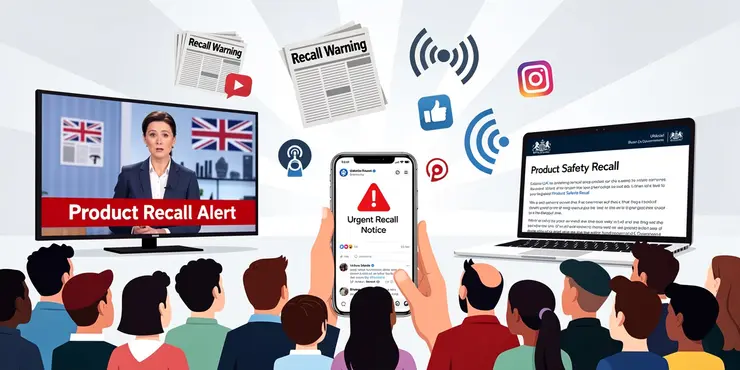
How are consumers informed about a product recall?
Relevance: 33%
-

What is the role of the Office for Product Safety and Standards in a recall?
Relevance: 32%
-

What are drug offences?
Relevance: 32%
-

Are there any penalties for not complying with a product recall?
Relevance: 31%
-

What is a duty to recall a product?
Relevance: 31%
-

What is a Product Recall in the UK?
Relevance: 29%
-

What are common reasons for product recalls?
Relevance: 29%
-

What are Public Liability Claims?
Relevance: 29%
-

Are public liability claims the same as personal injury claims?
Relevance: 28%
-

Do public liability claims only apply in public places?
Relevance: 27%
Introduction
In a UK product liability case, a manufacturer may have several possible defences depending on the facts and the legal basis of the claim. The main route for strict liability claims is usually the Consumer Protection Act 1987, although negligence and contract claims may also arise. Defences can sometimes defeat the claim entirely, or reduce the amount of compensation payable.
The strongest defence will often turn on whether the product was actually defective, whether the defect caused the damage, and whether the manufacturer can rely on one of the statutory exemptions. Manufacturers should also consider whether another party, such as a distributor or user, was responsible for the loss.
No defect or no causation
A basic defence is to argue that the product was not defective at the time it left the manufacturer’s control. Under the Consumer Protection Act, a product is defective only if its safety is not such as persons generally are entitled to expect. If the product was properly designed, manufactured, and accompanied by suitable warnings, liability may not arise.
Even if there was a defect, the manufacturer can argue that it did not cause the injury or damage. The claimant must prove a sufficient link between the defect and the harm suffered. If the damage was caused by some other event, such as misuse or an unrelated medical condition, the claim may fail.
Statutory defences under the Consumer Protection Act 1987
The Act gives manufacturers several specific defences. One is the “state of the art” defence, where the scientific and technical knowledge available at the relevant time was not enough to discover the defect. This can be important in cases involving new technologies or unknown risks.
A manufacturer may also defend a claim by showing that the defect did not exist when the product was put into circulation. Another defence is that the product was not supplied in the course of business, although this will usually be less relevant for commercial manufacturers. In some cases, the manufacturer may argue that the defect resulted from compliance with mandatory legal requirements.
Misuse, alteration, and contributory negligence
If the claimant misused the product, ignored clear instructions, or used it in an unforeseeable way, the manufacturer may rely on that conduct as a defence. A product liability claim is weaker where the harm was caused by abnormal use rather than ordinary consumer use. Faulty storage, poor maintenance, or unauthorised modifications can also break the chain of responsibility.
Contributory negligence may reduce damages even if the manufacturer is partly liable. For example, if a user failed to read warnings or operated equipment carelessly, the court may reduce the award to reflect shared responsibility. This is often a practical and important defence in everyday claims.
Limitation and contractual defences
Time limits can be a complete defence. Under the Consumer Protection Act, claims are subject to both a three-year limitation period and a long-stop period of ten years from the date the product was put into circulation. If proceedings are started too late, the claim may be barred.
In contract-based claims, manufacturers may also rely on exclusion clauses or limitation clauses, although these are subject to strict UK controls, especially under the Consumer Rights Act 2015 and the Unfair Contract Terms Act 1977. These clauses will not always be enforceable, but they can still be relevant in business-to-business disputes. Careful contract drafting and product warnings can therefore play a useful defensive role.
Frequently Asked Questions
What is the most basic defense a manufacturer can raise in a product liability case?
A manufacturer can argue that the product was not defective and was reasonably safe when it left the company’s control.
Can a manufacturer defend itself by showing the product was misused?
Yes. If the product was used in a way that was not intended or reasonably foreseeable, misuse can be a strong defense.
Does alteration of the product help the manufacturer’s defense?
Yes. If someone changed or modified the product after it left the manufacturer, the company may argue the alteration caused the injury.
Can failure to follow instructions be a defense?
Yes. A manufacturer may claim the user ignored warnings, labels, or operating instructions, and that this caused the harm.
What role do warnings play in a defense?
A manufacturer can argue that adequate warnings were provided and that the danger was open and obvious or clearly disclosed.
Can assumption of risk be used as a defense?
Yes. If the injured person knew about the danger and voluntarily chose to proceed, the manufacturer may raise assumption of risk.
Is comparative negligence a possible defense?
Yes. The manufacturer may argue that the plaintiff’s own negligence contributed to the injury and should reduce or bar recovery, depending on the law.
Can a manufacturer argue that the product met industry standards?
Yes. Compliance with industry standards, while not always a complete defense, can support the argument that the product was not unreasonably dangerous.
Does government compliance help the defense?
Yes. If the product complied with applicable regulations, the manufacturer may use that compliance to show the product was properly designed or labeled.
Can a manufacturer claim the product was state of the art?
Yes. The manufacturer may argue that the design or warning reflected the best available knowledge and technology at the time of sale.
Can lack of causation be a defense?
Yes. A manufacturer can argue that even if there was a defect, it did not actually cause the plaintiff’s injury.
What if the injury was caused by another party?
The manufacturer can argue that a distributor, retailer, installer, repairer, or another third party caused the problem instead.
Can the statute of limitations be raised as a defense?
Yes. If the claim was filed too late, the manufacturer can seek dismissal based on the applicable limitations period.
Can the statute of repose be used by manufacturers?
Yes. In some cases, a statute of repose cuts off liability after a certain number of years, regardless of when the injury occurred.
Is product modification by the plaintiff relevant to defense?
Yes. If the plaintiff’s own modifications changed the product’s performance or safety, the manufacturer may argue those changes caused the injury.
Can a manufacturer defend against a design defect claim differently than a manufacturing defect claim?
Yes. The manufacturer may argue that the design was sound, and if there was a problem, it was an isolated manufacturing error rather than a broader design flaw.
Can expert testimony help the manufacturer’s defense?
Yes. Expert evidence can help show that the product was not defective, the warnings were adequate, or the injury had another cause.
Does the obviousness of a danger matter?
Yes. If the danger was open and obvious, the manufacturer may argue that no additional warning was required or that the risk was apparent to users.
Can a manufacturer argue that the plaintiff did not use the product as intended?
Yes. The manufacturer can contend the product was safe when used properly, and the injury resulted from unintended use.
Can contractual or legal defenses apply in product liability cases?
Yes. Depending on the facts and jurisdiction, the manufacturer may raise warranty limitations, disclaimers, preemption, or other legal defenses.

Useful Linksxxx
This website offers general information and is not a substitute for professional advice.
Always seek guidance from qualified professionals.
If you have any medical concerns or need urgent help, contact a healthcare professional or emergency services immediately.
Some of this content was generated with AI assistance. We've done our best to keep it accurate, helpful, and human-friendly.
- Ergsy carefully checks the information in the videos we provide here.
- Videos shown by Youtube after a video has completed, have NOT been reviewed by ERGSY.
- To view, click the arrow in centre of video.
- Most of the videos you find here will have subtitles and/or closed captions available.
- You may need to turn these on, and choose your preferred language.
- Go to the video you'd like to watch.
- If closed captions (CC) are available, settings will be visible on the bottom right of the video player.
- To turn on Captions, click settings.
- To turn off Captions, click settings again.
More Items From Ergsy search
-
What defenses can a manufacturer raise in a product liability case?
Relevance: 100%
-
What is a manufacturers liability for the products it sells?
Relevance: 87%
-
What is a manufacturer's liability for the products it sells?
Relevance: 84%
-
Does consumer misuse always protect a manufacturer from liability?
Relevance: 79%
-
What is strict liability in product liability cases?
Relevance: 78%
-
Does a manufacturer's liability end after a product is sold?
Relevance: 76%
-
Can a manufacturer be liable for products made by a supplier?
Relevance: 75%
-
Does a manufacturer have liability even if it was not negligent?
Relevance: 74%
-
What are the main types of product liability claims against manufacturers?
Relevance: 72%
-
When can a manufacturer be held liable for product defects?
Relevance: 71%
-
Are manufacturers liable for products sold online or through third parties?
Relevance: 71%
-
Why is manufacturer liability important for consumers?
Relevance: 69%
-
How do warranties relate to manufacturer liability?
Relevance: 68%
-
Can a manufacturer be liable for a product that was altered after sale?
Relevance: 68%
-
How long can a manufacturer be liable after a product is sold?
Relevance: 67%
-
Can an injured person sue both the manufacturer and seller?
Relevance: 62%
-
Is a manufacturer responsible for warnings on its products?
Relevance: 58%
-
Can a manufacturer be liable for economic losses only?
Relevance: 50%
-
What defenses are available in a professional negligence case?
Relevance: 47%
-
What is a manufacturing defect?
Relevance: 44%
-
What happens if a product has a design defect?
Relevance: 42%
-
What is drug manufacturing?
Relevance: 39%
-
Can recalled products be resold?
Relevance: 37%
-
What are some common defenses against drug offence charges?
Relevance: 35%
-
Can product recalls be reversed?
Relevance: 35%
-
Who can initiate a product recall in the UK?
Relevance: 35%
-
What is the role of insurance in public liability claims?
Relevance: 35%
-
Is the production of ketamine regulated?
Relevance: 35%
-
What should businesses do if they discover a product defect?
Relevance: 34%
-
Can a product recall be voluntary?
Relevance: 34%
-
How are consumers informed about a product recall?
Relevance: 33%
-
What is the role of the Office for Product Safety and Standards in a recall?
Relevance: 32%
-
What are drug offences?
Relevance: 32%
-
Are there any penalties for not complying with a product recall?
Relevance: 31%
-
What is a duty to recall a product?
Relevance: 31%
-
What is a Product Recall in the UK?
Relevance: 29%
-
What are common reasons for product recalls?
Relevance: 29%
-
What are Public Liability Claims?
Relevance: 29%
-
Are public liability claims the same as personal injury claims?
Relevance: 28%
-
Do public liability claims only apply in public places?
Relevance: 27%