
Get Answers
Introduction to Woodland and Natural Burials
In the UK, there is a growing interest in alternative burial options that are more eco-friendly. Woodland and natural burials are two such options that offer a way to return to nature. They provide different approaches to environmentally conscious interment.
Both methods focus on reducing environmental impact and preserving natural landscapes. However, key differences distinguish woodland burials from natural ones. Understanding these differences is important for making an informed decision.
What is a Woodland Burial?
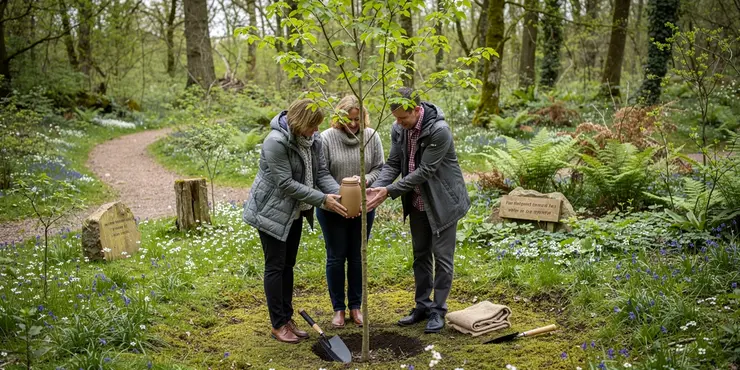
A woodland burial is an eco-friendly interment in a dedicated woodland site. These sites are carefully managed to maintain their natural beauty and biodiversity. Burial plots in a woodland are typically marked with native trees, shrubs, or modest markers.
The primary aim of a woodland burial is to create and preserve habitats for wildlife. These burial grounds foster rich ecosystems, making them appealing to those who love nature. Standardised tombstones are usually avoided to maintain the natural aesthetics.
What is a Natural Burial?
Natural burial grounds focus on sustainability and ecological benefits. Unlike woodland burials, they do not require interment within a woodland setting. Instead, natural burials can occur in meadows, fields, or areas designed to blend with local landscapes.
The practices followed in natural burials include using biodegradable coffins and avoiding embalming chemicals. The aim is to minimize the impact on the environment and return nutrients to the earth. This approach aligns with principles of simplicity and sustainability.
Key Differences Between Woodland and Natural Burials
One key difference is the environment where burials occur. Woodland burials take place in managed woodlands with an emphasis on tree planting. In contrast, natural burials focus on minimal environmental disturbance and can occur in various natural settings.
Another difference lies in the site's management and appearance. Woodland burial grounds often prioritize forest regeneration, while natural burial sites maintain broader ecological conditions. The choice between them often depends on personal values and environmental concerns.
Conclusion
Both woodland and natural burials offer meaningful ways to honour life in harmony with nature. By understanding their distinctions, individuals and families can choose the option that best aligns with their values. These practices promote sustainability and celebrate the natural world.
As awareness grows, more people in the UK are considering woodland and natural burials. The options reflect a societal shift towards environmentally responsible choices. Embracing these alternatives ensures a legacy that supports conservation and biodiversity.
Frequently Asked Questions
A woodland burial is a type of natural burial that takes place in a wooded area. It often involves minimal environmental impact, using biodegradable materials and no formal gravestones.
A natural burial is a burial method that seeks to have minimal environmental impact. It avoids embalming, uses biodegradable coffins or shrouds, and focuses on restoring or preserving natural habitats.
A woodland burial is specifically set in a forested area, forming a subset of natural burials, whereas a natural burial can occur in various natural settings, not limited to woodland.
Woodland burials typically avoid traditional headstones. Markers can be natural, like a tree or a small plaque, to maintain the woodland's natural appearance.
Yes, often a tree is planted on or near the burial site, which both marks the grave and contributes to the woodland environment.
Embalming is generally discouraged in natural burials due to its environmental impact and to maintain the natural decomposition process.
Biodegradable materials like cardboard, wicker, or untreated wood are commonly used for coffins in woodland burials.
Yes, natural burials are designed to minimize environmental impact by avoiding chemicals and synthetic materials and promoting ecosystem restoration.
Yes, woodland burials can accommodate various religious or personal ceremonies, as long as they align with the site's ecological focus.
Woodland burial sites typically feature native trees, shrubs, and wildflowers to support local biodiversity and maintain a natural ecosystem.
A natural burial cemetery encompasses various natural landscapes, such as meadows or fields, while a woodland cemetery specifically involves forested areas.
Yes, you can visit, but access may be more natural and less formal than traditional cemeteries, with the focus on preserving the natural environment.
Markers are typically natural, like trees or shrubs, or biodegradable plaques, which vary by site rules.
Natural burials conserve land by integrating burial sites with land conservation efforts, promoting ecosystem restoration and biodiversity.
Woodland burials often cost less than traditional ones due to their simpler processes and materials, although costs can vary significantly.
Preservation policies vary, but many woodland burial sites have conservation easements to maintain the site as a natural space indefinitely.
Biodegradable caskets made of materials like wicker, bamboo, or cardboard are encouraged to facilitate natural decomposition.
Yes, many woodland burial sites allow the burial of cremated remains, provided they are in biodegradable containers.
Yes, both types are subject to local regulations concerning burial practices, conservation efforts, and land use.
While perpetual care in the traditional sense may differ, natural burial sites focus on maintaining the ecological health and natural beauty of the land.

Ergsy Search Results
This website offers general information and is not a substitute for professional advice.
Always seek guidance from qualified professionals.
If you have any medical concerns or need urgent help, contact a healthcare professional or emergency services immediately.
Some of this content was generated with AI assistance. We've done our best to keep it accurate, helpful, and human-friendly.
- Ergsy carefully checks the information in the videos we provide here.
- Videos shown by Youtube after a video has completed, have NOT been reviewed by ERGSY.
- To view, click the arrow in centre of video.
- Most of the videos you find here will have subtitles and/or closed captions available.
- You may need to turn these on, and choose your preferred language.
- Go to the video you'd like to watch.
- If closed captions (CC) are available, settings will be visible on the bottom right of the video player.
- To turn on Captions, click settings.
- To turn off Captions, click settings again.