

Speak To An Expert
Get clear, personalised advice for your situation.
Jot down a few questions to make the most of your conversation.
More Items From Ergsy search
-

What is a fecal occult blood test?
Relevance: 100%
-

Are there any dietary restrictions before taking a fecal occult blood test?
Relevance: 93%
-
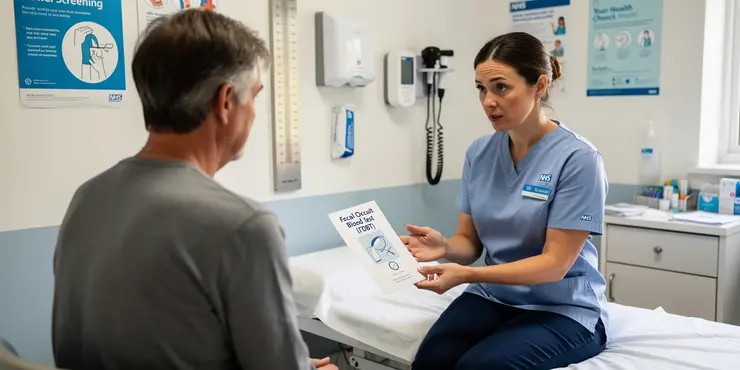
How does a fecal occult blood test (FOBT) work?
Relevance: 93%
-

How can I test myself for colorectal cancer?
Relevance: 52%
-
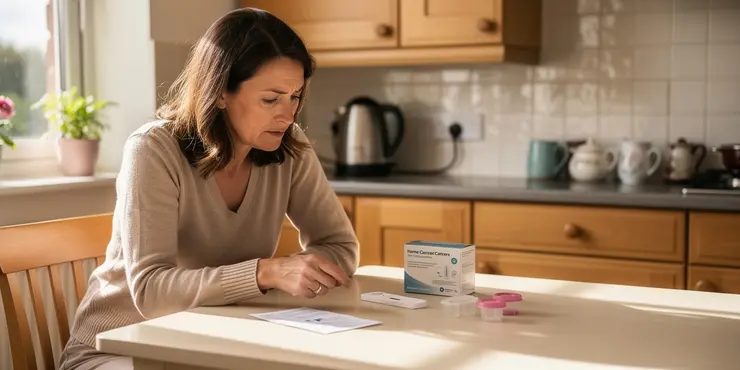
How often should I perform a home colorectal cancer test?
Relevance: 43%
-

What kinds of cancer screening are available?
Relevance: 41%
-

Are there risks associated with home colorectal cancer tests?
Relevance: 41%
-

Can I order a FIT test online?
Relevance: 40%
-

Is a colonoscopy necessary after a positive home test?
Relevance: 39%
-

How is bowel cancer diagnosed?
Relevance: 37%

-

Sandwell and West Birmingham Hospitals NHS Trust – Faecal Incontinence and Constipation Healthcare
Relevance: 35%
-
Having a blood test
Relevance: 32%
-
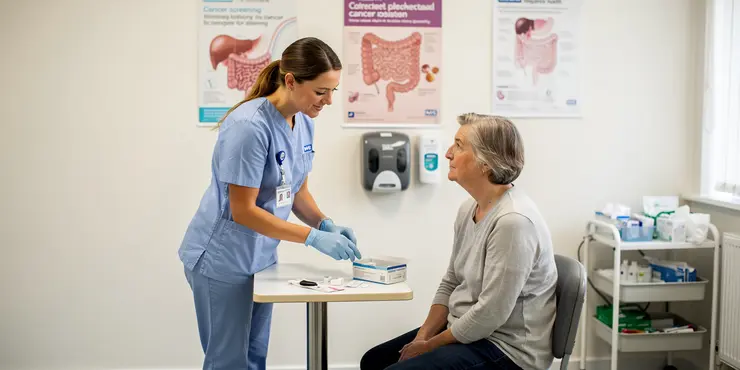
Can home colorectal cancer tests replace a colonoscopy?
Relevance: 32%
-
Will insurance cover the cost of home colorectal cancer tests?
Relevance: 31%
-
What other viruses are tested for in blood donations?
Relevance: 29%
-

Should I test my child for high blood pressure?
Relevance: 27%
-

How to do the FIT bowel cancer screening test | Cancer Research UK
Relevance: 25%
-

What are the different types of pregnancy tests?
Relevance: 23%
-

How is blood screened to prevent disease transmission?
Relevance: 23%
-

Are home tests for colorectal cancer accurate?
Relevance: 22%
-

Can syphilis be transmitted via blood transfusion?
Relevance: 22%
-

Is Hepatitis B a risk in blood transfusions?
Relevance: 22%
-

Is HTLV a risk in blood transfusions?
Relevance: 22%
-

Can HIV be transmitted through blood transfusions?
Relevance: 22%
-

What measures are taken to prevent disease transmission in blood transfusions?
Relevance: 22%
-
What is the most common disease transmitted by blood transfusion?
Relevance: 22%
-

Is Chagas disease a concern with blood transfusions?
Relevance: 21%
-
How to use the bowel cancer screening FIT kit | NHS
Relevance: 21%
-

How soon can a pregnancy test detect pregnancy?
Relevance: 21%
-

What is a CA-125 test?
Relevance: 21%
-

What tests are available for diagnosing Lyme disease?
Relevance: 21%
-

Are there any parasites that can be transmitted through blood transfusions?
Relevance: 21%
-

Are new emerging pathogens a risk for blood safety?
Relevance: 21%
-
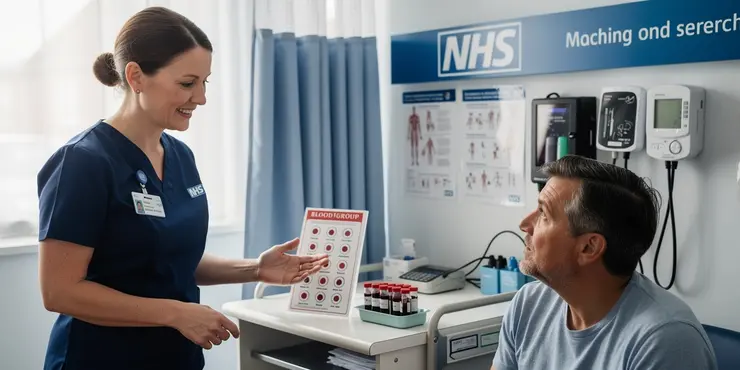
How do healthcare providers match blood for transfusions?
Relevance: 21%
-

What diseases can be spread by blood transfusions?
Relevance: 21%
-
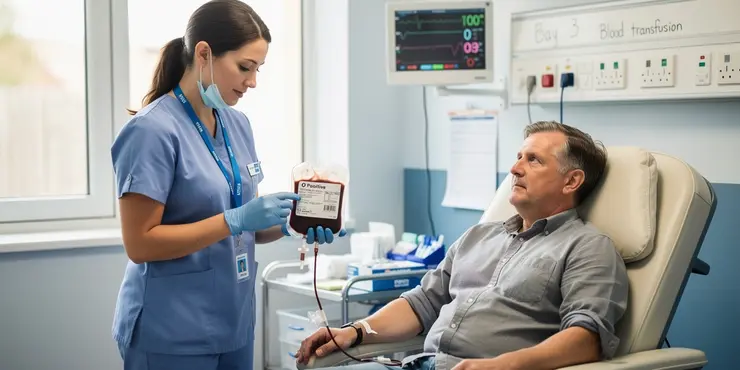
Blood Transfusion
Relevance: 21%
-

Is there a test for West Nile Virus?
Relevance: 21%
-

What is a blood transfusion?
Relevance: 20%
-

How does a pregnancy test work?
Relevance: 20%
-

Will the test affect my menstrual cycle?
Relevance: 20%
What is a Fecal Occult Blood Test?
A Fecal Occult Blood Test (FOBT) is a non-invasive medical test used to check for hidden (occult) blood in the stool, which is not visible to the naked eye. This test is important because the presence of blood in the stool can be an early sign of colorectal cancer or other conditions such as polyps, haemorrhoids, ulcers, or gastrointestinal bleeding. Detecting blood early can lead to early diagnosis and more effective treatment of these conditions.
How Does the Test Work?
The FOBT works by detecting haemoglobin, a protein contained in red blood cells, that may be present in the stool. There are a couple of methods used to perform the test: the guaiac-based fecal occult blood test (gFOBT) and the faecal immunochemical test (FIT). The gFOBT uses a chemical reaction to detect blood, while the FIT uses antibodies that specifically recognise human haemoglobin. The FIT test is often preferred because it is more specific and does not require dietary restrictions before the test.
Why is the Test Important?
Early detection of colorectal cancer significantly improves treatment outcomes. Regular screening with FOBTs can detect cancer at an early stage when treatment is more likely to be successful. In the UK, bowel cancer is a major health concern, and early detection through screening programmes, including the use of FOBTs, has been shown to reduce mortality rates. Besides cancer, the test can help identify other gastrointestinal issues that may need medical attention.
Who Should Take the Test?
In the UK, individuals aged 60 to 74 are invited to complete a FOBT every two years as part of the NHS Bowel Cancer Screening Programme. People outside this age range or those with higher risk factors, such as a family history of bowel cancer, may also need to discuss screening options with their GP. It is important to participate in regular screening if you fall within the recommended age range, as many bowel cancers can be detected early through these programmes.
How to Perform the Test?
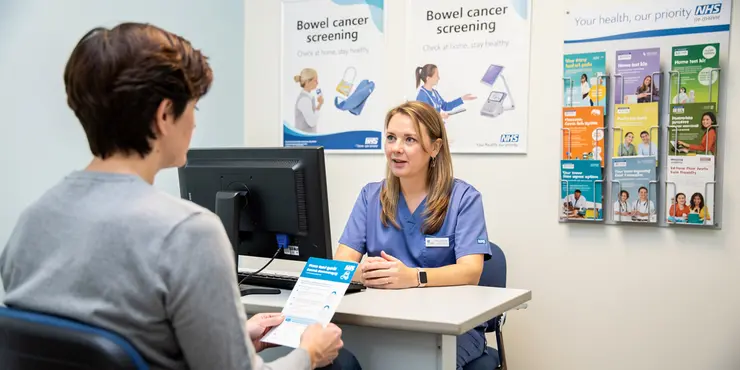
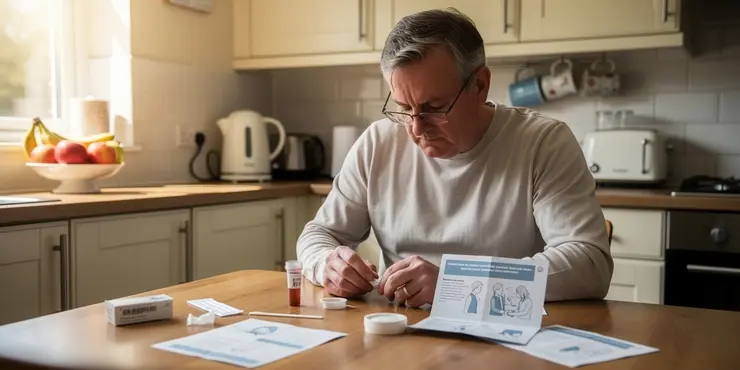
Performing an FOBT is simple and can be done in the privacy of your home. The NHS usually provides a test kit by mail, which includes instructions on how to collect stool samples using provided sticks or brushes. Once samples are collected, they are sent back to the lab using a prepaid envelope. It is essential to follow the instructions carefully to ensure accurate results. If the test detects blood, further diagnostic procedures such as colonoscopy may be recommended to determine the cause of the bleeding.
Conclusion
The Fecal Occult Blood Test is a crucial tool in the detection of bowel cancer and other gastrointestinal problems. It is a simple, cost-effective, and efficient means of catching potential health issues before they become severe. Participating in regular screening and staying informed about the test can significantly contribute to early diagnosis and improved health outcomes.
What is a Fecal Occult Blood Test?
A Fecal Occult Blood Test (FOBT) checks for hidden blood in your poo. You can't see this blood with your eyes. This test is important because finding blood early can help doctors find and treat problems like bowel cancer or other issues like piles, ulcers, or bleeding inside your tummy. Early detection means better treatment.
How Does the Test Work?
The test looks for a protein called haemoglobin in your poo. This protein is in red blood cells. There are two types of FOBT: the gFOBT and the FIT. The gFOBT uses a chemical to find blood, and the FIT uses a special tool to find human blood. People like the FIT because it is more accurate and you don’t have to change what you eat before the test.
Why is the Test Important?
Finding bowel cancer early makes treatment work better. Regular FOBT tests can catch cancer early when it can be treated more easily. In the UK, bowel cancer is a big health issue. Using FOBT tests can save lives because it helps find cancer early. It can also find other tummy problems that need a doctor’s help.
Who Should Take the Test?
In the UK, people aged 60 to 74 get a free FOBT kit every two years. This is part of a health check called the NHS Bowel Cancer Screening Programme. If you are younger or have family members with bowel cancer, talk to your doctor. It’s important to take the test if you are in the age group because it helps find cancer early.
How to Perform the Test?
You can do the FOBT at home. The NHS sends you a kit with instructions. You use the kit to collect a small amount of your poo. You then send it back in a prepaid envelope. It’s very important to follow the instructions correctly. If the test finds blood, you might need more tests like a camera test (colonoscopy) to find out why there is bleeding.
Conclusion
The Fecal Occult Blood Test is important for finding bowel cancer and other tummy issues. It’s a simple and cheap way to catch problems early. Doing regular tests and knowing about them can help find and treat problems early, making you healthier.
Frequently Asked Questions
What is a fecal occult blood test?
A fecal occult blood test (FOBT) is a noninvasive test that detects hidden (occult) blood in the stool, which could indicate the presence of conditions like colon cancer or polyps.
Why is a fecal occult blood test important?
An FOBT is important for early detection of gastrointestinal conditions such as colorectal cancer, enabling timely diagnosis and treatment.
Who should get a fecal occult blood test?
Typically, people over 50 or those with a higher risk for colorectal cancer should consider getting an FOBT, but it is best to consult with a healthcare provider.
How is a fecal occult blood test performed?
An FOBT involves collecting small stool samples at home and then taking them to a lab for analysis.
What are the types of fecal occult blood tests?
The main types are the guaiac-based FOBT (gFOBT) and the fecal immunochemical test (FIT).
What preparations are needed for a fecal occult blood test?
For a gFOBT, you may need to avoid certain foods and medications before the test. FIT typically requires no dietary restrictions.
Are there any risks associated with a fecal occult blood test?
There are no direct risks from the test itself, but there can be risks from follow-up procedures if the test detects blood.
What do the results of a fecal occult blood test mean?
A positive result indicates the presence of blood in the stool, necessitating further investigation. A negative result suggests no blood was detected.
How accurate is a fecal occult blood test?
FOBTs are fairly accurate but can have false positives or negatives. It's often used as a screening tool rather than diagnostic.
Can diet or medication affect the fecal occult blood test results?
Yes, certain foods and medications can affect gFOBT results, so dietary restrictions may be recommended before the test.
How often should I have a fecal occult blood test?
For those over 50 or at average risk of colorectal cancer, it is usually recommended annually. Consult your doctor for personal recommendations.
Is a positive fecal occult blood test always an indication of cancer?
No, a positive test can be caused by conditions other than cancer, such as hemorrhoids or ulcers.
What should I do if my fecal occult blood test is positive?
Further testing, such as a colonoscopy, is usually recommended to determine the cause of the bleeding.
How can I collect a stool sample for an FOBT?
Your healthcare provider will give you specific instructions and a kit for collecting small samples at home.
Is the fecal occult blood test painful?
No, the test involves collecting a stool sample and is completely noninvasive and painless.
Can a fecal occult blood test detect all types of cancer?
No, it primarily screens for colorectal cancer and will not detect other types of cancers.
What is the difference between gFOBT and FIT?
The gFOBT uses a chemical to detect blood, while FIT uses antibodies. FIT is generally more specific to human blood.
How long does it take to get results from a fecal occult blood test?
Results typically come back within a few days to a week, depending on the laboratory processing the test.
Can a fecal occult blood test detect bleeding from sources in the upper gastrointestinal tract?
It is primarily used for bleeding in the lower GI tract, with limited detection capabilities for the upper GI tract.
How does a healthcare provider respond to a negative FOBT?
If the test is negative and there are no symptoms, routine screening is usually continued according to the person's health plan.
What is a hidden blood poo test?
A hidden blood poo test checks if there is blood in your poo. You cannot see this blood. Doctors use the test to check for health problems in your tummy.
If you need help with reading or writing, ask someone you trust to help you. You can also use tools like finger reading, or reading aloud to understand better.
A fecal occult blood test (FOBT) is a simple test that checks for hidden blood in your poop. Finding blood might mean there are problems like colon cancer or bumps called polyps.
Why is a Poop Test Important?
A poop test checks for blood in your poop.
Doctors use it to see if something is wrong inside your tummy.
Finding blood early can help doctors keep you healthy.
If you find it hard to understand, ask someone to help explain.
Using pictures and simple words can make it easier to learn.
An FOBT is a test that helps find problems in your tummy early on. This is very important because it can help doctors find things like bowel cancer sooner. This means they can help you faster and give you the right treatment.
Who needs a poop blood test?
Some people need a test to check for tiny bits of blood in their poop. This is called a "poop blood test." Here is who might need it:
- Adults who are 50 years old or older.
- People who have family members who had colon cancer.
- People with tummy problems or bleeding when they go to the bathroom.
If you're not sure, talk to a doctor or nurse. They can help you decide if you need the test.
Using pictures or videos might make it easier to see how the test works.
People over 50 or people who might get bowel cancer should think about having a test. It's called an FOBT. But the best thing to do is talk to a doctor first.
How do you do a hidden blood test in poop?
A hidden blood test in poop checks for tiny amounts of blood in your poop. Here's how it's done:
- You will get a kit from your doctor or nurse.
- Use the kit to collect small samples of your poop. Follow the steps in the kit.
- Send the samples to a lab. They will look for hidden blood.
If you need help, ask someone you trust to explain it to you. You can also use videos or pictures that show the steps.
A FOBT is a test where you collect small pieces of your poop at home. Then you take them to a lab so they can be checked.
What are the types of hidden blood tests in poop?
Sometimes doctors need to check your poop (the stuff that comes out when you go to the toilet) to find out if there is any blood that you can't see. This is called a "hidden blood test." There are different types of these tests:
- Guaiac-based tests (gFOBT): This test uses a special paper to find blood.
- Immunochemical tests (FIT): This test uses a special liquid to find blood.
- DNA stool tests: This test looks at your poop for special changes in your DNA that might mean there is blood.
If you need help understanding, you can ask a grown-up to explain or use simple picture or video guides.
There are two main types of tests:
1. The guaiac-based FOBT (gFOBT): This test checks for hidden blood in your poo.
2. The fecal immunochemical test (FIT): This test also checks for hidden blood in your poo.
To help understand, you can use pictures or ask someone to explain it to you. Voice recorders can also help you listen to the information again.
How to get ready for a poo blood test?
Before a gFOBT test, you might need to stop eating some foods and taking some medicines. For a FIT test, you usually don't need to change what you eat.
Is a poop test safe?
The test itself is safe. There are no risks when you do it. But if the test finds blood, you might need more checks. These checks can have some risks.
What do the results of a poop test mean?
A poop test checks if there is any blood in your poop. Here is what the test results can mean:
Normal Result: If the test says "normal," it means there is no blood in your poop, and that is good.
Abnormal Result: If the test says "abnormal," it means there is blood in your poop. This does not always mean something is wrong, but it is important to see a doctor.
You can ask someone you trust or use a screen reader to help you understand more about the test results.
A positive result means there is blood in the poo. You need to check more to find out why. A negative result means there is no blood in the poo.
How good is a hidden blood test in poo?
A hidden blood test in poo checks for tiny bits of blood in your poo that you can't see. This test is used to help find problems in the stomach or intestines.
The hidden blood test is quite good, but not perfect. Sometimes it might miss blood in the poo, or show blood when there is none.
To make sure the test is right:
- Follow the steps given by the doctor or nurse carefully.
- Check with your doctor if you notice any blood in your poo or feel unwell.
If you find this hard to understand:
- Ask someone to read it to you.
- Use picture cards to help understand the test.
- Talk to a doctor or nurse if you have questions.
FOBTs are tests that can help find problems in the body. They usually work well, but sometimes they might say there is a problem when there isn't one. They might also miss a problem. Doctors use these tests to check if more tests are needed.
Can food or medicine change the results of a hidden blood test in poop?
Some foods and medicines can change the test results.
Here are some tips to help:
- Ask your doctor if you need to avoid certain foods before the test.
- Tell your doctor about any medicine you are taking.
- Your doctor can help you plan before the test.
Yes, some foods and medicines can change gFOBT test results. You might need to watch what you eat before the test.
How often should I get a poo blood test?
A poo blood test checks for tiny amounts of blood in your poo. This can help find problems in your tummy.
You should ask your doctor when to take the poo blood test. They can tell you what is best for you.
Tools that can help you:
- Use a calendar to remember the test dates.
- Ask someone you trust to help you understand what the doctor says.
If you are over 50 or have an average chance of getting bowel cancer, it is usually good to have a check-up every year. Talk to your doctor to find out what is best for you.
Does a positive poop blood test always mean cancer?
Sometimes, a test shows blood in your poop. This is called a "poop blood test."
But don't worry. A positive test does not always mean you have cancer.
Other things like ulcers or hemorrhoids can also cause blood in your poop.
It's important to talk to your doctor for more tests.
Supportive tools:
- Ask someone you trust to help you talk with the doctor.
- Use pictures or charts to understand your results better.
No, a test that comes back positive doesn't always mean cancer. Sometimes, it can be because of other things like hemorrhoids or ulcers.
What should I do if my poop test is positive?
If your poop test shows blood, don’t worry. Here’s what you can do:
- Talk to a doctor: Make an appointment to see your doctor. They can help you understand what the test means.
- Ask questions: It’s good to ask the doctor any questions you have. They can tell you why the test is important.
- Follow advice: The doctor might tell you to have more tests. These tests help find out if you have a problem in your tummy.
It’s okay to ask for help from someone you trust. They can go to the doctor with you or help you remember what the doctor says.
Doctors often suggest more tests, like a colonoscopy, to find out why there is bleeding.
How do I take a poo sample for an FOBT?
Here's how you can do it:
- Get ready: Your doctor will give you a kit. Make sure you have it with you.
- Go to the toilet: When you need to poo, make sure you do not let it touch the water. You can poo on a paper plate or in a clean container.
- Collect a small sample: Use the stick or spoon from the kit to scoop a tiny bit of poo.
- Put it in the container: Put the sample in the small container from the kit. Close it tight.
- Label it: Write your name and the date on the container.
- Send it back: Follow the kit instructions to send it back to the doctor.
Helpful Tips:
- Ask someone to help if you're not sure.
- Read each step slowly.
- Use a timer if it helps you stay focused.
Your doctor will tell you what to do and give you a kit to collect small samples at home.
Does the poo test hurt?
No, the test does not hurt and is very easy. You just need to give a small piece of poop.
Can a Stool Test Find All Kinds of Cancer?
No, this test looks for bowel cancer. It cannot find other kinds of cancer.
How is gFOBT different from FIT?
The gFOBT test uses a chemical to find blood. The FIT test uses special proteins called antibodies. FIT is better at finding human blood.
How long before I get my poop test results?
You usually get the results in a few days to a week. This depends on how fast the lab works on the test.
Can a poop test find bleeding in the upper tummy?
A poop test looks for hidden blood in your poop. It can tell if there is bleeding somewhere in your tummy. This test might find bleeding high up in your tummy, where your food goes after you eat.
Here is a tool to help:
- Ask a doctor to explain the results.
- Draw a picture of the tummy to show where the bleeding might be.
This is mostly used to find bleeding in the lower part of the belly. It is not very good at finding bleeding at the top part of the belly.
What happens if a doctor's test shows no blood in the poop?
If the test says you are okay and you feel fine, you will keep having regular health check-ups.

Useful Links
This website offers general information and is not a substitute for professional advice.
Always seek guidance from qualified professionals.
If you have any medical concerns or need urgent help, contact a healthcare professional or emergency services immediately.
Some of this content was generated with AI assistance. We've done our best to keep it accurate, helpful, and human-friendly.
- Ergsy carefully checks the information in the videos we provide here.
- Videos shown by Youtube after a video has completed, have NOT been reviewed by ERGSY.
- To view, click the arrow in centre of video.
- Most of the videos you find here will have subtitles and/or closed captions available.
- You may need to turn these on, and choose your preferred language.
- Go to the video you'd like to watch.
- If closed captions (CC) are available, settings will be visible on the bottom right of the video player.
- To turn on Captions, click settings.
- To turn off Captions, click settings again.
More Items From Ergsy search
-
What is a fecal occult blood test?
Relevance: 100%
-
Are there any dietary restrictions before taking a fecal occult blood test?
Relevance: 93%
-
How does a fecal occult blood test (FOBT) work?
Relevance: 93%
-
How can I test myself for colorectal cancer?
Relevance: 52%
-
How often should I perform a home colorectal cancer test?
Relevance: 43%
-
What kinds of cancer screening are available?
Relevance: 41%
-
Are there risks associated with home colorectal cancer tests?
Relevance: 41%
-
Can I order a FIT test online?
Relevance: 40%
-
Is a colonoscopy necessary after a positive home test?
Relevance: 39%
-
How is bowel cancer diagnosed?
Relevance: 37%
-
Sandwell and West Birmingham Hospitals NHS Trust – Faecal Incontinence and Constipation Healthcare
Relevance: 35%
-
Having a blood test
Relevance: 32%
-
Can home colorectal cancer tests replace a colonoscopy?
Relevance: 32%
-
Will insurance cover the cost of home colorectal cancer tests?
Relevance: 31%
-
What other viruses are tested for in blood donations?
Relevance: 29%
-
Should I test my child for high blood pressure?
Relevance: 27%
-
How to do the FIT bowel cancer screening test | Cancer Research UK
Relevance: 25%
-
What are the different types of pregnancy tests?
Relevance: 23%
-
How is blood screened to prevent disease transmission?
Relevance: 23%
-
Are home tests for colorectal cancer accurate?
Relevance: 22%
-
Can syphilis be transmitted via blood transfusion?
Relevance: 22%
-
Is Hepatitis B a risk in blood transfusions?
Relevance: 22%
-
Is HTLV a risk in blood transfusions?
Relevance: 22%
-
Can HIV be transmitted through blood transfusions?
Relevance: 22%
-
What measures are taken to prevent disease transmission in blood transfusions?
Relevance: 22%
-
What is the most common disease transmitted by blood transfusion?
Relevance: 22%
-
Is Chagas disease a concern with blood transfusions?
Relevance: 21%
-
How to use the bowel cancer screening FIT kit | NHS
Relevance: 21%
-
How soon can a pregnancy test detect pregnancy?
Relevance: 21%
-
What is a CA-125 test?
Relevance: 21%
-
What tests are available for diagnosing Lyme disease?
Relevance: 21%
-
Are there any parasites that can be transmitted through blood transfusions?
Relevance: 21%
-
Are new emerging pathogens a risk for blood safety?
Relevance: 21%
-
How do healthcare providers match blood for transfusions?
Relevance: 21%
-
What diseases can be spread by blood transfusions?
Relevance: 21%
-
Blood Transfusion
Relevance: 21%
-
Is there a test for West Nile Virus?
Relevance: 21%
-
What is a blood transfusion?
Relevance: 20%
-
How does a pregnancy test work?
Relevance: 20%
-
Will the test affect my menstrual cycle?
Relevance: 20%