

Speak To An Expert
Get clear, personalised advice for your situation.
Jot down a few questions to make the most of your conversation.
More Items From Ergsy search
-

Is a bicycle crash on the road an RTA?
Relevance: 100%
-
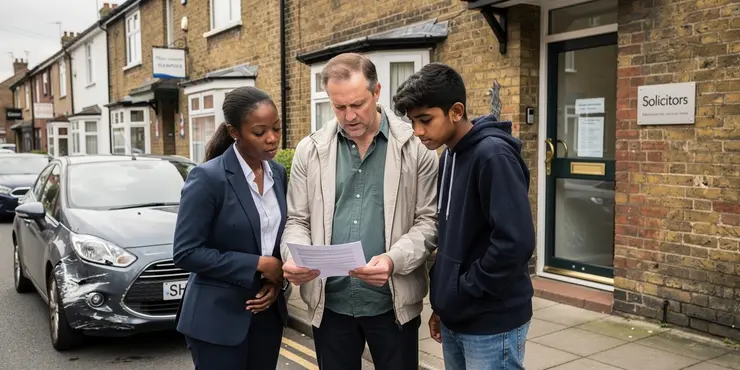
Is a minor car scrape considered an RTA?
Relevance: 97%
-

What is a Road Traffic Accident (RTA)?
Relevance: 95%
-

Can a parked vehicle be involved in an RTA?
Relevance: 90%
-
What role does insurance play after an RTA?
Relevance: 89%
-

What is a Road Traffic Accident - RTA?
Relevance: 86%
-

What types of vehicles can be involved in an RTA?
Relevance: 85%
-

Should I report every RTA to the police?
Relevance: 80%
-
Why is seat belt use important in an RTA?
Relevance: 75%
-
Can pedestrians be victims of an RTA?
Relevance: 71%

-

Can an RTA happen without injury?
Relevance: 70%
-

What information should be collected after an RTA?
Relevance: 60%
-
What should I do immediately after an RTA?
Relevance: 48%
-

Why is understanding RTAs important?
Relevance: 47%
-
Are weather conditions a factor in RTAs?
Relevance: 31%
-

What injuries are commonly caused by RTAs?
Relevance: 12%
Why collecting information matters
After a road traffic accident (RTA), collecting the right information can help with insurance claims, police reports, and any later legal action. It also helps to create a clear record of what happened while details are still fresh.
In the UK, this information may be needed by insurers, solicitors, or medical professionals. The more accurate and complete the record, the easier it is to deal with the aftermath of the incident.
Details about the vehicles and people involved
Start by recording the registration numbers, make, model, and colour of every vehicle involved. It is also helpful to note the names, addresses, phone numbers, and insurance details of the other drivers.
If there were passengers, pedestrians, or cyclists involved, collect their names and contact details too. Where possible, note the name and badge number of any attending police officers.
Time, place, and conditions
Write down the exact date, time, and location of the accident. Include nearby road names, landmarks, junctions, and the direction each vehicle was travelling.
It is also important to note weather and road conditions. For example, record whether it was wet, foggy, dark, icy, or if the road surface was damaged or poorly lit.
What happened in the accident
Make a simple note of how the accident happened, in your own words. Include the sequence of events, the position of the vehicles before and after impact, and anything that may have contributed to the crash.
Try to record whether indicators, brake lights, traffic lights, road signs, or speed limits were relevant. If you noticed any sudden manoeuvres, poor driving, or obstructions, write them down as soon as possible.
Photos, witnesses, and evidence
Take clear photographs of the scene, vehicle damage, skid marks, road layout, and any debris. If safe to do so, capture wider shots as well as close-up images.
Ask for witness details, including names and contact information, and note what they saw. If there is CCTV, dashcam footage, or video from a phone, make a note of where it might be obtained.
Injuries and financial impact
Record any injuries, even if they seem minor at first. Keep a note of pain, bruising, cuts, shock, or symptoms that develop later, and seek medical advice if needed.
It is also sensible to list any costs linked to the accident, such as vehicle repairs, recovery charges, travel expenses, and time off work. Keeping receipts and invoices can support a future claim.
Practical tips after the accident
Try to collect information as soon as it is safe to do so. If you cannot do everything at the scene, make notes immediately afterwards while the details are still clear.
In the UK, you should exchange details with other drivers and report the accident to your insurer promptly. If anyone is injured or the road is blocked, the police and emergency services should be contacted straight away.
Frequently Asked Questions
What basic details should be collected after an RTA?
Collect the date, time, exact location, people involved, vehicles involved, and a brief description of what happened.
Why is the exact location important after an RTA?
The exact location helps identify the scene, support reporting, and clarify road conditions, landmarks, and jurisdiction.
Should vehicle registration details be recorded after an RTA?
Yes, record the registration numbers, make, model, color, and any visible vehicle identification details.
What driver information should be noted after an RTA?
Record each driver’s full name, contact details, license number, and insurance information if available.
Should passenger details be collected after an RTA?
Yes, collect the names, contact details, and any injuries of passengers involved in the incident.
What witness information should be gathered after an RTA?
Collect witness names, phone numbers, addresses, and a short statement of what they saw.
Why should injury information be documented after an RTA?
Injury details are important for medical care, reporting, insurance claims, and legal records.
Should photos be taken after an RTA?
Yes, take photos of the vehicles, damage, road layout, skid marks, traffic signs, and any visible injuries if appropriate and permitted.
What damage details should be recorded after an RTA?
Document the type, location, and extent of damage to all vehicles and any property involved.
Should road and weather conditions be noted after an RTA?
Yes, record weather, lighting, road surface, visibility, and any other conditions that may have contributed.
Why is it useful to note the direction of travel after an RTA?
Direction of travel helps reconstruct the incident and understand how the collision occurred.
Should police and emergency service details be recorded after an RTA?
Yes, note the names or badge numbers of responding officers and the details of any ambulance, fire, or tow services.
What insurance information should be collected after an RTA?
Record the insurance company name, policy number, and any claim or incident reference numbers available.
Should statements from those involved be recorded after an RTA?
Yes, obtain brief factual statements from drivers and witnesses while the details are fresh.
Why is it important to note whether anyone refused to provide details after an RTA?
This helps explain any missing information and supports accurate reporting later.
Should any road hazards be documented after an RTA?
Yes, note hazards such as potholes, debris, poor signage, slippery surfaces, or obstructed views.
What medical information should be collected after an RTA?
Record any apparent injuries, whether medical help was called, and where the injured person was taken if known.
Should time-related details be recorded after an RTA?
Yes, note the time of the crash, the time it was reported, and when emergency responders arrived.
What contact details are useful to collect after an RTA?
Collect phone numbers, email addresses, and residential or business addresses for all relevant parties.
Why should all collected information be organized after an RTA?
Organized records make it easier to report the incident, support claims, and review what happened accurately.

Useful Linksxxx
This website offers general information and is not a substitute for professional advice.
Always seek guidance from qualified professionals.
If you have any medical concerns or need urgent help, contact a healthcare professional or emergency services immediately.
Some of this content was generated with AI assistance. We've done our best to keep it accurate, helpful, and human-friendly.
- Ergsy carefully checks the information in the videos we provide here.
- Videos shown by Youtube after a video has completed, have NOT been reviewed by ERGSY.
- To view, click the arrow in centre of video.
- Most of the videos you find here will have subtitles and/or closed captions available.
- You may need to turn these on, and choose your preferred language.
- Go to the video you'd like to watch.
- If closed captions (CC) are available, settings will be visible on the bottom right of the video player.
- To turn on Captions, click settings.
- To turn off Captions, click settings again.
More Items From Ergsy search
-
Is a bicycle crash on the road an RTA?
Relevance: 100%
-
Is a minor car scrape considered an RTA?
Relevance: 97%
-
What is a Road Traffic Accident (RTA)?
Relevance: 95%
-
Can a parked vehicle be involved in an RTA?
Relevance: 90%
-
What role does insurance play after an RTA?
Relevance: 89%
-
What is a Road Traffic Accident - RTA?
Relevance: 86%
-
What types of vehicles can be involved in an RTA?
Relevance: 85%
-
Should I report every RTA to the police?
Relevance: 80%
-
Why is seat belt use important in an RTA?
Relevance: 75%
-
Can pedestrians be victims of an RTA?
Relevance: 71%
-
Can an RTA happen without injury?
Relevance: 70%
-
What information should be collected after an RTA?
Relevance: 60%
-
What should I do immediately after an RTA?
Relevance: 48%
-
Why is understanding RTAs important?
Relevance: 47%
-
Are weather conditions a factor in RTAs?
Relevance: 31%
-
What injuries are commonly caused by RTAs?
Relevance: 12%