
Get Answers
Introduction to Dividing Ashes
Cremation is a popular choice for handling remains in the UK due to its flexibility and personalisation options. One question that often arises is whether or not cremation ashes can be divided among family members. This practice is indeed possible and can help meet the varied emotional needs of loved ones.
Family dynamics and personal beliefs often influence the decision to divide ashes. Understanding the practical and legal aspects in the UK is crucial for making informed choices.
Legal Considerations
Currently, UK law does not prohibit the division of cremated remains. The person responsible for the remains, often named in the will or agreed upon by the family, typically makes decisions on their handling. However, it is essential to respect the deceased's wishes if they are known.
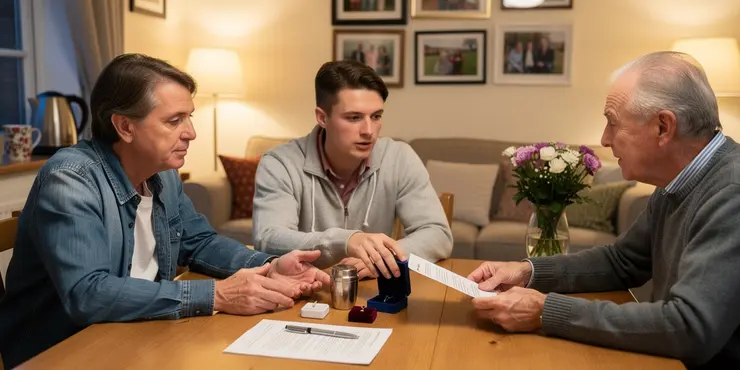
Open communication among family members can prevent disputes. If a clear agreement is reached, the process can proceed more smoothly.
Practical Aspects
Dividing ashes can be done personally or through professional services. Some funeral directors or crematoriums offer assistance in accurately dividing and packaging the ashes. This can ensure the task is handled respectfully.
Families might choose to use keepsake urns, jewellery, or scattering ceremonies to distribute the ashes. These options allow each member to hold a tangible connection to the departed.
Emotional Considerations
Different individuals may have varied emotional responses to dividing ashes. For some, sharing ashes can symbolise maintaining a bond with the deceased and provide comfort. Others may see it as a way to honour different relationships and memories between the deceased and each family member.
Providing space for everyone to express their feelings is important. This can foster a sense of closure and unity during a challenging time.
Memorialisation Options
Dividing ashes opens opportunities for personalised memorials. Families can create unique tributes, such as incorporating ashes into art, jewellery, or plants. These keepsakes can serve as lasting reminders of the deceased.
Scattering ceremonies can also be personalised to reflect the deceased’s personality or passions. Whether at sea, in a garden, or another cherished location, these acts can bring peace and a sense of completion.
Conclusion
Dividing cremation ashes among family members is a personal decision supported by UK law. Clear communication and respect for all parties involved are key to navigating this process successfully. By understanding the legal, practical, and emotional aspects, families can make choices that honour their loved one and provide comfort in their loss.
Frequently Asked Questions
Yes, cremation ashes can be legally divided among family members. However, it is advisable to check local laws and regulations, as they can vary by region.
Yes, it is quite common for families to divide ashes so that multiple individuals can hold onto a portion of their loved one's remains.
Cremation ashes can be divided using a sterile scoop or spoon and then distributed into separate urns, keepsake jewelry, or other containers.
Many funeral homes offer services to help professionally divide and distribute cremation ashes upon request.
Yes, there are various keepsake urns and jewelry designed to hold small portions of cremation ashes.
Yes, divided ashes can be scattered. Each portion can be taken to a different location meaningful to family members or the deceased.
Families should discuss openly to decide if and how ashes will be divided, taking into account the deceased's wishes, cultural or religious considerations, and each member’s preferences.
While not required, some families may choose to hold a small ceremony to honor the division of ashes and the memory of their loved one.
Yes, some families choose to mix small personal items, like a lock of hair or dried flowers, with the divided ashes for sentimental reasons.
Creative options include incorporating ashes into art, jewelry, or even using them in plantings to grow a memorial garden.
It is best if all family members agree, as the decision can be deeply personal and emotional. Having a consensus helps avoid potential conflicts.
Different cultures may have unique practices regarding the handling of ashes, and it's important to respect these traditions when making decisions.
If a family member does not wish to hold onto ashes, their portion can be kept by someone else or scattered in a meaningful location.
Each container should be labeled with the name of the deceased, the date of cremation, and, if necessary, the recipient's name to avoid any confusion.
While not necessary, involving a professional such as a funeral director can ensure the process is done respectfully and correctly.
In the absence of specific instructions, the decision can be made by the next of kin or through family consensus, keeping the deceased's personality and values in mind.
There could be additional costs for multiple urns or keepsakes, as well as any services hired to assist in dividing and distributing the ashes.
Yes, dividing ashes can be a respectful way to honor each family member's relationship with the deceased. Care and consideration should be taken in the process.
Yes, children can receive a portion of ashes if it aligns with the wishes of the family and is deemed appropriate by the guardians involved.
If you change your mind, you can opt to scatter your portion, have another family member hold on to it, or consider other memorialization options.

Ergsy Search Results
This website offers general information and is not a substitute for professional advice.
Always seek guidance from qualified professionals.
If you have any medical concerns or need urgent help, contact a healthcare professional or emergency services immediately.
Some of this content was generated with AI assistance. We've done our best to keep it accurate, helpful, and human-friendly.
- Ergsy carefully checks the information in the videos we provide here.
- Videos shown by Youtube after a video has completed, have NOT been reviewed by ERGSY.
- To view, click the arrow in centre of video.
- Most of the videos you find here will have subtitles and/or closed captions available.
- You may need to turn these on, and choose your preferred language.
- Go to the video you'd like to watch.
- If closed captions (CC) are available, settings will be visible on the bottom right of the video player.
- To turn on Captions, click settings.
- To turn off Captions, click settings again.