

Speak To An Expert
Get clear, personalised advice for your situation.
Jot down a few questions to make the most of your conversation.
More Items From Ergsy search
-

How is blame determined in a Road Traffic Accident?
Relevance: 100%
-

What is a Road Traffic Accident - RTA?
Relevance: 74%
-

Can a road traffic accident involve multiple vehicles?
Relevance: 69%
-

What is a Road Traffic Accident (RTA)?
Relevance: 66%
-

Is a bicycle crash on the road an RTA?
Relevance: 51%
-

What if I was partly at fault for the accident?
Relevance: 50%
-
What if there were no witnesses to the accident?
Relevance: 43%
-
What is the difference between an accident and a collision?
Relevance: 41%
-
Is road rage a form of dangerous driving?
Relevance: 40%
-

What are the common causes of RTAs?
Relevance: 38%

-
Can pedestrians be victims of an RTA?
Relevance: 37%
-

Can a parked vehicle be involved in an RTA?
Relevance: 37%
-

Are public liability claims the same as personal injury claims?
Relevance: 37%
-
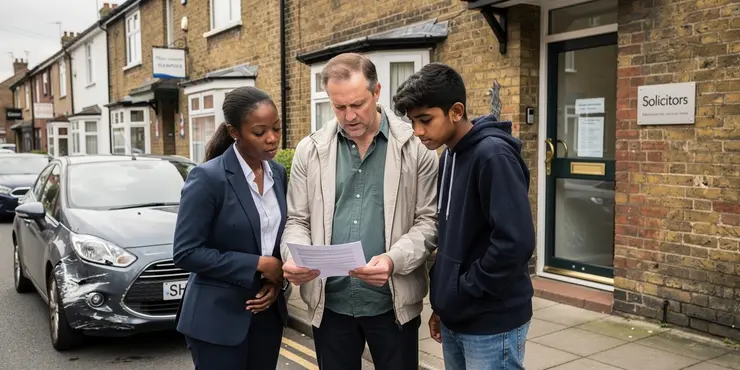
Is a minor car scrape considered an RTA?
Relevance: 36%
-

What kinds of accidents are covered by public liability claims?
Relevance: 36%
-
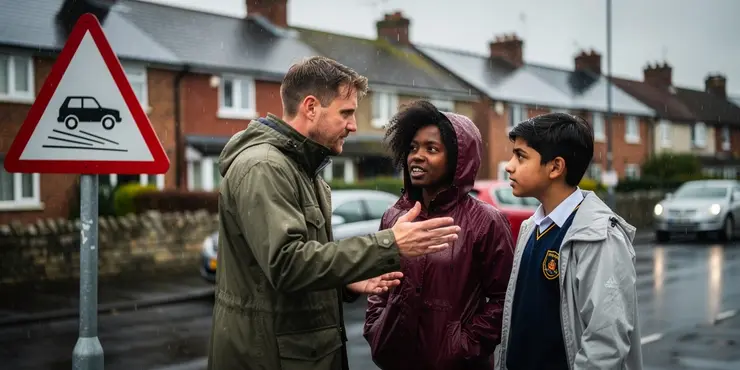
Are weather conditions a factor in RTAs?
Relevance: 33%
-

What if the accident happened on council or government property?
Relevance: 32%
-
What role does insurance play after an RTA?
Relevance: 31%
-
Is driving too slowly considered dangerous driving?
Relevance: 31%
-

Can I make a claim if I was partly at fault?
Relevance: 31%
-

How can RTAs be prevented?
Relevance: 30%
-

How does speeding contribute to dangerous driving?
Relevance: 30%
-

Who is usually responsible in a public liability claim?
Relevance: 30%
-

What must be proven in a public liability claim?
Relevance: 29%
-

What shall I do if I have had an accident at work?
Relevance: 28%
-
Can I make a compensation claim after a work accident?
Relevance: 28%
-

Do I need to fill in an accident report form?
Relevance: 28%
-
Is it dangerous driving to run a red light?
Relevance: 28%
-
How is causation established in professional negligence?
Relevance: 27%
-
What should I do immediately after an RTA?
Relevance: 27%
-
Are there specific laws against dangerous driving?
Relevance: 27%
-

What can I do to avoid dangerous driving?
Relevance: 26%
-

Do public liability claims only apply in public places?
Relevance: 26%
-

What are Public Liability Claims?
Relevance: 26%
-

What if the accident was caused by faulty equipment?
Relevance: 26%
-
What is whiplash after a car accident?
Relevance: 26%
-

Can I claim for a slip and fall accident?
Relevance: 25%
-

How do I start a public liability claim?
Relevance: 25%
-
How do cognitive changes in older adults influence driving risk?
Relevance: 25%
-
How can older drivers mitigate the risks associated with driving?
Relevance: 25%
What blame means in a road traffic accident
In a UK road traffic accident, blame is usually about legal responsibility. It asks who was careless, breached the Highway Code, or failed to take reasonable care on the road.
Blame is not always the same as who was most badly injured. A driver can be partly responsible even if they were not the main cause of the crash.
How the evidence is assessed
Blame is determined by looking at the facts of the accident. This can include witness statements, dashcam footage, CCTV, police reports, and photographs of the scene.
Insurers may also review vehicle damage, road conditions, skid marks, traffic signals, and any admissions made at the scene. These details help build a picture of what happened and why.
The role of the Highway Code
The Highway Code is an important guide when deciding fault. While not every rule is legally binding, it is often used to show whether someone drove responsibly.
For example, failing to give way, speeding, or not keeping a proper lookout can all point towards blame. A breach of the Highway Code may strengthen a claim that a driver was at fault.
Shared blame and contributory negligence
In many accidents, blame is shared between more than one person. This is known as contributory negligence.
If both drivers contributed to the crash, compensation may be reduced to reflect each party’s level of responsibility. For example, one driver might be found 70% at fault and the other 30% at fault.
Who decides fault
In the first instance, insurance companies often decide blame based on the evidence they receive. Their decision is important because it affects whether a claim is accepted and how much compensation may be paid.
If the matter cannot be agreed, a court may decide fault. A judge will consider the evidence and decide liability on the balance of probabilities, which means what is more likely than not to have happened.
Why early evidence matters
It is important to gather evidence as soon as possible after the accident. Details can be forgotten, vehicles repaired, and road conditions changed quickly.
Taking photos, getting contact details from witnesses, and reporting the incident promptly can all help establish blame. The stronger the evidence, the easier it is to show what happened.
Frequently Asked Questions
How is blame determined in a road traffic accident?
Blame is usually determined by examining the facts of the crash, traffic laws, witness statements, photos, video, police reports, and any other evidence showing who acted negligently or violated the rules of the road.
Does the police report decide who is at fault?
A police report can be important evidence, but it does not automatically decide fault. Insurers, lawyers, or a court may still review all the evidence before making a final determination.
What evidence is most useful for proving fault?
Useful evidence includes photographs of the scene and vehicles, dashcam footage, surveillance video, witness accounts, skid marks, vehicle damage, and the police report.
Can both drivers be blamed for the same accident?
Yes. In many cases, fault can be shared if both drivers contributed to the crash. The amount of blame may be divided based on each driver’s actions.
What if one driver broke a traffic law?
A traffic violation often strongly suggests fault, but it is not always conclusive. The full circumstances still matter, including whether the violation directly caused the accident.
How do insurance companies decide fault?
Insurance companies review statements, photos, repair estimates, the police report, and other evidence to decide which driver was more likely responsible under the applicable traffic laws and policy terms.
Is a witness statement enough to prove blame?
A witness statement can help, but it is usually stronger when supported by other evidence such as video, physical damage, and the police report.
What happens if there are no witnesses?
Fault can still be determined using physical evidence, vehicle damage patterns, skid marks, road conditions, traffic signals, and any available camera footage or driver statements.
How do traffic cameras or dashcams affect fault determination?
Video evidence is often very persuasive because it can show exactly how the crash happened, which driver had the right of way, and whether anyone acted carelessly.
Does rear-ending another vehicle always mean the rear driver is at fault?
Usually the rear driver is presumed at fault, but not always. Exceptions may apply if the front driver reversed suddenly, had nonfunctioning brake lights, or acted in another unexpected way.
Who is blamed in a left-turn accident?
In many left-turn crashes, the turning driver is often at fault for failing to yield. However, fault may shift if the other driver was speeding, ran a light, or otherwise acted unlawfully.
How is fault determined at a four-way stop?
Fault at a four-way stop is generally based on who arrived first, who had the right of way, and whether any driver failed to yield, rolled through the stop, or entered unsafely.
Can road conditions affect blame?
Yes. Poor weather, potholes, signage problems, or obscured markings may affect how the accident happened and whether a driver acted reasonably under the conditions.
What if the other driver was speeding?
Speeding can be strong evidence of fault if it contributed to the collision. Investigators may use vehicle damage, skid marks, witness statements, and accident reconstruction to assess speed.
How do hit-and-run accidents affect blame?
If a driver leaves the scene, they may be viewed as responsible, but investigators still try to determine how the crash occurred and whether another factor contributed.
Can an accident be partially my fault even if the other driver was careless?
Yes. If your actions also helped cause the crash, fault may be shared. Many jurisdictions and insurers consider comparative negligence when assigning responsibility.
What role does accident reconstruction play?
Accident reconstruction uses physical evidence, vehicle damage, measurements, and crash dynamics to help determine how the collision happened and who was likely at fault.
How important are the statements made by the drivers?
Driver statements can be useful, but they may be incomplete or biased. They are usually weighed alongside objective evidence before fault is assigned.
Can a passenger be blamed for causing the accident?
Passengers are rarely blamed for causing a crash unless they directly interfered with the driver in a way that contributed to the collision.
Do fault rules differ by location?
Yes. Traffic laws, insurance rules, and negligence standards vary by state or country, so blame may be determined differently depending on where the accident occurred.

Useful Linksxxx
This website offers general information and is not a substitute for professional advice.
Always seek guidance from qualified professionals.
If you have any medical concerns or need urgent help, contact a healthcare professional or emergency services immediately.
Some of this content was generated with AI assistance. We've done our best to keep it accurate, helpful, and human-friendly.
- Ergsy carefully checks the information in the videos we provide here.
- Videos shown by Youtube after a video has completed, have NOT been reviewed by ERGSY.
- To view, click the arrow in centre of video.
- Most of the videos you find here will have subtitles and/or closed captions available.
- You may need to turn these on, and choose your preferred language.
- Go to the video you'd like to watch.
- If closed captions (CC) are available, settings will be visible on the bottom right of the video player.
- To turn on Captions, click settings.
- To turn off Captions, click settings again.
More Items From Ergsy search
-
How is blame determined in a Road Traffic Accident?
Relevance: 100%
-
What is a Road Traffic Accident - RTA?
Relevance: 74%
-
Can a road traffic accident involve multiple vehicles?
Relevance: 69%
-
What is a Road Traffic Accident (RTA)?
Relevance: 66%
-
Is a bicycle crash on the road an RTA?
Relevance: 51%
-
What if I was partly at fault for the accident?
Relevance: 50%
-
What if there were no witnesses to the accident?
Relevance: 43%
-
What is the difference between an accident and a collision?
Relevance: 41%
-
Is road rage a form of dangerous driving?
Relevance: 40%
-
What are the common causes of RTAs?
Relevance: 38%
-
Can pedestrians be victims of an RTA?
Relevance: 37%
-
Can a parked vehicle be involved in an RTA?
Relevance: 37%
-
Are public liability claims the same as personal injury claims?
Relevance: 37%
-
Is a minor car scrape considered an RTA?
Relevance: 36%
-
What kinds of accidents are covered by public liability claims?
Relevance: 36%
-
Are weather conditions a factor in RTAs?
Relevance: 33%
-
What if the accident happened on council or government property?
Relevance: 32%
-
What role does insurance play after an RTA?
Relevance: 31%
-
Is driving too slowly considered dangerous driving?
Relevance: 31%
-
Can I make a claim if I was partly at fault?
Relevance: 31%
-
How can RTAs be prevented?
Relevance: 30%
-
How does speeding contribute to dangerous driving?
Relevance: 30%
-
Who is usually responsible in a public liability claim?
Relevance: 30%
-
What must be proven in a public liability claim?
Relevance: 29%
-
What shall I do if I have had an accident at work?
Relevance: 28%
-
Can I make a compensation claim after a work accident?
Relevance: 28%
-
Do I need to fill in an accident report form?
Relevance: 28%
-
Is it dangerous driving to run a red light?
Relevance: 28%
-
How is causation established in professional negligence?
Relevance: 27%
-
What should I do immediately after an RTA?
Relevance: 27%
-
Are there specific laws against dangerous driving?
Relevance: 27%
-
What can I do to avoid dangerous driving?
Relevance: 26%
-
Do public liability claims only apply in public places?
Relevance: 26%
-
What are Public Liability Claims?
Relevance: 26%
-
What if the accident was caused by faulty equipment?
Relevance: 26%
-
What is whiplash after a car accident?
Relevance: 26%
-
Can I claim for a slip and fall accident?
Relevance: 25%
-
How do I start a public liability claim?
Relevance: 25%
-
How do cognitive changes in older adults influence driving risk?
Relevance: 25%
-
How can older drivers mitigate the risks associated with driving?
Relevance: 25%