

Speak To An Expert
Get clear, personalised advice for your situation.
Jot down a few questions to make the most of your conversation.
More Items From Ergsy search
-

What are the symptoms of kidney stones?
Relevance: 100%
-

What are kidney stones?
Relevance: 92%
-
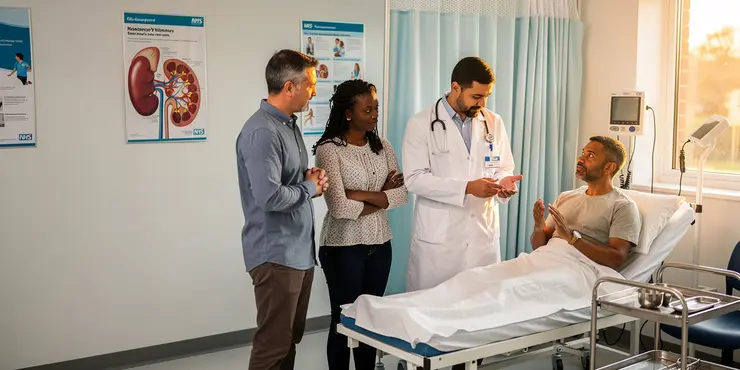
How are kidney stones diagnosed?
Relevance: 90%
-

Are kidney stones a recurring condition?
Relevance: 87%
-

Can children get kidney stones?
Relevance: 87%
-

Is surgery always required for kidney stones?
Relevance: 86%
-

How are kidney stones treated?
Relevance: 85%
-

Can kidney stones be prevented?
Relevance: 84%
-

What causes kidney stones?
Relevance: 82%
-

What should I do if I think I have a kidney stone?
Relevance: 82%

-

Who is most at risk for kidney stones?
Relevance: 80%
-

Can diet influence the formation of kidney stones?
Relevance: 77%
-

How much water should I drink to prevent kidney stones?
Relevance: 71%
-

What causes chronic kidney disease?
Relevance: 45%
-

What kinds of problems do urologists commonly treat?
Relevance: 43%
-

What is lithotripsy?
Relevance: 42%
-

Living with early stage kidney disease
Relevance: 41%
-

Chronic kidney disease: What are the treatments?
Relevance: 40%
-
What is my risk of kidney failure with CKD (chronic kidney disease) | UHL NHS Trust
Relevance: 39%
-

Matthew's Story: Kidney Transplant - Part 1
Relevance: 39%
-

Are there any complications associated with untreated BPH?
Relevance: 39%
-

Having a kidney transplant
Relevance: 38%
-

Does Ozempic have an impact on kidney function?
Relevance: 36%
-

Patient Stories - Having a kidney transplant
Relevance: 36%
-

Should I choose a urologist based on my specific condition?
Relevance: 35%
-

What is an ultrasound used for?
Relevance: 33%
-

Kidney transplant waiting stories – DJ Ace and Lauren | NHS Organ Donation
Relevance: 32%
-

NHSGGC - Diet and Chronic Kidney Disease (CKD)
Relevance: 32%
-

What are the common symptoms of lupus in children?
Relevance: 32%
-

What should I eat to help with chronic kidney disease?
Relevance: 31%
-

What are the symptoms of BPH?
Relevance: 30%
-

How do I know if a urologist uses modern treatments?
Relevance: 30%
-

Are there different types of kidney stones?
Relevance: 29%
-

How is appendicitis different from other causes of abdominal pain?
Relevance: 26%
-

What are the symptoms of arterial thrombosis?
Relevance: 26%
-

How is appendicitis diagnosed?
Relevance: 25%
-

Are there any complications associated with Crohn's disease?
Relevance: 25%
-

When is surgery recommended for BPH?
Relevance: 24%
-

What types of memorials are allowed in woodland burial sites?
Relevance: 23%
-

What illness does Hantavirus cause?
Relevance: 23%
What are kidney stones?
Kidney stones are hard deposits of minerals and salts that form in the kidneys. They can vary in size from a tiny grain to a larger stone that may block the flow of urine.
Some stones pass out of the body without causing much trouble. Others can trigger severe pain and other symptoms, especially if they move into the ureter, the tube that carries urine from the kidney to the bladder.
Main symptoms of kidney stones
The most common symptom is a sudden, severe pain in the side or back, often below the ribs. This pain can come in waves and may move towards the lower abdomen or groin.
Many people also feel pain when passing urine. You may notice that you need to pee more often than usual, or feel an urgent need to go even if only a small amount comes out.
Blood in the urine is another common sign. The urine may look pink, red, or brown, although sometimes the blood is only picked up on a urine test.
Other possible signs
Kidney stones can also cause nausea and vomiting, particularly when the pain is intense. Some people feel restless and unable to get comfortable because the pain is so strong.
Urine may smell unusual or look cloudy if there is an infection as well as a stone. Fever and chills are not typical of a simple kidney stone and may suggest a more serious problem.
Some people only notice mild discomfort, depending on the size and location of the stone. Others may have no symptoms at all until the stone begins to move.
When to seek medical help
You should contact a GP or NHS 111 if you think you may have a kidney stone and the pain is not going away. This is especially important if you are unable to keep fluids down or the pain is difficult to manage.
Seek urgent medical help if you have a fever, feel very unwell, or have trouble passing urine. These could be signs of a urinary tract infection or blockage that needs prompt treatment.
In the UK, severe pain, blood in the urine, or symptoms of infection should never be ignored. Getting checked early can help prevent complications and make treatment easier.
Frequently Asked Questions
What are the most common symptoms of kidney stones?
The most common symptoms are severe pain in the side, back, or lower abdomen, pain that comes in waves, blood in the urine, nausea, and frequent or painful urination.
Does kidney stone pain usually start suddenly?
Yes, kidney stone pain often starts suddenly and can become intense quickly, especially as the stone moves through the urinary tract.
Where is kidney stone pain usually felt?
Pain is often felt in the flank, which is the side and back below the ribs, and it may spread to the lower abdomen, groin, or genitals.
Can kidney stones cause blood in the urine?
Yes, kidney stones commonly cause blood in the urine, which may make the urine look pink, red, or brown.
Do kidney stones cause nausea or vomiting?
Yes, many people with kidney stones feel nauseated or vomit because the pain can be very intense.
Can kidney stones cause burning during urination?
Yes, if a stone moves into the lower urinary tract, it can cause burning or pain during urination.
Do kidney stones make you urinate more often?
Yes, a kidney stone can cause frequent urges to urinate, especially when the stone is near the bladder.
Can kidney stones cause trouble passing urine?
Yes, a stone can partially block urine flow, causing difficulty urinating or a reduced amount of urine.
Is fever a symptom of kidney stones?
Fever is not a typical symptom of an uncomplicated kidney stone, but it can occur if there is an infection, which needs urgent medical attention.
Can kidney stone pain come in waves?
Yes, kidney stone pain often comes in waves as the urinary tract tries to move the stone along.
Do kidney stones cause restlessness?
Yes, people with kidney stone pain often cannot get comfortable and may feel restless or unable to sit still.
Can kidney stones cause abdominal pain?
Yes, kidney stones can cause lower abdominal pain, especially as the stone travels toward the bladder.
Do kidney stones ever cause groin pain?
Yes, pain may radiate into the groin as the stone moves down the ureter.
Can kidney stones cause cloudy or foul-smelling urine?
They can sometimes, especially if there is a urinary tract infection along with the stone.
Do kidney stones cause severe pain with no warning?
They often do, and the pain may begin suddenly even when a person felt fine earlier.
Can kidney stones cause only mild symptoms?
Yes, smaller kidney stones may cause mild pain, slight discomfort, or no noticeable symptoms at all.
Are kidney stone symptoms different for everyone?
Yes, symptoms vary depending on the stone’s size, location, and whether it is blocking urine flow or causing infection.
Can kidney stones cause pain that moves around?
Yes, the pain often shifts location as the stone moves from the kidney into the ureter and toward the bladder.
Do kidney stones affect urination color or smell?
They can, especially if they cause blood in the urine or an infection, which may change the urine’s color or smell.
When should kidney stone symptoms be treated as an emergency?
Seek urgent care if symptoms include fever, severe uncontrolled pain, vomiting that prevents drinking, difficulty passing urine, or signs of infection.

Useful Links
This website offers general information and is not a substitute for professional advice.
Always seek guidance from qualified professionals.
If you have any medical concerns or need urgent help, contact a healthcare professional or emergency services immediately.
Some of this content was generated with AI assistance. We've done our best to keep it accurate, helpful, and human-friendly.
- Ergsy carefully checks the information in the videos we provide here.
- Videos shown by Youtube after a video has completed, have NOT been reviewed by ERGSY.
- To view, click the arrow in centre of video.
- Most of the videos you find here will have subtitles and/or closed captions available.
- You may need to turn these on, and choose your preferred language.
- Go to the video you'd like to watch.
- If closed captions (CC) are available, settings will be visible on the bottom right of the video player.
- To turn on Captions, click settings.
- To turn off Captions, click settings again.
More Items From Ergsy search
-
What are the symptoms of kidney stones?
Relevance: 100%
-
What are kidney stones?
Relevance: 92%
-
How are kidney stones diagnosed?
Relevance: 90%
-
Are kidney stones a recurring condition?
Relevance: 87%
-
Can children get kidney stones?
Relevance: 87%
-
Is surgery always required for kidney stones?
Relevance: 86%
-
How are kidney stones treated?
Relevance: 85%
-
Can kidney stones be prevented?
Relevance: 84%
-
What causes kidney stones?
Relevance: 82%
-
What should I do if I think I have a kidney stone?
Relevance: 82%
-
Who is most at risk for kidney stones?
Relevance: 80%
-
Can diet influence the formation of kidney stones?
Relevance: 77%
-
How much water should I drink to prevent kidney stones?
Relevance: 71%
-
What causes chronic kidney disease?
Relevance: 45%
-
What kinds of problems do urologists commonly treat?
Relevance: 43%
-
What is lithotripsy?
Relevance: 42%
-
Living with early stage kidney disease
Relevance: 41%
-
Chronic kidney disease: What are the treatments?
Relevance: 40%
-
What is my risk of kidney failure with CKD (chronic kidney disease) | UHL NHS Trust
Relevance: 39%
-
Matthew's Story: Kidney Transplant - Part 1
Relevance: 39%
-
Are there any complications associated with untreated BPH?
Relevance: 39%
-
Having a kidney transplant
Relevance: 38%
-
Does Ozempic have an impact on kidney function?
Relevance: 36%
-
Patient Stories - Having a kidney transplant
Relevance: 36%
-
Should I choose a urologist based on my specific condition?
Relevance: 35%
-
What is an ultrasound used for?
Relevance: 33%
-
Kidney transplant waiting stories – DJ Ace and Lauren | NHS Organ Donation
Relevance: 32%
-
NHSGGC - Diet and Chronic Kidney Disease (CKD)
Relevance: 32%
-
What are the common symptoms of lupus in children?
Relevance: 32%
-
What should I eat to help with chronic kidney disease?
Relevance: 31%
-
What are the symptoms of BPH?
Relevance: 30%
-
How do I know if a urologist uses modern treatments?
Relevance: 30%
-
Are there different types of kidney stones?
Relevance: 29%
-
How is appendicitis different from other causes of abdominal pain?
Relevance: 26%
-
What are the symptoms of arterial thrombosis?
Relevance: 26%
-
How is appendicitis diagnosed?
Relevance: 25%
-
Are there any complications associated with Crohn's disease?
Relevance: 25%
-
When is surgery recommended for BPH?
Relevance: 24%
-
What types of memorials are allowed in woodland burial sites?
Relevance: 23%
-
What illness does Hantavirus cause?
Relevance: 23%