

Speak To An Expert
Get clear, personalised advice for your situation.
Jot down a few questions to make the most of your conversation.
More Items From Ergsy search
-

Heavy periods (heavy menstrual bleeding)
Relevance: 100%
-

How is heavy menstrual bleeding diagnosed?
Relevance: 99%
-
What is heavy menstrual bleeding?
Relevance: 95%
-

What causes heavy menstrual bleeding?
Relevance: 91%
-

What are common signs of heavy menstrual bleeding?
Relevance: 89%
-

Does heavy menstrual bleeding affect fertility?
Relevance: 89%
-

Can heavy menstrual bleeding happen in teenagers?
Relevance: 88%
-

What treatments are used for heavy menstrual bleeding?
Relevance: 87%
-
Is heavy menstrual bleeding the same as painful periods?
Relevance: 87%
-

Can heavy menstrual bleeding be caused by fibroids?
Relevance: 87%

-

Can heavy menstrual bleeding cause anemia?
Relevance: 87%
-

Can stress cause heavy menstrual bleeding?
Relevance: 86%
-
Can heavy menstrual bleeding lead to emergencies?
Relevance: 85%
-

Is heavy menstrual bleeding always a sign of a serious problem?
Relevance: 84%
-
How is heavy menstrual bleeding different from a normal period?
Relevance: 84%
-

What self-care can help with heavy menstrual bleeding?
Relevance: 83%
-

Can birth control help with heavy menstrual bleeding?
Relevance: 82%
-

When should I see a doctor for heavy menstrual bleeding?
Relevance: 82%
-

Can heavy menstrual bleeding happen after menopause?
Relevance: 75%
-

How much bleeding is considered heavy?
Relevance: 73%
-

Should I track my periods if I have heavy bleeding?
Relevance: 59%
-

Can I use Ibuprofen for menstrual pain?
Relevance: 45%
-
Bleeding from the bottom rectal bleeding
Relevance: 42%
-

Post Menopausal Bleeding Clinic | A Guide to What Happens at An Appointment
Relevance: 41%
-
Bleeding from the bottom rectal bleeding
Relevance: 41%
-

What should I do if I start bleeding during early pregnancy? | NHS
Relevance: 39%
-

What happens after a womb lining test?
Relevance: 35%
-

In what situations are medical tampons used?
Relevance: 35%
-

What should I do if I experience severe pain or bleeding after the test?
Relevance: 35%
-

What you need to know about irregular periods
Relevance: 35%
-
What is Anaemia (iron deficiency)?
Relevance: 34%
-

Irregular periods - BSL
Relevance: 33%
-
Are there any risks associated with the womb lining test?
Relevance: 33%
-

What is the Womb Lining test?
Relevance: 33%
-
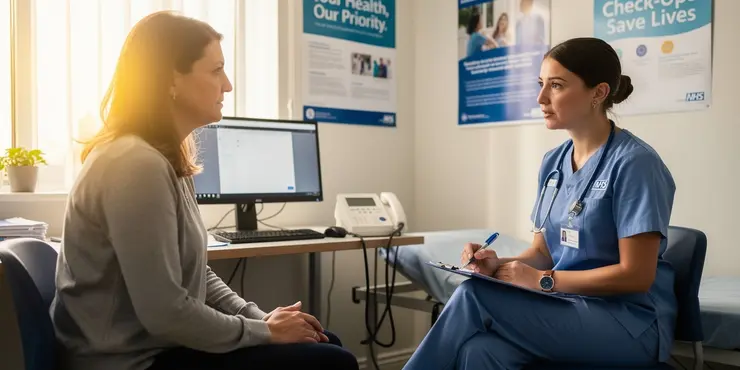
Can the test be performed during my menstrual period?
Relevance: 32%
-

Will the test affect my menstrual cycle?
Relevance: 31%
-

Having a hysteroscopy as an outpatient (English)
Relevance: 29%
-
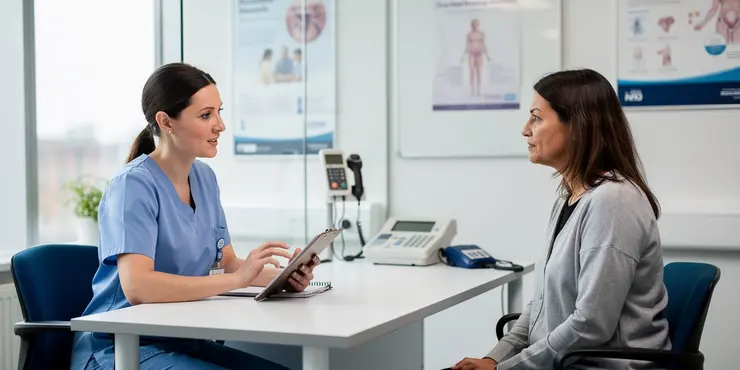
Is the womb lining test painful?
Relevance: 27%
-
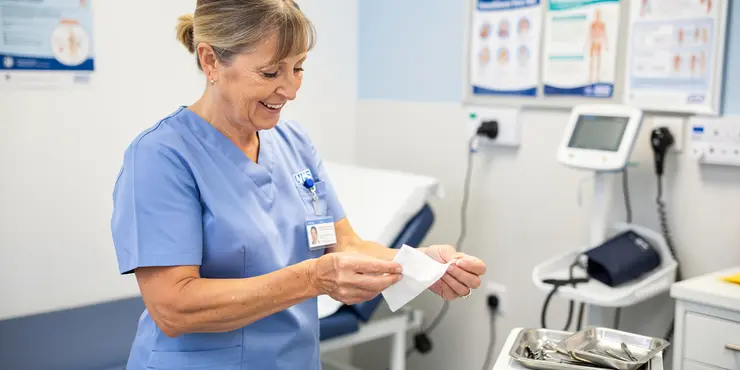
How to treat a nosebleed | NHS
Relevance: 24%
-

Finding out about Fibroids - information for patients
Relevance: 24%
Recognising heavy menstrual bleeding
Heavy menstrual bleeding, sometimes called menorrhagia, is usually diagnosed by talking about your periods and how they affect your daily life. A GP will want to know how often your periods come, how long they last, and how much bleeding you have.
It is not just about the number of days you bleed. Doctors also look at symptoms such as flooding, passing large blood clots, needing to change protection very frequently, or having periods that interfere with work, sleep, or normal activities.
What your GP will ask
Your GP will usually start by taking a detailed history. They may ask when your heavy bleeding began, whether it happens every cycle, and whether you have pain, pelvic pressure, or bleeding between periods.
They will also ask about your general health and any medicines you take. This includes contraception, blood thinners, and treatments that might affect bleeding.
It is helpful to mention signs of anaemia too, such as tiredness, dizziness, shortness of breath, or looking pale. These can happen when heavy bleeding has caused iron deficiency.
Physical examination and tests
A doctor may offer a physical examination to look for possible causes. This might include checking your tummy and, in some cases, a pelvic examination.
Blood tests are often used to check for anaemia and iron levels. Depending on your symptoms, your GP may also arrange tests for thyroid problems or a pregnancy test.
If there is concern about an underlying cause, you may be referred for further investigations. Common tests include an ultrasound scan, which can check for fibroids, polyps, or other changes in the womb.
Looking for the cause
Heavy menstrual bleeding can happen for many reasons. These may include hormonal changes, fibroids, endometriosis, adenomyosis, polyps, or problems with the womb lining.
Sometimes no clear cause is found, but that does not mean the symptoms are not real or serious. Diagnosis is still based on your symptoms, test results, and how much the bleeding affects your life.
Keeping track of your symptoms
Before your appointment, it can help to keep a period diary for a few months. Note the dates of your periods, how many pads or tampons you use, whether you bleed through clothes or bedding, and any clots.
This information can make it easier for your GP to assess how severe the bleeding is. It can also help guide the next steps in diagnosis and treatment.
When to seek urgent help
You should seek urgent medical advice if you are soaking through pads very quickly, feel faint, or have severe pain with heavy bleeding. Very heavy bleeding that causes weakness or breathlessness should not be ignored.
If you think you may be pregnant and are bleeding heavily, get urgent help straight away. Heavy bleeding in pregnancy can be a medical emergency.
Frequently Asked Questions
How is heavy menstrual bleeding diagnosed?
Diagnosis usually starts with a medical history, a review of menstrual patterns, and a physical examination. A clinician may also order blood tests, pregnancy testing, imaging, or other tests to find the cause.
What symptoms make a doctor suspect heavy menstrual bleeding?
Common signs include soaking through pads or tampons quickly, passing large clots, needing to change protection at night, bleeding longer than 7 days, or having bleeding that interferes with daily activities.
What questions will a doctor ask during the evaluation?
A doctor may ask how long periods last, how many pads or tampons you use, whether you pass clots, how often you change protection, and whether bleeding affects work, sleep, or school.
Why is a menstrual history important for diagnosis?
Menstrual history helps show whether bleeding is heavier or longer than expected and whether the pattern suggests a hormonal issue, fibroids, a bleeding disorder, or another cause.
What physical exam is usually done?
A pelvic exam may be done to check for uterine enlargement, tenderness, masses, or signs of another gynecologic problem. A general exam may also look for pale skin or other signs of anemia.
What blood tests are used to diagnose heavy menstrual bleeding?
Blood tests may include a complete blood count to check for anemia, iron studies to assess iron deficiency, and sometimes tests for thyroid function, clotting problems, or hormone-related issues.
Why is a pregnancy test sometimes ordered?
Pregnancy can cause abnormal bleeding, including complications such as miscarriage or ectopic pregnancy. A pregnancy test helps rule out these possibilities when diagnosing the cause of bleeding.
Can ultrasound help diagnose heavy menstrual bleeding?
Yes. Pelvic ultrasound can check the uterus and ovaries for fibroids, polyps, adenomyosis, ovarian cysts, or other structural causes of heavy bleeding.
When is a transvaginal ultrasound used?
A transvaginal ultrasound may be used when a closer view of the uterus and ovaries is needed. It often provides more detail than an abdominal ultrasound for finding structural causes.
What is an endometrial biopsy?
An endometrial biopsy is a procedure that takes a small sample of the lining of the uterus. It helps check for abnormal cells, cancer, or hormonal changes that may explain heavy bleeding.
Who needs an endometrial biopsy?
It is more often recommended for people over a certain age, those with risk factors for endometrial cancer, or those with persistent bleeding despite initial evaluation or treatment.
Can heavy menstrual bleeding be diagnosed without tests?
Sometimes the diagnosis is based on symptoms and exam findings, especially when bleeding is clearly excessive. Tests are often added to identify the cause and check for complications like anemia.
How do doctors tell heavy menstrual bleeding from normal variation?
They compare bleeding patterns with typical menstrual amounts and duration, and they consider whether the bleeding causes anemia, pain, fatigue, or disruption of normal life.
What role do clotting disorder tests play?
If bleeding has been heavy since the first periods, there is a family history of bleeding problems, or there is easy bruising or frequent nosebleeds, tests may be done to look for a bleeding disorder.
Can thyroid problems cause heavy menstrual bleeding?
Yes. Thyroid disorders can affect menstrual bleeding patterns, so thyroid testing may be included when the cause is unclear or when symptoms suggest a thyroid problem.
Why are iron studies important?
Heavy menstrual bleeding can lead to iron deficiency even before anemia becomes severe. Iron studies help show whether the body’s iron stores are low and whether treatment is needed.
What is a bleeding diary and how does it help diagnosis?
A bleeding diary records when bleeding starts and stops, how heavy it is, and how often protection is changed. It gives the clinician a clearer picture of the bleeding pattern.
Do doctors look for medications that can cause heavy bleeding?
Yes. Some medicines, such as blood thinners or certain hormonal treatments, can affect menstrual bleeding. A medication review is part of the diagnosis.
Can heavy menstrual bleeding be related to fibroids or polyps?
Yes. Fibroids and polyps are common structural causes of heavy bleeding, and imaging such as ultrasound or hysteroscopy may be used to detect them.
When should someone seek medical evaluation for heavy menstrual bleeding?
Medical evaluation is important if periods are consistently very heavy, last longer than usual, cause fatigue or dizziness, or lead to soaking through protection quickly or bleeding between periods.

Useful Linksxxx
This website offers general information and is not a substitute for professional advice.
Always seek guidance from qualified professionals.
If you have any medical concerns or need urgent help, contact a healthcare professional or emergency services immediately.
Some of this content was generated with AI assistance. We've done our best to keep it accurate, helpful, and human-friendly.
- Ergsy carefully checks the information in the videos we provide here.
- Videos shown by Youtube after a video has completed, have NOT been reviewed by ERGSY.
- To view, click the arrow in centre of video.
- Most of the videos you find here will have subtitles and/or closed captions available.
- You may need to turn these on, and choose your preferred language.
- Go to the video you'd like to watch.
- If closed captions (CC) are available, settings will be visible on the bottom right of the video player.
- To turn on Captions, click settings.
- To turn off Captions, click settings again.
More Items From Ergsy search
-
Heavy periods (heavy menstrual bleeding)
Relevance: 100%
-
How is heavy menstrual bleeding diagnosed?
Relevance: 99%
-
What is heavy menstrual bleeding?
Relevance: 95%
-
What causes heavy menstrual bleeding?
Relevance: 91%
-
What are common signs of heavy menstrual bleeding?
Relevance: 89%
-
Does heavy menstrual bleeding affect fertility?
Relevance: 89%
-
Can heavy menstrual bleeding happen in teenagers?
Relevance: 88%
-
What treatments are used for heavy menstrual bleeding?
Relevance: 87%
-
Is heavy menstrual bleeding the same as painful periods?
Relevance: 87%
-
Can heavy menstrual bleeding be caused by fibroids?
Relevance: 87%
-
Can heavy menstrual bleeding cause anemia?
Relevance: 87%
-
Can stress cause heavy menstrual bleeding?
Relevance: 86%
-
Can heavy menstrual bleeding lead to emergencies?
Relevance: 85%
-
Is heavy menstrual bleeding always a sign of a serious problem?
Relevance: 84%
-
How is heavy menstrual bleeding different from a normal period?
Relevance: 84%
-
What self-care can help with heavy menstrual bleeding?
Relevance: 83%
-
Can birth control help with heavy menstrual bleeding?
Relevance: 82%
-
When should I see a doctor for heavy menstrual bleeding?
Relevance: 82%
-
Can heavy menstrual bleeding happen after menopause?
Relevance: 75%
-
How much bleeding is considered heavy?
Relevance: 73%
-
Should I track my periods if I have heavy bleeding?
Relevance: 59%
-
Can I use Ibuprofen for menstrual pain?
Relevance: 45%
-
Bleeding from the bottom rectal bleeding
Relevance: 42%
-
Post Menopausal Bleeding Clinic | A Guide to What Happens at An Appointment
Relevance: 41%
-
Bleeding from the bottom rectal bleeding
Relevance: 41%
-
What should I do if I start bleeding during early pregnancy? | NHS
Relevance: 39%
-
What happens after a womb lining test?
Relevance: 35%
-
In what situations are medical tampons used?
Relevance: 35%
-
What should I do if I experience severe pain or bleeding after the test?
Relevance: 35%
-
What you need to know about irregular periods
Relevance: 35%
-
What is Anaemia (iron deficiency)?
Relevance: 34%
-
Irregular periods - BSL
Relevance: 33%
-
Are there any risks associated with the womb lining test?
Relevance: 33%
-
What is the Womb Lining test?
Relevance: 33%
-
Can the test be performed during my menstrual period?
Relevance: 32%
-
Will the test affect my menstrual cycle?
Relevance: 31%
-
Having a hysteroscopy as an outpatient (English)
Relevance: 29%
-
Is the womb lining test painful?
Relevance: 27%
-
How to treat a nosebleed | NHS
Relevance: 24%
-
Finding out about Fibroids - information for patients
Relevance: 24%