
Get Answers
Understanding Flesh-Eating Disease
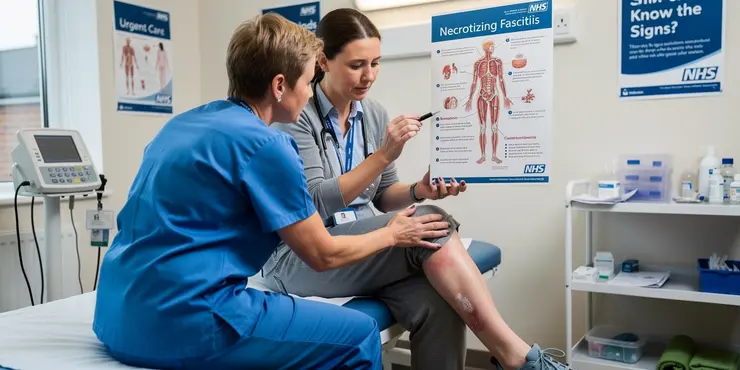
Flesh-eating disease, or necrotizing fasciitis, is a severe bacterial infection. It rapidly destroys muscles, skin, and tissues beneath the skin.
This condition is rare but serious. It can develop quickly and requires immediate medical attention.
Causes and Risk Factors
Flesh-eating disease is most often caused by group A Streptococcus bacteria. Other bacteria, such as Vibrio and Clostridium, can also lead to the condition.
Risk factors include cuts, surgical wounds, or weakened immune systems. Timely treatment is crucial to prevent severe outcomes.
Mortality Rate of Flesh-Eating Disease
The mortality rate for necrotizing fasciitis varies widely. Estimates indicate it ranges from 20% to 30% worldwide.
In some cases, particularly severe infections can lead to higher fatality rates. Early diagnosis and treatment significantly improve survival chances.
Treatment Options
Treatment typically involves antibiotics and surgical intervention. Surgery is often needed to remove dead tissue and stop the spread of infection.
In severe cases, patients may require multiple surgeries. Intensive care support may also be necessary.
Importance of Awareness and Prevention
Public awareness is crucial in reducing mortality rates. Recognizing symptoms early can save lives.
Preventative measures include maintaining good hygiene and timely medical consultation for infected wounds. This can mitigate the risk of developing the disease.
Conclusion
Flesh-eating disease is a life-threatening condition. Understanding its risk factors and symptoms can help in reducing its mortality rate.
Prompt medical treatment and preventive measures hold the key to better outcomes. Awareness can ensure timely intervention and enhanced survival rates.
Frequently Asked Questions
Flesh-eating disease, also known as necrotizing fasciitis, is a rare but severe infection that destroys tissues under the skin.
Necrotizing fasciitis is usually caused by a bacterial infection, most commonly by Group A Streptococcus bacteria.
The bacteria that cause necrotizing fasciitis can enter the body through a break in the skin, such as a cut or surgical wound.
Early symptoms include severe pain, fever, swelling, and redness at the infection site, followed by skin changes and systemic symptoms.
The mortality rate for necrotizing fasciitis varies but is generally reported to be around 20% to 30% even with treatment.
The mortality rate is high due to the rapid progression of the infection, potential for systemic involvement, and the need for prompt, aggressive treatment.
Diagnosis is based on clinical examination, imaging studies, and laboratory tests. Suspicion of the condition requires immediate medical evaluation.
Necrotizing fasciitis requires prompt surgical intervention to remove dead tissue, along with antibiotics and supportive care.
Good wound care and hygiene can reduce the risk of infection, and seeking medical advice promptly for unusual symptoms can aid early diagnosis.
Individuals with weakened immune systems, chronic diseases, or recent surgery are at higher risk, though it can affect healthy individuals as well.
The disease can progress rapidly, often within 24 to 48 hours, making prompt treatment essential to improve outcomes.
Necrotizing fasciitis is not usually contagious as it requires entry through a wound, but the bacteria can be spread from person to person.
Yes, necrotizing fasciitis can be polymicrobial or monomicrobial, depending on the bacteria causing the infection.
While rare, necrotizing fasciitis can recur or cause complications post-treatment, making follow-up care important.
Antibiotics are crucial for treating the bacterial infection, but surgery is necessary to remove necrotic tissue.
Complications can include sepsis, organ failure, limb amputation, and significant scarring or disfigurement.
Necrotizing fasciitis is rare, with statistics varying by region, but it is a critical medical emergency whenever it occurs.
Prognosis depends on how quickly treatment is initiated and the individual’s overall health, but it can be poor without rapid intervention.
Rapid intervention is crucial due to the fast progression of tissue destruction, which can lead to severe complications or death.
Public awareness can be improved through education about risk factors, early signs, and the importance of seeking immediate medical care.

Ergsy Search Results
This website offers general information and is not a substitute for professional advice.
Always seek guidance from qualified professionals.
If you have any medical concerns or need urgent help, contact a healthcare professional or emergency services immediately.
Some of this content was generated with AI assistance. We've done our best to keep it accurate, helpful, and human-friendly.
- Ergsy carefully checks the information in the videos we provide here.
- Videos shown by Youtube after a video has completed, have NOT been reviewed by ERGSY.
- To view, click the arrow in centre of video.
- Most of the videos you find here will have subtitles and/or closed captions available.
- You may need to turn these on, and choose your preferred language.
- Go to the video you'd like to watch.
- If closed captions (CC) are available, settings will be visible on the bottom right of the video player.
- To turn on Captions, click settings.
- To turn off Captions, click settings again.