
Get Answers
Understanding the Legal Framework
In the UK, the use of security cameras by private individuals is subject to certain laws and regulations. The most relevant legislation is the Data Protection Act 2018 and the General Data Protection Regulation (GDPR). These laws require that the use of CCTV is legitimate, necessary, and proportionate. If a neighbour's security camera is recording areas outside their boundary, it is capturing personal data, and the neighbour must have a valid reason to do so.
Assessing the Situation
Before taking any action, it is essential to assess the situation carefully. Determine whether the camera is genuinely infringing on your privacy. Note the direction, field of view, and whether it records any part of your property. Cameras installed for legitimate security reasons, like covering doorways or driveways, may inadvertently capture a small portion of your property but should not focus directly on it.
Communicating with Your Neighbour
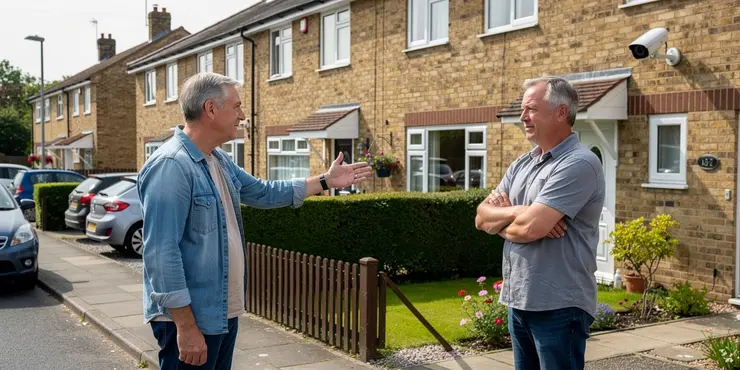
Your first step should be to speak directly with your neighbour. Explain your concerns politely and provide specific examples of what makes you uncomfortable. Often, neighbours are unaware that their camera is intruding on your privacy and may adjust the camera angle or reposition it without any issue.
Seeking Mediation
If a direct conversation fails to resolve the issue, consider mediation. Many communities have access to informal dispute resolution services. Mediation can help both parties reach an agreement without escalating the situation further. This approach is less confrontational and can preserve neighbourly relations.
Legal Options
Should all attempts at a peaceful resolution fail, legal action may be necessary. Contact the Information Commissioner's Office (ICO), the body responsible for enforcing data protection laws in the UK. They can advise on whether your neighbour's CCTV usage is compliant with legal requirements. Additionally, consult a solicitor to explore legal options such as pursuing a claim for an invasion of privacy.
Installing Screening Measures
While addressing the issue through communication or legal means, you can also consider installing physical barriers. Fencing, hedging, or privacy screens can prevent the camera from recording your property. Ensure any installations comply with local planning regulations and discuss with your neighbour to maintain a harmonious relationship.
Conclusion
Dealing with a neighbour's security camera pointing at your property can often be resolved through open communication and understanding among neighbours. It is crucial to approach the situation calmly and with knowledge of your rights. Legal resources are available if necessary, but many scenarios can be resolved through dialogue or simple adjustments.
Understanding the Rules
In the UK, people must follow rules when they use security cameras. The Data Protection Act 2018 and GDPR are important laws. These rules say cameras must be used for a good reason. If a neighbour's camera is looking at your property, it needs to have a good reason to do that.
Checking the Problem
Before doing anything, check the problem first. Look at where the camera is pointing and see if it is looking at your property. Cameras meant to watch doorways or driveways might accidentally see part of your property. They should not be focused on your property only.
Talking to Your Neighbour
Your first step should be to talk to your neighbour. Be nice and tell them why you are worried. Give examples of what bothers you. Many times, they may not know their camera is a problem. They might fix it easily if you tell them.
Getting Help to Solve the Problem
If talking doesn't help, you can ask for help from a mediator. A mediator is a person who helps solve problems. This can stop the problem from getting worse. This way is friendly and helps keep good neighbour relations.
Using the Law
If nothing else works, you might need to use the law. You can talk to the Information Commissioner's Office (ICO). They make sure data protection laws are followed. Also, a lawyer can help you understand what to do next if your privacy is being invaded.
Adding Physical Barriers
While trying to solve the problem, you can put up fences or screens. These can block the camera from seeing your property. Check local rules about fences. Talk to your neighbour so you both stay friendly.
Conclusion
A neighbour's camera pointing at you can often be fixed by talking and understanding. Stay calm and know your rights. Legal help is there if needed, but many problems solve with simple talking or small changes.
Frequently Asked Questions
Politely talk to your neighbor about your concerns and ask if they could adjust the camera.
Laws vary by location, but generally, cameras should not invade your privacy by recording areas where you have a reasonable expectation of privacy.
Yes, planting trees or installing fences can help block the camera's view of your property.
If discussing directly with your neighbor fails, contacting local authorities or seeking legal advice can be a next step.
Footage of private areas like inside your home or yard areas where you expect privacy could be deemed invasive.
Yes, seeking legal counsel or mediation might be necessary if the issue cannot be resolved amicably.
Privacy laws vary by region, but many protect against undue surveillance without consent.
You can still request adjustment or covering of any parts that infringe on your privacy.
Yes, requesting your neighbor to redirect their camera away from private areas of your property can be effective.
Politely ask your neighbor to review the footage with you to ensure it does not invade your privacy.
Mediation is a useful approach if discussions with your neighbor have not been successful.
Yes, as long as it complies with local laws, installing a camera on your property can provide evidence if needed.
Take notes of dates and times you've discussed this issue, any changes in camera position, and gather any relevant photos.
If you belong to a neighborhood association, they might mediate disputes between residents over privacy concerns.
Your concern is valid if it feels intrusive; communication with your neighbor is the first step.
Special films or materials can block a camera’s line of sight, but check legality before use.
Yes, discussing security measures in advance with neighbors can prevent future disputes.
If all else fails, legal action or involving law enforcement may be necessary.
Consult with a lawyer to ensure your actions comply with local regulations.
If informal solutions fail, filing a formal complaint with local authorities can be effective.
Talk nicely to your neighbor. Tell them what is worrying you and ask if they can move the camera a bit.
Laws can be different in each place, but usually, cameras should not record places where you expect to be private and alone.
Yes, you can plant trees or put up fences to stop the camera from seeing your home.
If talking to your neighbor doesn’t work, you can ask the local council or get help from a lawyer.
Videos showing private places, like inside your house or your backyard, might feel like someone is invading your privacy.
Yes, if you can't solve the problem nicely, you might need help from a lawyer or a mediator.
Privacy laws are different in each place, but many of them stop people from watching you without asking first.
You can ask for changes or cover-ups if something is invading your privacy.
You can ask your neighbor to move their camera so it doesn't point at your private space. This can work well.
Ask your neighbor nicely if you can watch the video together. Make sure the video does not show things that are private to you.
Mediation can help if talking to your neighbor didn't work.
Yes, you can put a camera on your property if it follows the law. It can help you have proof if you need it.
Write down when you talked about the problem, mark the dates and times. Also, note if the camera moved, and collect any photos that could help.
If you are part of a neighborhood group, they can help solve arguments between people who live there about privacy worries.
It's okay to feel worried if something bothers you. Try talking to your neighbor about it first.
Some special things, like films or covers, can stop cameras from seeing. Make sure to check if using them is okay by law.
Talking about safety plans with neighbors before something happens can help avoid arguments later.
If nothing else works, you might need to get help from a lawyer or the police.
Talk to a lawyer to make sure you are following the rules in your area.
If talking it out doesn't work, you can tell the people in charge to help fix the problem. This is called making a formal complaint.

Ergsy Search Results
This website offers general information and is not a substitute for professional advice.
Always seek guidance from qualified professionals.
If you have any medical concerns or need urgent help, contact a healthcare professional or emergency services immediately.
Some of this content was generated with AI assistance. We've done our best to keep it accurate, helpful, and human-friendly.
- Ergsy carefully checks the information in the videos we provide here.
- Videos shown by Youtube after a video has completed, have NOT been reviewed by ERGSY.
- To view, click the arrow in centre of video.
- Most of the videos you find here will have subtitles and/or closed captions available.
- You may need to turn these on, and choose your preferred language.
- Go to the video you'd like to watch.
- If closed captions (CC) are available, settings will be visible on the bottom right of the video player.
- To turn on Captions, click settings.
- To turn off Captions, click settings again.