

Speak To An Expert
Get clear, personalised advice for your situation.
Jot down a few questions to make the most of your conversation.
More Items From Ergsy search
-

Are there any AI-based tools available for lung cancer risk assessment?
Relevance: 100%
-
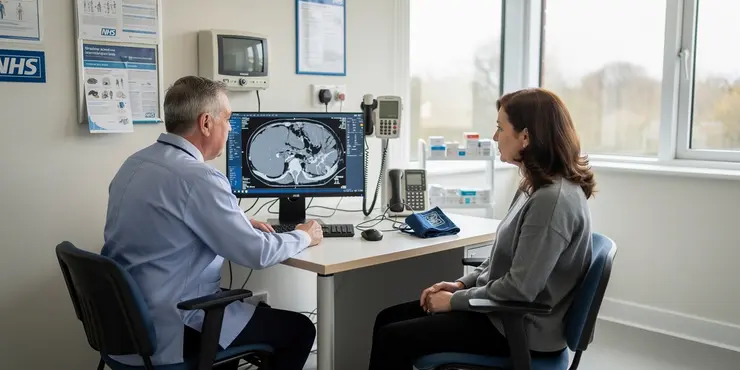
How are AI and Robots used to detect lung cancer?
Relevance: 58%
-
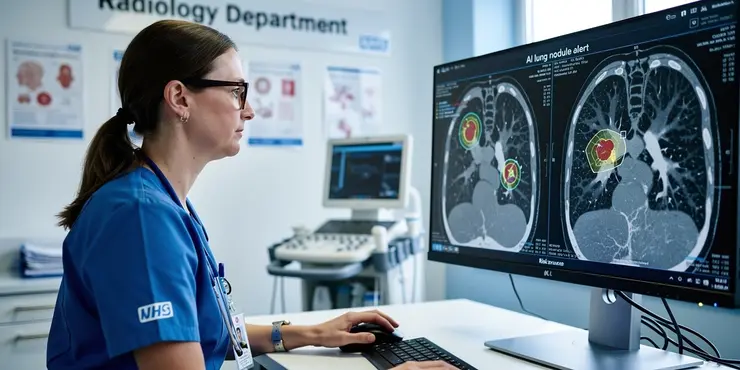
What role does AI play in lung cancer detection?
Relevance: 56%
-

Air Pollution and Lung Cancer
Relevance: 54%
-
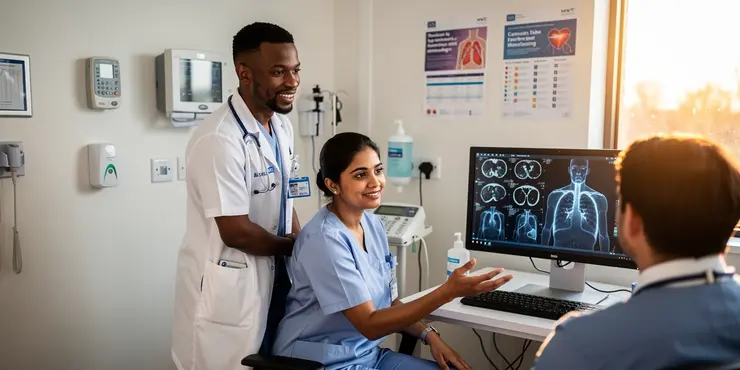
How does AI impact the cost of lung cancer detection?
Relevance: 54%
-
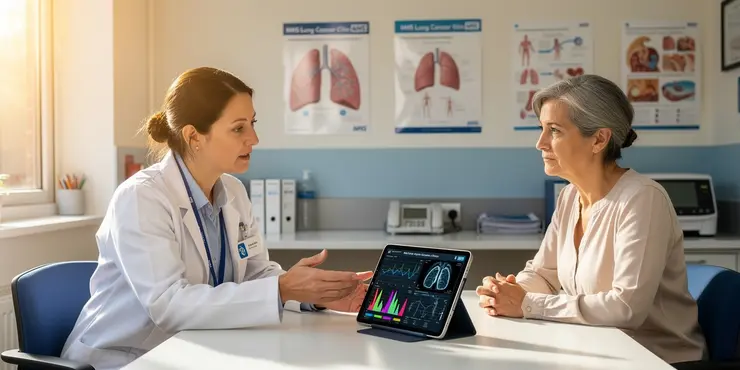
How can AI improve patient outcomes in lung cancer?
Relevance: 53%
-

What is a low-dose CT scan for lung cancer?
Relevance: 53%
-
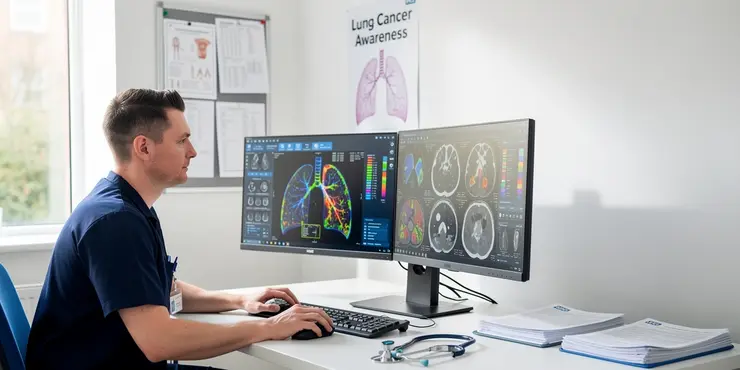
Can AI systems reduce the rate of false positives in lung cancer screening?
Relevance: 53%
-
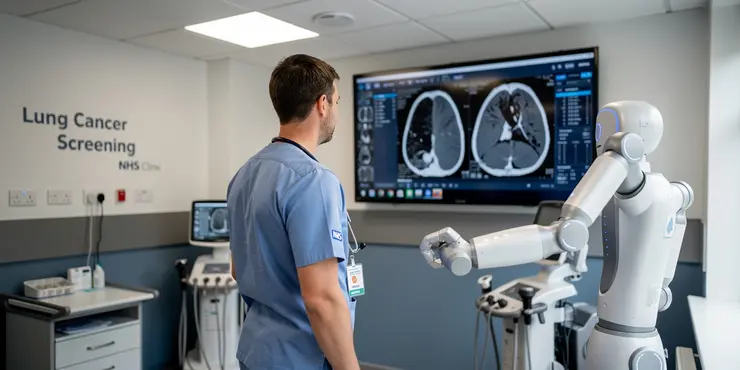
Can robots perform lung cancer screenings?
Relevance: 52%
-
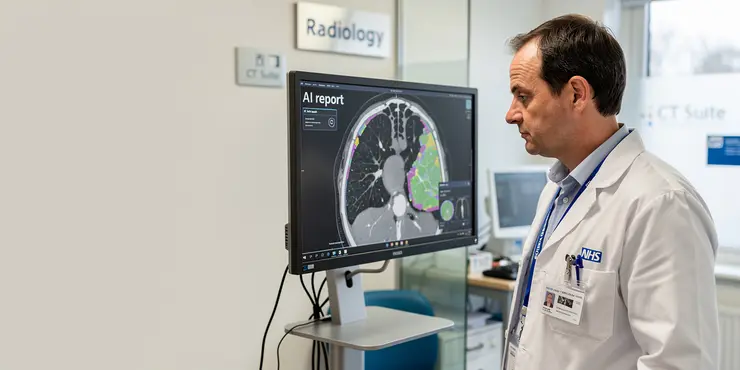
What is the future of AI and robotics in lung cancer detection and treatment?
Relevance: 52%

-
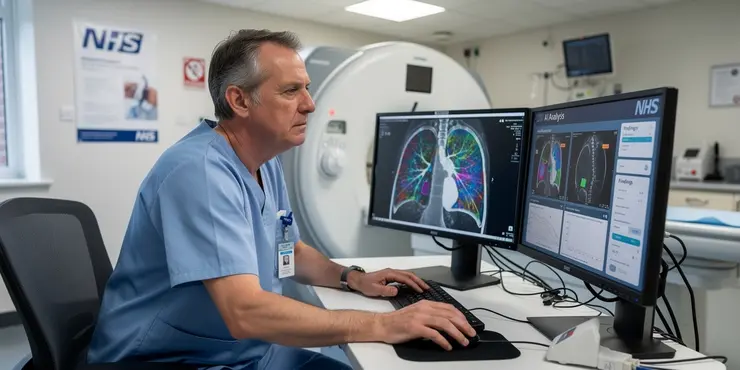
What is the advantage of using AI for lung cancer detection?
Relevance: 51%
-
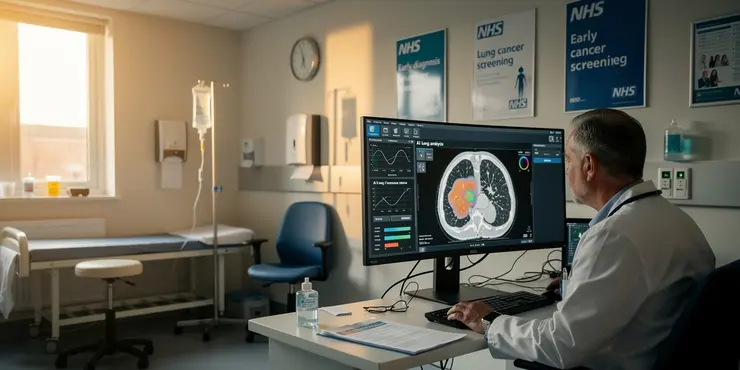
Which types of imaging data are analyzed by AI for lung cancer detection?
Relevance: 50%
-
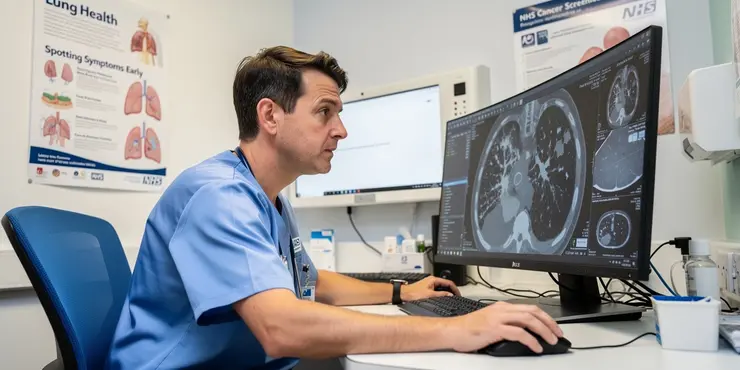
How do AI algorithms detect lung cancer in scans?
Relevance: 50%
-
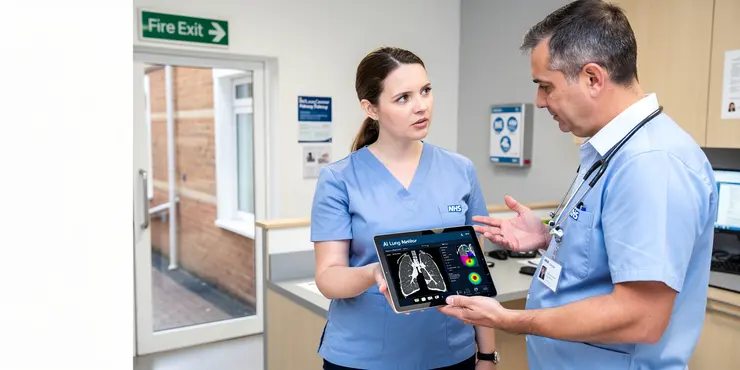
Can AI help in monitoring lung cancer progression?
Relevance: 50%
-
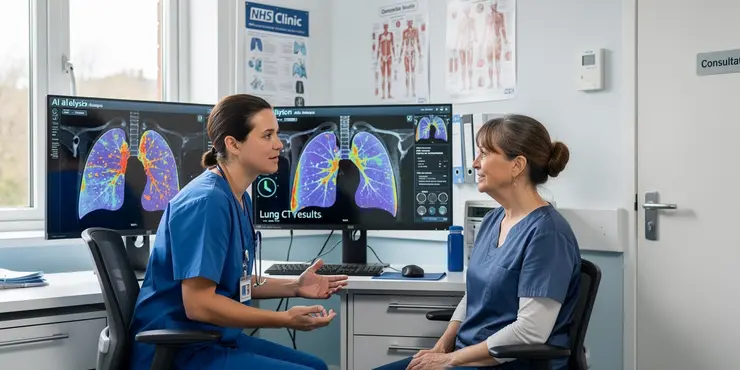
Is AI technology in lung cancer detection widely accepted by hospitals?
Relevance: 49%
-
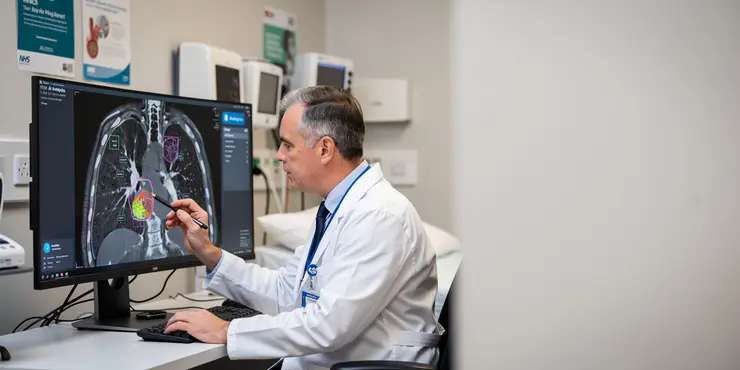
Are AI systems used alone in lung cancer diagnosis or alongside human radiologists?
Relevance: 49%
-
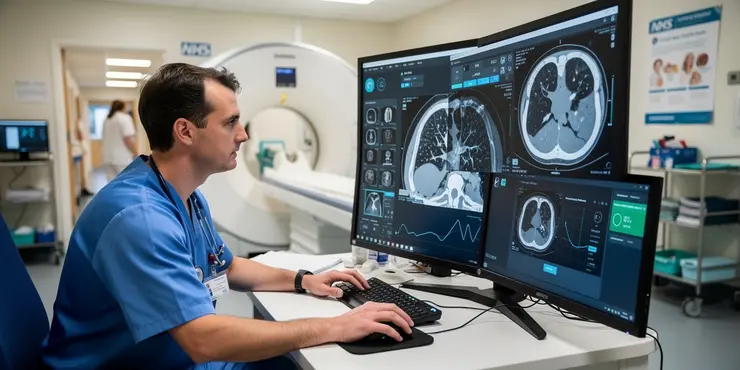
Have AI systems for lung cancer detection been clinically validated?
Relevance: 49%
-
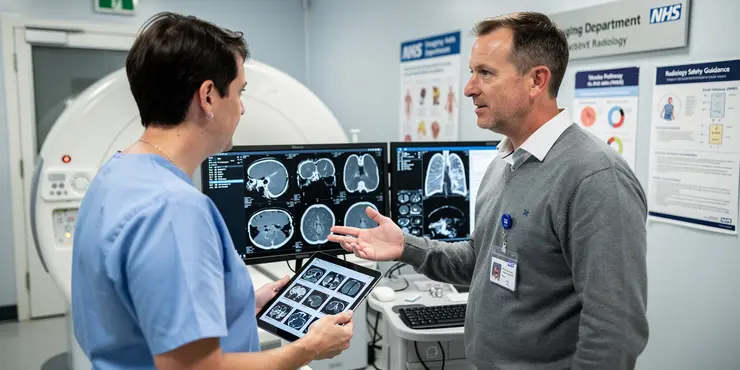
Do AI models for lung cancer require a lot of data to train?
Relevance: 48%
-
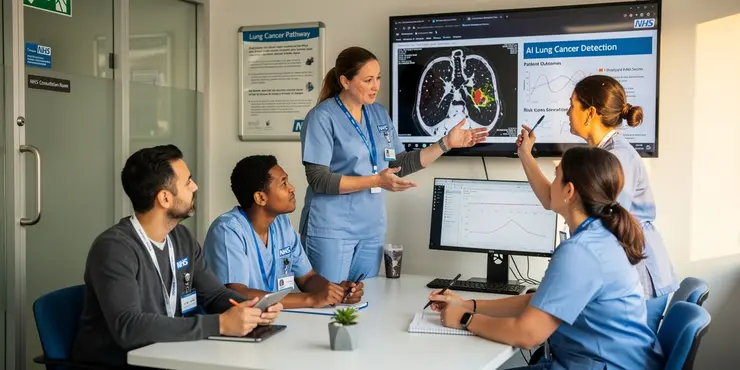
What challenges remain in using AI for lung cancer detection?
Relevance: 48%
-
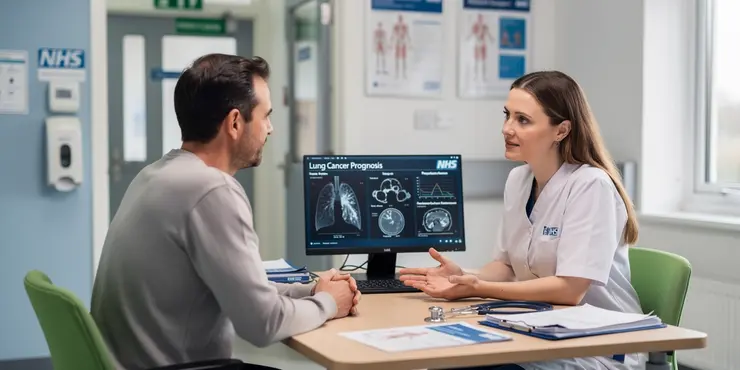
Can AI predict lung cancer survival rates?
Relevance: 47%
-
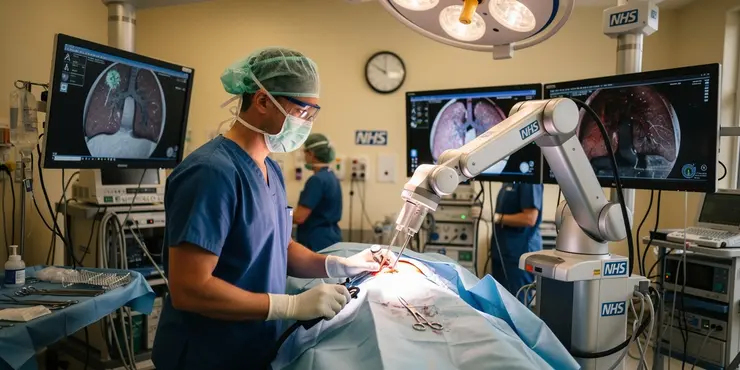
How do AI-assisted robotic systems enhance lung cancer surgeries?
Relevance: 45%
-
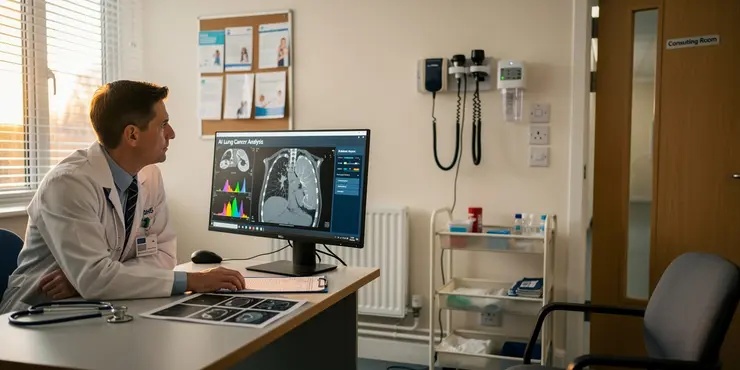
Are there ethical considerations in using AI for lung cancer detection?
Relevance: 42%
-

What kinds of cancer screening are available?
Relevance: 36%
-

What are the stages of testicular cancer?
Relevance: 34%
-

Bernard's Story - Lung Transplant
Relevance: 33%
-

What is cancer screening?
Relevance: 33%
-

Does vaping increase the risk of lung infections for bystanders?
Relevance: 33%
-
Are there any risk factors that increase the need for cancer screening?
Relevance: 32%
-
Is genetic screening available for cancer risk?
Relevance: 31%
-

Am I more at risk of prostate cancer?
Relevance: 30%
-

Can bowel cancer spread to other parts of the body?
Relevance: 30%
-

How common is bowel cancer?
Relevance: 29%
-
How is the stage of bowel cancer determined?
Relevance: 29%
-

What are the symptoms of testicular cancer?
Relevance: 28%
-

What are some common examples of industrial diseases?
Relevance: 28%
-

Can testicular cancer spread to other parts of the body?
Relevance: 28%
-

What is the new NHS Cancer Jab ?
Relevance: 27%
-
Who is at risk for testicular cancer?
Relevance: 27%
-
Vaginal Cancer
Relevance: 27%
-

What is Bowel Cancer?
Relevance: 27%
Introduction to AI in Lung Cancer Risk Assessment
Artificial intelligence (AI) is starting to play a significant role in healthcare, particularly in the area of lung cancer detection and risk assessment. With lung cancer being one of the leading causes of cancer-related deaths in the UK, early identification of high-risk individuals is crucial.
AI-based tools are now helping healthcare professionals assess who might be at risk, often using patient data and imaging scans. These tools aim to improve early diagnosis, enabling timely treatment and better outcomes.
How AI-Based Risk Assessment Tools Work
AI tools for lung cancer risk assessment commonly analyse data such as age, medical history, smoking status, and genetic factors. Many also evaluate imaging results from chest X-rays or CT scans using advanced algorithms.
Some tools use machine learning to find patterns that human eyes might miss. These patterns can indicate the likelihood of developing lung cancer, even in individuals with no visible symptoms.
This approach enables more accurate risk stratification and can guide doctors on which patients might need further tests or screening.
Examples of AI Tools Available
Several AI-based risk assessment models are either in use or being developed in the UK. For example, the “Liverpool Lung Project” model integrates patient data to estimate lung cancer risk over time and is being enhanced with AI capabilities.
Other tools, like qXR and LCP-CNN, use AI to analyse medical imaging and help flag suspicious lung nodules for further investigation. NHS trusts are beginning pilot programmes with some of these technologies.
Internationally, tools such as Google Health’s AI models for CT scan analysis are being studied for adoption in the UK. Collaborations between the NHS and private firms are helping bring these innovations closer to routine clinical use.
Benefits and Considerations for UK Patients
AI-based lung cancer risk assessment tools promise increased accuracy and efficiency. They can help ensure those at greatest risk are identified and referred for further screening promptly.
These tools can also support overburdened NHS staff by automating part of the assessment process. The aim is to reduce missed cases and improve survival rates by catching cancer earlier.
However, widespread adoption in the UK depends on further clinical validation, data privacy considerations, and integration into NHS systems. Efforts are ongoing to ensure these tools meet UK clinical standards and patient safety guidelines.
The Future of AI in Lung Cancer Screening
The use of AI for lung cancer risk assessment in the UK is expected to grow in the coming years. Ongoing trials and research are enhancing the accuracy of AI models and expanding their application.
As these tools become more widely available, they could become a key part of national screening programmes. Patients and clinicians alike stand to benefit from earlier, more precise risk identification and management.
Introduction to AI in Lung Cancer Risk Assessment
Artificial intelligence (AI) is a type of computer technology. AI is now helping doctors with health care and checking for lung cancer. Lung cancer is one of the main causes of cancer deaths in the UK, so finding people who are at high risk early is very important.
AI tools help doctors find out who might have a higher chance of getting lung cancer. These tools use information like patient records and pictures of the lungs. This helps doctors find cancer earlier, so patients can get treatment sooner and have better results.
How AI-Based Risk Assessment Tools Work
AI tools look at information such as your age, health history, if you smoke, and your family’s health. They also look at pictures of your lungs, like X-rays and CT scans, using smart computer programs.
Some AI tools can see patterns in the scans that people might not notice. These patterns can show if someone might get lung cancer, even if they don’t feel sick or look ill.
This means doctors can make better choices about who needs more tests or checks. It helps find people more likely to have lung cancer.
Examples of AI Tools Available
There are several AI tools in the UK and around the world to help find lung cancer risks. One example is the “Liverpool Lung Project” model, which uses your health information to estimate your risk of getting lung cancer. This tool is getting better with new AI technology.
Other tools, like qXR and LCP-CNN, use AI to look at lung pictures and point out any lumps or spots that need to be checked. Some hospitals in the NHS are starting to try out these tools.
Across the world, Google Health is making AI tools to help with CT scans. The NHS is working with private companies to bring these new tools into more hospitals in the UK.
Benefits and Considerations for UK Patients
AI tools can make it quicker and more accurate when doctors check for lung cancer. People at high risk can get help and extra tests sooner.
These tools can also help NHS staff by making their work easier and faster. The goal is to find more people with cancer early, so more lives can be saved.
Before these AI tools can be used everywhere in the UK, experts need to check they work well and are safe. The NHS is making sure these tools protect your private information and follow all health rules.
The Future of AI in Lung Cancer Screening
AI is likely to become more important in finding lung cancer in the UK. Researchers are testing these tools to make them even better and more helpful for patients.
Soon, these tools could be a normal part of lung cancer checks for everyone. This can help doctors and patients by finding cancer risks early and giving better care.
If you have learning difficulties, you can ask a friend, family member, or a health care worker to help you understand this information. You can also use support tools like text-to-speech apps or picture guides. If you have questions about lung cancer or AI tools, talk to your doctor or nurse for more help.
Frequently Asked Questions
Are there any AI-based tools available for lung cancer risk assessment?
Yes, there are multiple AI-based tools developed for lung cancer risk assessment to assist clinicians.
What is the purpose of AI-based lung cancer risk assessment tools?
These tools aim to improve early detection, predict risk levels, and aid in decision-making for lung cancer screening and management.
Can AI analyze medical images for lung cancer risk?
Yes, many AI tools use deep learning to analyze CT scans, X-rays, and other imaging modalities to assess lung cancer risk.
Do AI tools use patient data for lung cancer risk assessment?
Yes, AI-based systems often analyze patient history, genetic information, demographics, and clinical data to estimate lung cancer risk.
Are AI-based lung cancer risk tools approved for clinical use?
Some AI-based tools have received regulatory clearance for clinical use, while others are still in research or pilot phases.
What are some examples of AI-based lung cancer risk assessment tools?
Examples include Lung-RADS AI, Google’s AI model for lung cancer, and Qure.ai’s qXR for chest X-rays.
How do AI tools help clinicians in lung cancer risk assessment?
AI tools can assist by highlighting suspicious regions, quantifying risk, and integrating multiple data sources for a more comprehensive assessment.
Do AI-based tools replace the need for doctors in lung cancer screening?
AI tools are designed to support and augment physicians, not replace them, improving efficiency and accuracy.
Can AI models predict lung cancer before symptoms appear?
Some AI models can predict risk based on imaging and patient data, potentially identifying high-risk patients before symptoms manifest.
Are AI-based tools accurate in lung cancer risk assessment?
Many studies report high accuracy rates, but performance can vary depending on the population, data quality, and implementation.
Is patient consent required to use AI-based risk assessment tools?
Yes, patient data privacy and consent are important considerations in using AI-based assessment tools, especially in clinical settings.
What are the limitations of AI-based lung cancer risk tools?
Limitations include the need for large and diverse datasets, potential biases, interpretability issues, and regulatory constraints.
Can AI risk assessment tools be integrated with hospital systems?
Many AI tools are being developed for integration with existing electronic medical record and radiology systems for seamless workflow.
Are AI-based lung cancer tools available for public use?
Most AI-based lung cancer risk tools are currently intended for healthcare professionals rather than direct public use.
How do AI tools improve early detection of lung cancer?
AI can analyze large volumes of imaging data quickly, identify patterns missed by the human eye, and flag early abnormalities.
Can AI predict the likelihood of lung nodules being cancerous?
Yes, several AI tools assess lung nodules on CT scans and predict their malignancy risk, aiding in follow-up decisions.
Are AI algorithms trained on diverse populations for lung cancer risk?
Efforts are underway to train AI algorithms on diverse datasets, but more work is needed to ensure broad applicability.
Do insurance companies recognize AI-based risk assessment results?
Recognition varies and is evolving; some insurers may consider AI-assisted results, especially if validated and regulated.
Is research ongoing to improve AI-based lung cancer risk tools?
Yes, ongoing research focuses on improving accuracy, generalizability, and clinical utility of AI-based lung cancer assessment.
Where can clinicians find and access AI-based lung cancer risk tools?
Clinicians can access AI tools via specialized radiology software, research collaborations, and platforms developed by medical AI companies.
Are there any computer tools to help find out your risk of lung cancer?
Some computer tools can help doctors see if you might get lung cancer. These tools use computers to look at your health information. For example, they can check if you smoke or other things that may affect your risk. Doctors use these tools to help decide if you need more tests. If you are worried, talk to your doctor. You can also ask someone you trust to help you understand the information.
Yes, there are many computer tools that help doctors find out who might get lung cancer.
Why do we use AI tools to check lung cancer risk?
AI tools help doctors find out if someone might get lung cancer. These tools look at health information to see if there is a risk. They help doctors decide what to do next.
If you find reading hard, you can ask someone you trust to help you read. You can also use screen readers to listen to the text.
These tools help doctors find lung cancer early. They show who might get lung cancer and help doctors decide the best care. If you find reading hard, you can use a screen reader or ask someone to read it with you.
Can computers help doctors find lung cancer in pictures?
Doctors use special pictures, like X-rays, to look for signs of lung cancer.
Computers that use AI (artificial intelligence) can look at these pictures and help spot problems.
AI helps doctors decide if someone might have lung cancer. This can help doctors treat people faster.
Supportive tools: You can ask someone to read this with you, or use a screen reader to listen to it.
Techniques: If you do not understand a word, you can look it up or ask for help.
Yes, many computer tools use deep learning. This means they learn from lots of pictures. These tools look at CT scans, X-rays, and other pictures of the lungs. They can help doctors find out if someone might have lung cancer.
If you find this text hard to read, you can ask someone to read it with you. Using a screen reader or text-to-speech tool can also help.
Do AI tools use patient data for lung cancer risk assessment?
Some computer tools can help doctors find out if someone might get lung cancer. These tools sometimes use patient information, like age, if someone smokes, or if they have been sick before.
If you are not sure about your data being used, you can ask your doctor. You can also use a support person or a family member to help you understand.
Using pictures or asking someone to read with you can make understanding easier.
Yes, some computer programs can help doctors find out if someone might get lung cancer. These programs look at things like your health history, your genes, your age, and your health tests.
If you find it hard to remember or understand this, you can ask someone to read it with you. You can also use tools like pictures or voice readers to help.
Can doctors use AI tools to help find lung cancer?
Doctors now have computer tools that use AI (artificial intelligence) to help find out if someone might have lung cancer.
Some of these AI tools are checked and approved for use with real patients. But not all AI tools are ready yet. Doctors must use the ones that are safe and have been tested.
If you want to learn more or get help, you can:
- Ask your doctor to explain things in a way you understand
- Use pictures or drawings to help show how things work
- Bring someone with you to help take notes or ask questions
Some smart computer tools have been checked and allowed for doctors to use. Others are still being tested or tried out in smaller ways.
If you find this hard to read, you can ask someone to help you or use a text reader tool to read it aloud for you.
What are some examples of AI-based lung cancer risk assessment tools?
AI is a type of computer program that can help doctors spot lung cancer. These programs can look at x-rays or CT scans to find signs of cancer. Some examples are:
- Google Lung Cancer Tool: This computer program uses x-rays and scans to check for cancer in the lungs.
- Optellum Virtual Nodule Clinic: This tool helps doctors decide if a small spot in the lung might be cancer or not.
- Siemens AI-Rad Companion: This program helps doctors look at lung scans and find problems early.
If you find it hard to understand medical information, you can:
- Ask a doctor, nurse, or family member to explain things.
- Write down words you don’t understand and look them up later.
- Use pictures or diagrams to help you learn.
Some examples are:
- Lung-RADS AI – a computer tool that helps doctors look at lung scans
- Google’s AI for lung cancer – a smart computer that helps find lung cancer
- Qure.ai’s qXR – a computer helper for looking at chest X-rays
These tools help doctors see problems in the lungs more easily. If you find medical words hard, you can ask someone to explain or use a picture dictionary for help.
How do AI tools help doctors find out if someone might get lung cancer?
AI tools are smart computer programs. They help doctors look at test results, like X-rays or scans, very carefully. This makes it easier for doctors to see if a person could get lung cancer.
If you find this hard to read, you can ask someone to read it with you. You can also use text-to-speech tools, which can read the words out loud.
AI tools can help by showing areas that may look unusual. They can also measure how big the risk is. AI tools can put together information from different places to help doctors make better choices.
If you find reading hard, you can use tools like text-to-speech (where your device reads out loud) or ask someone you trust to help you understand new words.
Do AI-based tools replace the need for doctors in lung cancer screening?
Some computers can help find lung cancer. These computers are called AI tools. But we still need doctors.
Doctors know a lot about health. They can make the best decisions for you.
It is good to use AI tools and doctors together. This helps people get the best care.
If you do not understand something, ask your doctor or bring a friend or family member to help you.
You can use pictures, videos, or ask someone to explain in simple words to help you understand.
AI tools are made to help doctors do their jobs better and faster. They do not take the place of doctors. AI helps make work easier and more correct.
If reading is hard, you can ask someone to read with you or use a text-to-speech tool to listen to the words.
Can computers help find lung cancer before you feel sick?
Doctors can use special computers called AI models. These computers look for signs of lung cancer before you have any symptoms. This helps doctors find cancer early, so it is easier to treat.
You can use pictures and videos to help you understand. Ask a family member, friend, or support worker to help you if you need it. You can also use speech tools to read this text out loud.
Some computer programs, called AI, can look at pictures and information about patients. These programs can help doctors find people who might become sick before they feel any symptoms. This means doctors can help these people sooner.
If you find this hard to understand, you can use voice readers or ask someone you trust to help explain it to you.
Can computer tools help doctors find out if someone might get lung cancer?
Computer tools, called AI, can look at health information and help doctors see if someone might get lung cancer.
These tools can be helpful, but sometimes they make mistakes.
Doctors still need to check the results carefully.
If you do not understand the words, you can ask someone you trust, like a family member, support worker, or friend, to help explain.
Using pictures, videos, or speaking out loud can also help you understand this question.
Many studies say these methods work well. But, how well they work can change. It depends on the people being tested, how good the information is, and how the test is done.
Using simple charts, pictures, or talking to someone can help make things clearer.
Do we need to ask the patient before using computer tools to check their health risks?
Before using a computer program to check if someone might get sick, you should ask the person if they agree.
Ask the patient if it is okay to use the tool.
You can help people make a choice by using pictures, simple words, or Makaton signs.
This makes things easier to understand and helps the patient feel safe and listened to.
Yes, keeping patient data private and asking for patient permission are very important when using AI tools in hospitals or clinics.
What are things AI lung cancer risk tools cannot do?
AI tools can help doctors see if you might get lung cancer. But sometimes, they make mistakes.
- AI does not always get things right.
- It might miss some problems or say there is a problem when there is not.
- AI needs good information to work well. If the information is wrong, the answer might be wrong.
- AI is not a real doctor. Doctors still need to check everything.
If you find information hard to understand, you can:
- Ask a family member or friend to help you read.
- Use a text-to-speech tool to read the words out loud.
- Ask your doctor to explain things in a clear way.
There are some problems to know about. We need lots of different data to make things work well. Sometimes, there can be unfair choices or mistakes. It can be hard to understand why decisions are made. There are also rules we must follow.
If you find this hard to read, you can use tools like text-to-speech to help. You can also ask someone you trust to explain it to you.
Can computers that check risks be used with hospital computers?
Can hospitals use special computer tools to help find risks for patients?
These tools can work together with hospital computers. This can help doctors and nurses make better decisions.
If you need help reading or understanding the information, you can:
- Ask someone you trust to read it with you.
- Use a screen reader or read-aloud tool.
- Highlight important words or make notes.
Lots of new computer programs (AI tools) are being made to work with hospital computer systems. This helps doctors and nurses see your health records and scans easily, all in one place.
Doctors and nurses can use these tools to save time and find the information they need faster. If you find reading this tricky, you can ask someone to help you or use tools like a screen reader.
Can everyone use AI tools to help find lung cancer?
Some computer programs use AI to help find lung cancer. Most of these tools are made for doctors and hospitals. Most people cannot use them at home. If you want to check your lungs, talk to your doctor. If you find reading hard, you can ask someone you trust to help you understand. You can also use tools like speak-to-text or screen readers to help you read information.
Most computer tools for checking lung cancer risk are made for doctors and nurses to use. They are not for the general public yet.
If you want to know about your own lung cancer risk, talk to your doctor or nurse. You can also ask someone you trust to help you understand the information.
It can help to write down your questions before you talk to a doctor. Using pictures or videos about lung cancer risks may also make it easier to understand.
How can AI tools help find lung cancer early?
AI tools are smart computer programs. They can look at lung scans and pictures. AI can find signs of lung cancer that people might miss. This can help doctors find cancer sooner.
If you need help reading, you can ask someone to read with you. You can also use tools like a text reader or look for pictures to help understand.
AI is a type of computer program that can look at lots of pictures very fast. It can find things in the pictures that people might not see. AI can also point out if something is wrong in the pictures early on.
If the picture is hard to understand, you can use helpful tools, like speaking to text, or ask someone you trust to read with you.
Can computers help doctors tell if lung lumps are cancer?
Doctors can use computers to look at pictures of your lungs. These computers are called AI. They help doctors see if a lump in your lung might be cancer.
If you find words difficult, you can ask someone to help you read. You can also use tools that read the words out loud, like a screen reader.
Yes, there are computer tools (called AI) that look at lung lumps on CT scans. These tools help doctors see if a lump might be cancer, and help decide what to do next.
It can help to have a family member or friend with you when you talk to your doctor. You can also ask your doctor to explain things in simple words, or show you pictures to help you understand.
Do AI computer programs use information from many different people to find out who might get lung cancer?
This question asks if the computer programs (called AI) that help doctors find out who might get lung cancer have learned from lots of different people. This means people of different ages, backgrounds, or countries.
If you find this hard to read, you can ask someone to read it with you. You can also use a screen reader or special reading tools to help understand the information.
People are teaching AI to learn from different types of information. This helps AI understand more things. But there is still more to do. AI needs to learn from even more types of information.
A good way to help is to use pictures, videos, or audio recordings along with words. This makes it easier for everyone to understand. Asking questions and talking about what you learn can also help.
Do insurance companies use results from AI to check risks?
Insurance companies decide how risky something is before giving insurance. AI (Artificial Intelligence) is a type of smart computer program. Some insurance companies use computers like this to help them decide about risk. If you need help, ask someone you trust to read this with you. You could also use text-to-speech tools to listen to the words.
Things are changing. Some insurance companies might accept test results made with AI (artificial intelligence), but only if the tests are checked and safe.
If you find this information hard to understand, you can ask someone to read it with you. You might also use a text-to-speech tool to have the words read out loud.
Are people still working to make AI lung cancer risk tools better?
Yes, people are still doing research to make these AI tools better. This means they are trying to help doctors find lung cancer earlier and more correctly. If you want help to understand this, you can ask someone to explain the words, use pictures, or listen to the information being read out loud.
Yes, scientists are still working to make AI tools for lung cancer better. They want to make these tools more correct and helpful for doctors and patients.
If you find this text hard, you can use tools like text-to-speech (which reads text aloud) or ask someone you trust to help explain it. You can also break up long words and read them slowly.
Where can doctors find and use AI tools for lung cancer risk?
Doctors can look for special computer tools that help check lung cancer risk. These tools can be found:
- On trusted health websites
- In hospital systems
- By asking other doctors
Doctors can talk to their team for help. They can use pictures and simple instructions to use these tools. They may also use screen readers or voice apps if reading is hard.
Doctors can use AI tools in a few ways. They can use special computer programs for x-rays and scans. They can also work with other hospitals or researchers. Some companies make easy-to-use AI tools for medical care.
If you need help, you can:
- Ask another person to explain the words.
- Use pictures and videos to help you understand.
- Try talking about what you have learnt with someone you trust.

Useful Links
This website offers general information and is not a substitute for professional advice.
Always seek guidance from qualified professionals.
If you have any medical concerns or need urgent help, contact a healthcare professional or emergency services immediately.
Some of this content was generated with AI assistance. We've done our best to keep it accurate, helpful, and human-friendly.
- Ergsy carefully checks the information in the videos we provide here.
- Videos shown by Youtube after a video has completed, have NOT been reviewed by ERGSY.
- To view, click the arrow in centre of video.
- Most of the videos you find here will have subtitles and/or closed captions available.
- You may need to turn these on, and choose your preferred language.
- Go to the video you'd like to watch.
- If closed captions (CC) are available, settings will be visible on the bottom right of the video player.
- To turn on Captions, click settings.
- To turn off Captions, click settings again.
More Items From Ergsy search
-
Are there any AI-based tools available for lung cancer risk assessment?
Relevance: 100%
-
How are AI and Robots used to detect lung cancer?
Relevance: 58%
-
What role does AI play in lung cancer detection?
Relevance: 56%
-
Air Pollution and Lung Cancer
Relevance: 54%
-
How does AI impact the cost of lung cancer detection?
Relevance: 54%
-
How can AI improve patient outcomes in lung cancer?
Relevance: 53%
-
What is a low-dose CT scan for lung cancer?
Relevance: 53%
-
Can AI systems reduce the rate of false positives in lung cancer screening?
Relevance: 53%
-
Can robots perform lung cancer screenings?
Relevance: 52%
-
What is the future of AI and robotics in lung cancer detection and treatment?
Relevance: 52%
-
What is the advantage of using AI for lung cancer detection?
Relevance: 51%
-
Which types of imaging data are analyzed by AI for lung cancer detection?
Relevance: 50%
-
How do AI algorithms detect lung cancer in scans?
Relevance: 50%
-
Can AI help in monitoring lung cancer progression?
Relevance: 50%
-
Is AI technology in lung cancer detection widely accepted by hospitals?
Relevance: 49%
-
Are AI systems used alone in lung cancer diagnosis or alongside human radiologists?
Relevance: 49%
-
Have AI systems for lung cancer detection been clinically validated?
Relevance: 49%
-
Do AI models for lung cancer require a lot of data to train?
Relevance: 48%
-
What challenges remain in using AI for lung cancer detection?
Relevance: 48%
-
Can AI predict lung cancer survival rates?
Relevance: 47%
-
How do AI-assisted robotic systems enhance lung cancer surgeries?
Relevance: 45%
-
Are there ethical considerations in using AI for lung cancer detection?
Relevance: 42%
-
What kinds of cancer screening are available?
Relevance: 36%
-
What are the stages of testicular cancer?
Relevance: 34%
-
Bernard's Story - Lung Transplant
Relevance: 33%
-
What is cancer screening?
Relevance: 33%
-
Does vaping increase the risk of lung infections for bystanders?
Relevance: 33%
-
Are there any risk factors that increase the need for cancer screening?
Relevance: 32%
-
Is genetic screening available for cancer risk?
Relevance: 31%
-
Am I more at risk of prostate cancer?
Relevance: 30%
-
Can bowel cancer spread to other parts of the body?
Relevance: 30%
-
How common is bowel cancer?
Relevance: 29%
-
How is the stage of bowel cancer determined?
Relevance: 29%
-
What are the symptoms of testicular cancer?
Relevance: 28%
-
What are some common examples of industrial diseases?
Relevance: 28%
-
Can testicular cancer spread to other parts of the body?
Relevance: 28%
-
What is the new NHS Cancer Jab ?
Relevance: 27%
-
Who is at risk for testicular cancer?
Relevance: 27%
-
Vaginal Cancer
Relevance: 27%
-
What is Bowel Cancer?
Relevance: 27%