

Find Help
More Items From Ergsy search
-
How does AI impact the cost of lung cancer detection?
Relevance: 100%
-
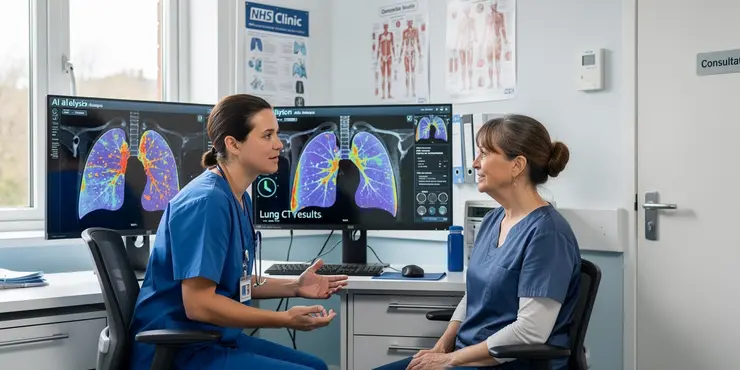
Is AI technology in lung cancer detection widely accepted by hospitals?
Relevance: 94%
-
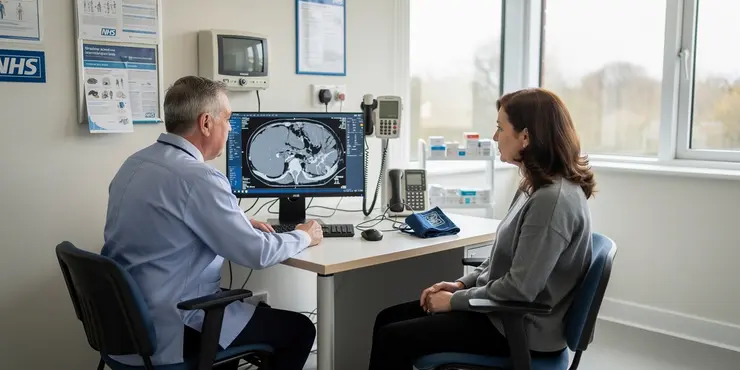
How are AI and Robots used to detect lung cancer?
Relevance: 93%
-
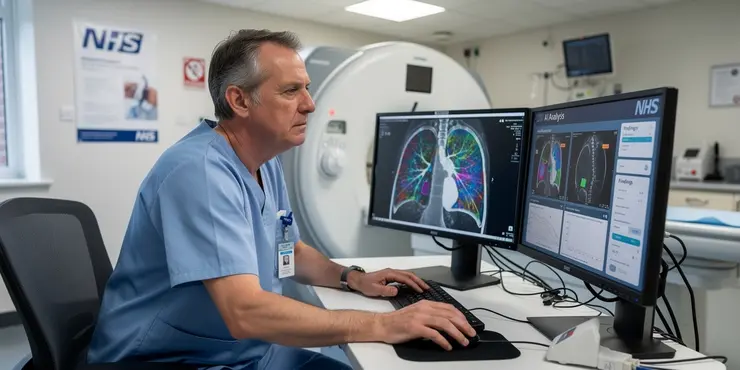
What is the advantage of using AI for lung cancer detection?
Relevance: 92%
-
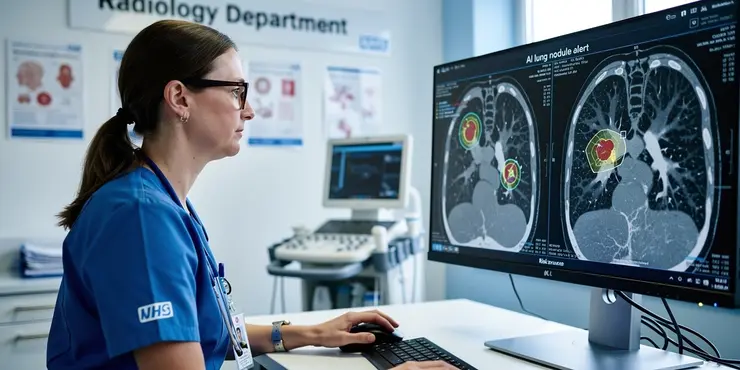
What role does AI play in lung cancer detection?
Relevance: 90%
-
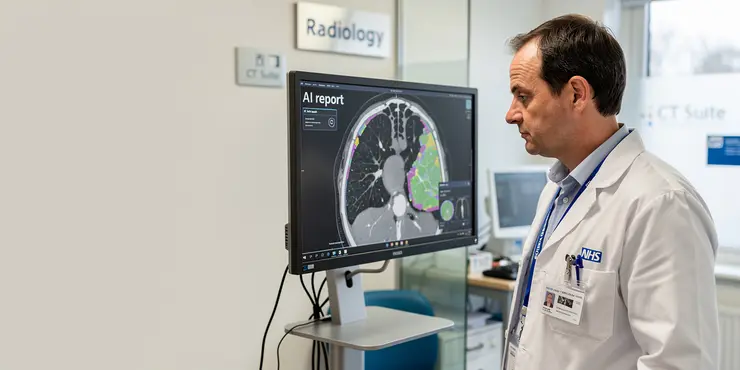
What is the future of AI and robotics in lung cancer detection and treatment?
Relevance: 89%
-
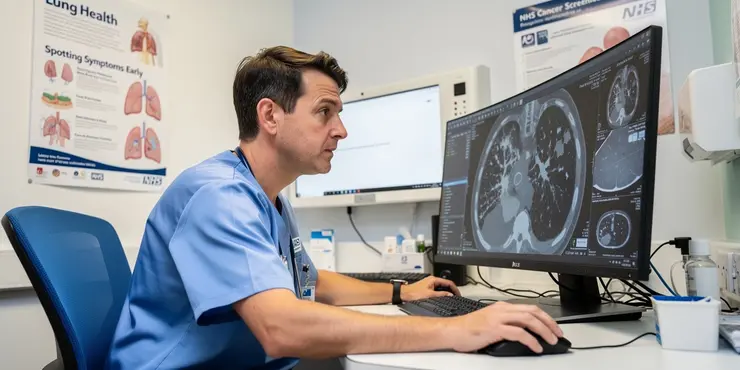
How do AI algorithms detect lung cancer in scans?
Relevance: 88%
-
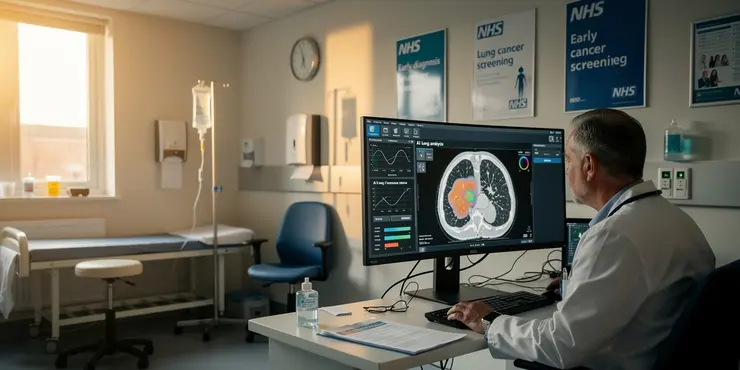
Which types of imaging data are analyzed by AI for lung cancer detection?
Relevance: 87%
-
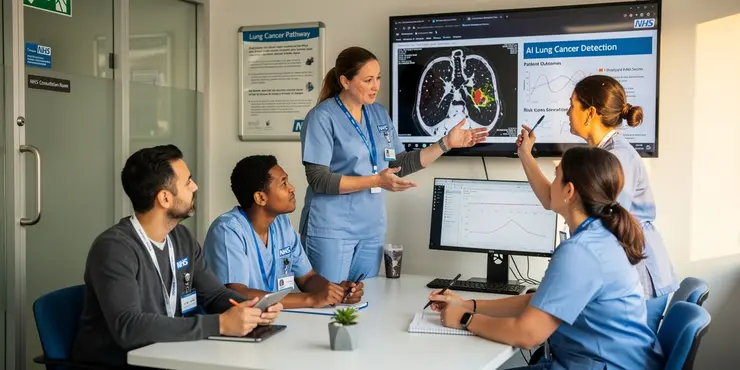
What challenges remain in using AI for lung cancer detection?
Relevance: 86%
-
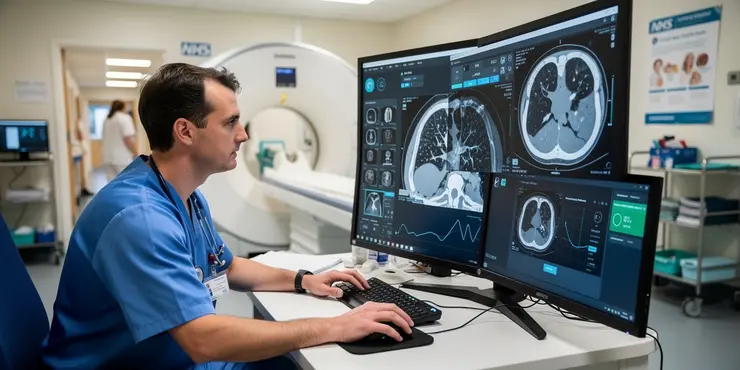
Have AI systems for lung cancer detection been clinically validated?
Relevance: 86%

-
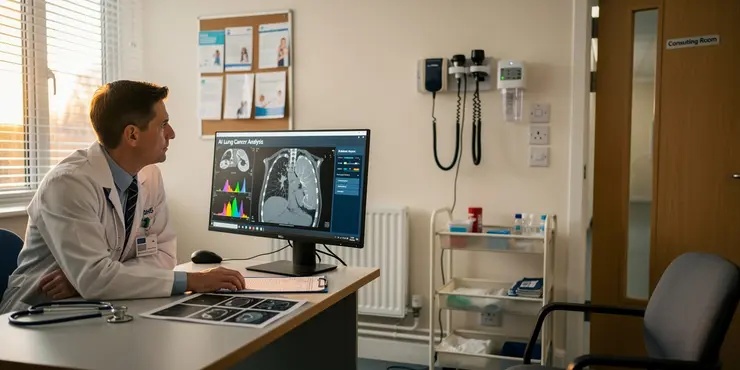
Are there ethical considerations in using AI for lung cancer detection?
Relevance: 84%
-
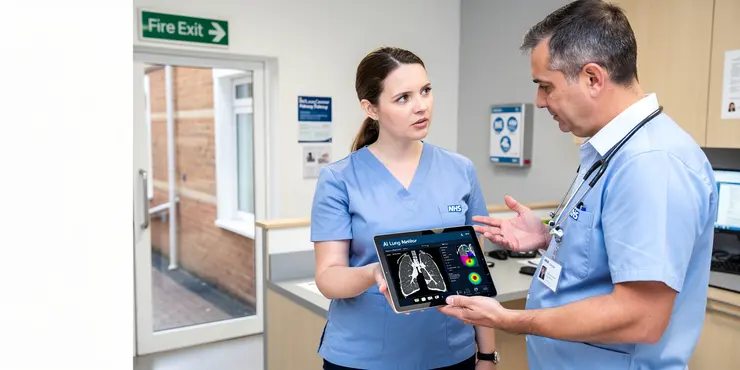
Can AI help in monitoring lung cancer progression?
Relevance: 82%
-
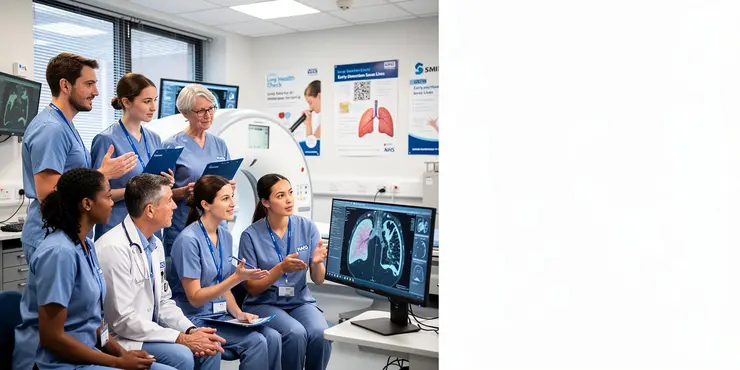
Can AI systems reduce the rate of false positives in lung cancer screening?
Relevance: 79%
-

Are AI systems used alone in lung cancer diagnosis or alongside human radiologists?
Relevance: 77%
-
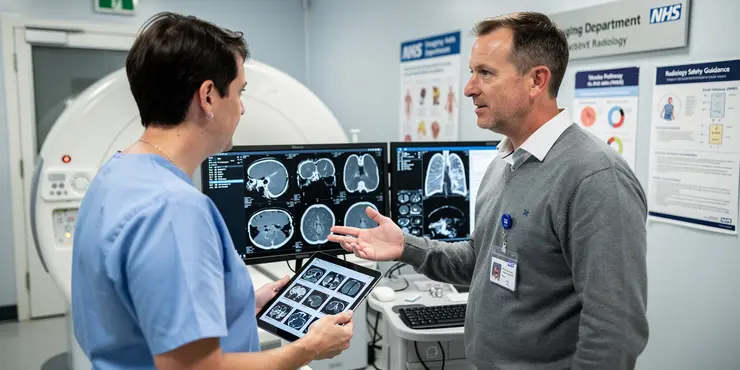
Do AI models for lung cancer require a lot of data to train?
Relevance: 76%
-

How can AI improve patient outcomes in lung cancer?
Relevance: 76%
-
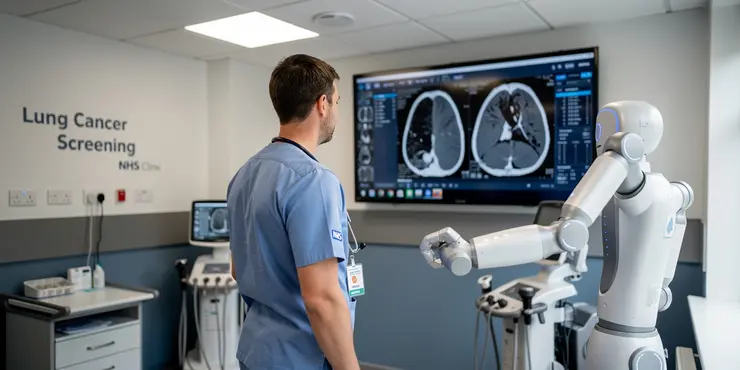
Can robots perform lung cancer screenings?
Relevance: 74%
-
Are there any AI-based tools available for lung cancer risk assessment?
Relevance: 73%
-
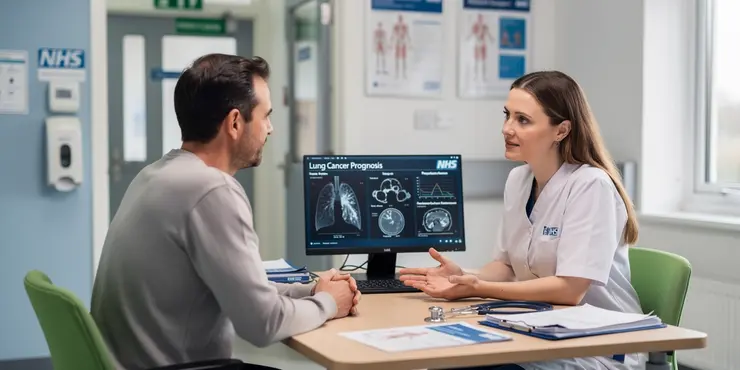
Can AI predict lung cancer survival rates?
Relevance: 67%
-
AI Breast Cancer Screening in the UK
Relevance: 58%
-
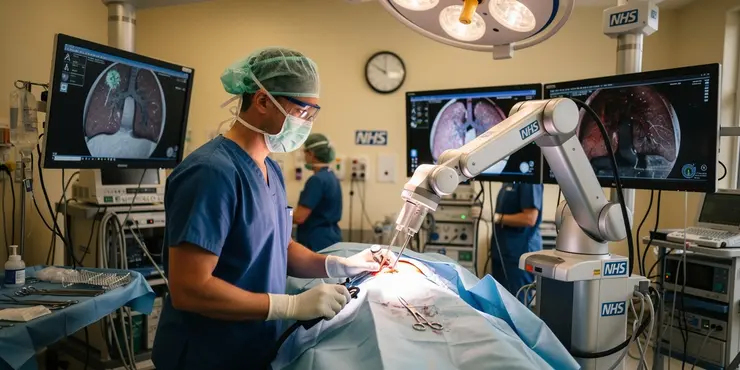
How do AI-assisted robotic systems enhance lung cancer surgeries?
Relevance: 55%
-

What is a low-dose CT scan for lung cancer?
Relevance: 51%
-

Are AI body scans reliable?
Relevance: 48%
-

Air Pollution and Lung Cancer
Relevance: 44%
-

What areas of the NHS are using AI in 2024?
Relevance: 39%
-
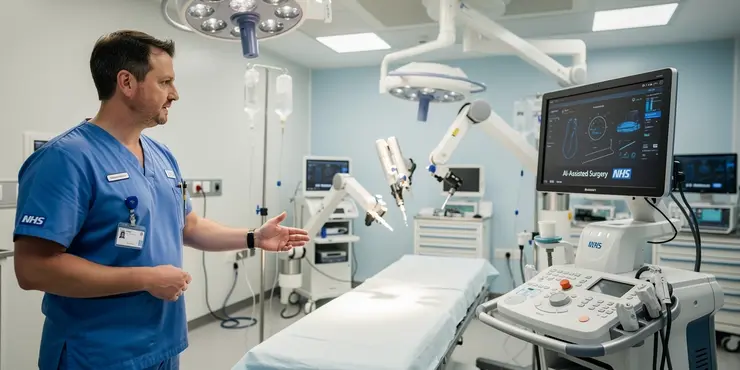
How do AI and robotic systems improve the workflow in healthcare settings?
Relevance: 36%
-

What kinds of cancer screening are available?
Relevance: 35%
-

Can a womb lining test detect cancer?
Relevance: 35%
-

Can a womb lining test detect cancer?
Relevance: 34%
-

Prostate cancer symptoms - detecting them early
Relevance: 34%
-
NHS Utilizes AI to Prioritize High-Risk Patients on Waiting Lists
Relevance: 33%
-

What is cancer screening?
Relevance: 33%
-
Legal Experts Warn of Consequences in Upcoming AI Regulation Bill
Relevance: 31%
-
How do water companies detect leaks?
Relevance: 31%
-

Will insurance cover the cost of home colorectal cancer tests?
Relevance: 31%
-

Can bowel cancer spread to other parts of the body?
Relevance: 30%
-

What are the symptoms of testicular cancer?
Relevance: 29%
-

How common is bowel cancer?
Relevance: 29%
-

Is testicular cancer treatable?
Relevance: 29%
-
How does increased screening impact bowel cancer statistics?
Relevance: 29%
Advanced Detection Technology
AI has transformed the diagnostic landscape for lung cancer, offering advanced imaging analysis. This technology enhances the accuracy of scanning results, enabling early detection of potential issues.
By improving the precision of lung cancer screening, AI reduces the likelihood of unnecessary tests and follow-up procedures. This can lead to significant cost savings for the healthcare system.
Cost Reduction in Healthcare
Integrating AI into lung cancer diagnostics can help cut overall healthcare expenses. With AI, the time and resources spent on manual analysis can be significantly reduced.
The streamlined process facilitated by AI contributes to a decrease in medical overheads, allowing more patients to be screened effectively within a given budget.
Efficiency and Resource Allocation
AI supports the efficient allocation of healthcare resources by highlighting high-risk cases. This enables medical professionals to prioritise patients who need urgent care.
As a result, the workload on specialists is reduced, translating to lowered costs associated with staffing and resource management in healthcare facilities.
Reducing Human Error
AI algorithms are designed to minimise human error by providing a second opinion in diagnostics. This reduces misdiagnosis rates, which can be costly in lung cancer detection.
Lowered rates of errors and subsequent corrective measures lead to decreased overall costs in patient care and treatment.
Investment and Implementation Costs
While AI offers numerous cost-saving benefits, initial investments and implementation can be significant. Healthcare systems must evaluate the return on investment for AI technologies.
Despite these upfront costs, many healthcare providers find that long-term savings in diagnostic efficiency and improved patient outcomes often justify the initial investment.
Frequently Asked Questions
How does AI reduce the cost of lung cancer detection?
AI can reduce costs by automating image analysis, minimizing the need for multiple screenings, and improving detection accuracy, which leads to earlier diagnosis and less intensive treatment.
Can AI improve the speed of lung cancer detection?
Yes, AI can analyze medical images faster than human radiologists, allowing for quicker diagnosis and treatment planning.
Does AI decrease the need for repeated imaging tests in lung cancer detection?
AI improves accuracy in image interpretation, potentially reducing the need for repeat tests due to misdiagnosis or inconclusive results.
How does AI affect the accuracy of lung cancer detection?
AI can enhance detection accuracy by identifying subtle patterns and anomalies that may be missed by human radiologists.
Is AI more cost-effective than traditional methods of lung cancer detection?
AI can be more cost-effective by reducing unnecessary follow-up procedures, minimizing human error, and optimizing resource allocation.
Does AI assist in identifying lung cancer earlier?
Yes, AI models trained on large datasets can identify early signs of lung cancer more reliably than conventional methods, leading to earlier intervention.
Can AI lead to savings in operational costs associated with lung cancer detection?
AI streamlines workflows, reduces the burden on radiologists, and enhances the throughput of imaging departments, resulting in lower operational costs.
How does AI handle variability in image interpretation in lung cancer detection?
AI reduces variability by providing consistent and objective analysis across different cases, improving overall diagnostic consistency.
Does AI-enabled lung cancer detection still require human oversight?
Yes, while AI enhances detection capabilities, human oversight remains crucial for validating results and making contextual clinical decisions.
Can AI identify types or stages of lung cancer?
AI has the potential to classify different types and stages of lung cancer by analyzing advanced imaging features and cross-referencing with extensive data.
What role does AI play in decreasing false positives in lung cancer detection?
AI algorithms are trained to reduce false positives by learning from a wide array of cases, thus refining the criteria for positive indications of lung cancer.
How does AI contribute to personalized treatment plans for lung cancer?
AI can analyze data from multiple sources to suggest personalized treatment options based on the specific characteristics of a patient’s cancer.
Does AI integration in lung cancer detection require significant upfront investment?
While the initial investment can be high, the long-term savings from increased efficiency and accuracy can offset these costs.
Is AI technology in lung cancer detection accessible in all healthcare settings?
The accessibility depends on the resources of the healthcare setting; larger, well-funded hospitals may have easier access than smaller clinics.
Are there any limitations to AI in lung cancer detection?
Yes, AI systems can be limited by the quality and quantity of the data they are trained on, and there is always a risk of algorithmic bias.
How can AI algorithms improve over time in detecting lung cancer?
AI algorithms improve through machine learning by continuously learning from new data and outcomes, refining their accuracy and reliability.
Does AI aid in predicting lung cancer prognosis?
AI can analyze trends and patterns in historical patient data to predict potential outcomes, thus assisting in prognosis estimation.
Is there an ethical concern regarding AI in lung cancer detection?
Ethical concerns include data privacy, the potential for algorithmic bias, and ensuring AI decisions are interpretable and transparent.
Can AI detect lung cancer using non-imaging data?
Yes, AI can also analyze genetic, clinical, and demographic data to assist in the detection and characterization of lung cancer.
How does AI impact the workload of medical professionals in lung cancer detection?
AI can alleviate workloads by taking over routine tasks, allowing professionals to focus on complex decision-making and patient care.

Useful Links
This website offers general information and is not a substitute for professional advice.
Always seek guidance from qualified professionals.
If you have any medical concerns or need urgent help, contact a healthcare professional or emergency services immediately.
Some of this content was generated with AI assistance. We’ve done our best to keep it accurate, helpful, and human-friendly.
- Ergsy carfully checks the information in the videos we provide here.
- Videos shown by Youtube after a video has completed, have NOT been reviewed by ERGSY.
- To view, click the arrow in centre of video.
- Most of the videos you find here will have subtitles and/or closed captions available.
- You may need to turn these on, and choose your preferred language.
- Go to the video you'd like to watch.
- If closed captions (CC) are available, settings will be visible on the bottom right of the video player.
- To turn on Captions, click settings .
- To turn off Captions, click settings again.
More Items From Ergsy search
-
How does AI impact the cost of lung cancer detection?
Relevance: 100%
-
Is AI technology in lung cancer detection widely accepted by hospitals?
Relevance: 94%
-
How are AI and Robots used to detect lung cancer?
Relevance: 93%
-
What is the advantage of using AI for lung cancer detection?
Relevance: 92%
-
What role does AI play in lung cancer detection?
Relevance: 90%
-
What is the future of AI and robotics in lung cancer detection and treatment?
Relevance: 89%
-
How do AI algorithms detect lung cancer in scans?
Relevance: 88%
-
Which types of imaging data are analyzed by AI for lung cancer detection?
Relevance: 87%
-
What challenges remain in using AI for lung cancer detection?
Relevance: 86%
-
Have AI systems for lung cancer detection been clinically validated?
Relevance: 86%
-
Are there ethical considerations in using AI for lung cancer detection?
Relevance: 84%
-
Can AI help in monitoring lung cancer progression?
Relevance: 82%
-
Can AI systems reduce the rate of false positives in lung cancer screening?
Relevance: 79%
-
Are AI systems used alone in lung cancer diagnosis or alongside human radiologists?
Relevance: 77%
-
Do AI models for lung cancer require a lot of data to train?
Relevance: 76%
-
How can AI improve patient outcomes in lung cancer?
Relevance: 76%
-
Can robots perform lung cancer screenings?
Relevance: 74%
-
Are there any AI-based tools available for lung cancer risk assessment?
Relevance: 73%
-
Can AI predict lung cancer survival rates?
Relevance: 67%
-
AI Breast Cancer Screening in the UK
Relevance: 58%
-
How do AI-assisted robotic systems enhance lung cancer surgeries?
Relevance: 55%
-
What is a low-dose CT scan for lung cancer?
Relevance: 51%
-
Are AI body scans reliable?
Relevance: 48%
-
Air Pollution and Lung Cancer
Relevance: 44%
-
What areas of the NHS are using AI in 2024?
Relevance: 39%
-
How do AI and robotic systems improve the workflow in healthcare settings?
Relevance: 36%
-
What kinds of cancer screening are available?
Relevance: 35%
-
Can a womb lining test detect cancer?
Relevance: 35%
-
Can a womb lining test detect cancer?
Relevance: 34%
-
Prostate cancer symptoms - detecting them early
Relevance: 34%
-
NHS Utilizes AI to Prioritize High-Risk Patients on Waiting Lists
Relevance: 33%
-
What is cancer screening?
Relevance: 33%
-
Legal Experts Warn of Consequences in Upcoming AI Regulation Bill
Relevance: 31%
-
How do water companies detect leaks?
Relevance: 31%
-
Will insurance cover the cost of home colorectal cancer tests?
Relevance: 31%
-
Can bowel cancer spread to other parts of the body?
Relevance: 30%
-
What are the symptoms of testicular cancer?
Relevance: 29%
-
How common is bowel cancer?
Relevance: 29%
-
Is testicular cancer treatable?
Relevance: 29%
-
How does increased screening impact bowel cancer statistics?
Relevance: 29%